Looking at Denzel Washington’s career as a whole, one lesson becomes difficult to ignore. Success is not simply about reaching the highest point. It is about knowing how to continue once you get there. Washington reached levels of recognition that most actors never experience. He earned major awards, became a household name, worked with respected filmmakers, and created performances that became part of popular culture. But instead of allowing those achievements to become the end of the journey, he continued working. That decision may be one of the most important parts of his legacy. Because talent can open a door. Opportunity can put someone in the right room.
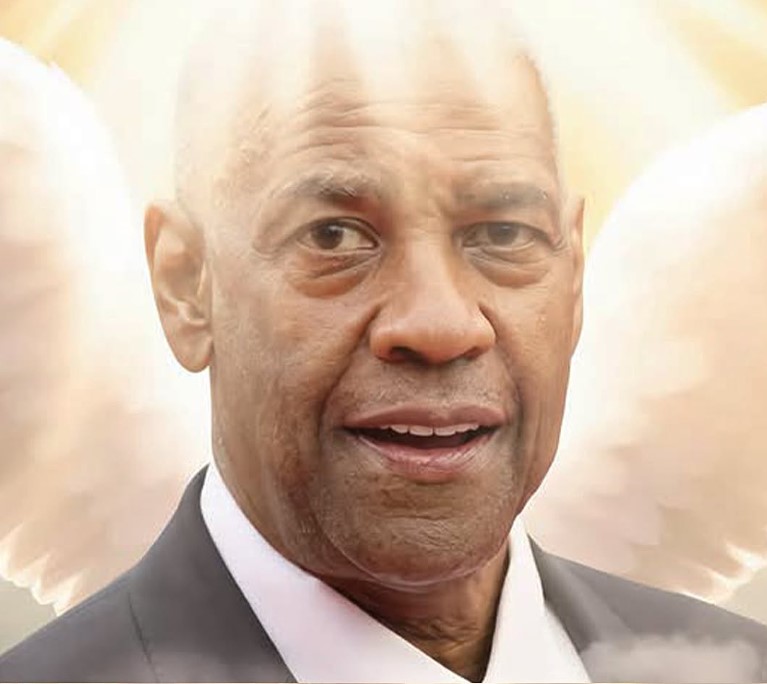
Luck can create a breakthrough. But longevity requires something else. Discipline. And discipline has been one of the quiet forces behind Washington’s career. The Importance of Never Becoming Comfortable There is always a danger after an actor becomes successful. Comfort. When audiences already love you, why take a risk? When studios already know what sells, why choose something unfamiliar? When you have already won the industry’s biggest awards, why keep proving yourself? Washington’s career provides an interesting answer. Because the purpose of acting is not simply to prove that you are talented. It is to continue discovering what you are capable of doing.
That mindset allows an actor to keep growing.
And growth requires discomfort.
It requires taking roles that may not immediately seem safe.
It requires working with different directors.
It requires accepting that not every project will become a classic.
It requires continuing even when expectations become enormous.
Washington repeatedly demonstrated that willingness.
Not Every Character Had to Be a Hero
One of the most important things about his career is that he did not need every character to be admirable.
That may sound simple, but it is extremely important.
An actor who only plays heroes can eventually become predictable.
Washington understood that audiences could handle something more complicated.
They could watch a character make terrible choices.
They could watch a powerful man become corrupted.
They could watch someone struggle with prejudice.
They could watch someone lose control.
They could watch someone fight for justice while carrying anger and pain.
The goal was never to make every character a role model.
The goal was to make the character believable.
And believable characters are rarely perfect.
His Performances Made Imperfection Powerful
Perfection is difficult to relate to.
Human beings make mistakes.
They lose their temper.
They become afraid.
They become jealous.
They make selfish choices.
They misunderstand other people.
They sometimes hurt the people they are trying to protect.
Washington’s characters often contain those contradictions.
That is why audiences can recognize something of themselves in them.
Even when the circumstances are extraordinary, the emotions remain familiar.
Fear is familiar.
Pride is familiar.
Love is familiar.
Anger is familiar.
Regret is familiar.
Hope is familiar.
Those emotions connect the character to the audience.
And Washington has repeatedly understood how to turn those emotions into dramatic moments.
The Actor Who Could Control a Room
There is a reason Washington has often been cast as leaders and authority figures.
He has an extraordinary ability to control the emotional temperature of a scene.
Sometimes he does it through movement.
Sometimes through his voice.
Sometimes through silence.
Sometimes simply by looking at another character.
The audience senses that something is happening even before the dialogue confirms it.
That quality cannot be separated from screen presence.
Some actors enter a scene and become part of the environment.
Washington often enters a scene and changes the environment.
The other characters respond to him.
The audience responds to him.
The atmosphere changes.
That is star power, but it is also acting technique.
The Difference Between Power and Control
An interesting feature of Washington’s performances is that power and control are not always the same thing.
A character may have authority but be emotionally unstable.
Another may appear calm while secretly losing control.
Another may have no official power but possess enormous psychological influence over the people around him.
Washington can play all of those variations.
That flexibility makes his performances more interesting than simply portraying strong men.
He explores what strength actually means.
Is strength the ability to control others?
Is it the ability to control yourself?
Is it the willingness to admit that you are wrong?
Is it the courage to continue after failure?
Those questions appear in different forms throughout his work.
The Legacy of a Performer Who Kept Evolving
The word “legacy” can sometimes sound like something that belongs only to the past.
But Washington’s legacy is different.
It continues to evolve because his work remains available to new audiences.
Every new generation can reinterpret his performances.
A teenager watching Training Day today may see something different from someone who watched it when it was first released.
Someone discovering Malcolm X years later may connect with different aspects of the character’s transformation.
A viewer watching Glory for the first time may be struck by the emotional force of Silas Trip in ways that an earlier audience experienced differently.
That is what makes great performances durable.
They do not belong exclusively to the moment in which they were created.
They can belong to later generations too.
The Movies Become Memories
Eventually, movies stop being just movies.
They become memories.
People remember where they were when they first saw something.
They remember who they watched it with.
They remember how a particular scene made them feel.
They remember the character long after forgetting smaller details of the plot.
For many viewers, Washington is connected to those memories.
Perhaps they watched Remember the Titans with family.
Perhaps they discovered Training Day during their teenage years.
Perhaps Malcolm X introduced them to a historical figure they knew little about.
Perhaps Philadelphia changed how they thought about prejudice and compassion.
The details differ from person to person.
But the emotional connection remains.
That is one of the greatest achievements an actor can have.
Why His Name Still Carries Weight
There are actors whose names remind audiences of a particular decade.
Washington’s name carries something broader.
It represents a standard.
When people discuss serious Hollywood leading men, his name naturally enters the conversation.
When people talk about memorable performances, his work is difficult to ignore.
When people discuss actors who successfully moved between drama, action, history, sports, crime, and political stories, his career provides an obvious example.
And when people talk about longevity, his career becomes even more significant.
He has not simply survived changes in Hollywood.
He has remained relevant through them.
His Influence Is Bigger Than a Filmography
A filmography is simply a list.
A legacy is what that list means.
Washington’s filmography contains many movies.
But the legacy comes from the connection between those movies and the audiences who watched them.
The characters became examples.
The performances became references.
The scenes became memories.
The choices became lessons for other performers.
That is how influence grows.
Quietly.
One audience member at a time.
One actor inspired by another.
One performance watched years after its release.
One character remembered long after the credits.
The Final Years of a Career Can Reveal the Truth
Early in a career, an actor may still be trying to prove something.
Later, there is less need to prove.
That creates freedom.
The performer can focus more deeply on the character.
The audience already knows the actor’s abilities.
The actor can therefore spend less energy establishing credibility and more energy exploring the story.
Washington’s later work reflects that kind of confidence.
It is the confidence of someone who understands his strengths.
He knows when to be intense.
He knows when to be quiet.
He knows when a character needs authority.
He knows when a character needs vulnerability.
And he knows that sometimes the strongest performance is the one that does not try to impress the audience.
It simply tells the truth of the character.
The Young Actor and the Established Legend
There is something powerful about comparing the beginning of Washington’s career with the performer audiences know today.
The young actor had potential.
The established actor has history.
The young actor had to earn opportunities.
The established actor has the freedom to choose among them.
The young actor had to convince people to pay attention.
The established actor can walk into a scene and audiences are already watching.
That transformation did not happen overnight.
It happened through years of work.
Every role added another layer.
Every success created another opportunity.
Every challenge tested his ability.
Eventually, the young performer became the veteran whose name could define a project.
That journey is what makes his career worth studying.
A Career That Became Bigger Than Hollywood
At a certain point, Washington’s career stopped being only about Hollywood.
It became part of the broader history of American entertainment.
His performances became cultural reference points.
His career became an example of longevity.
His roles became material for discussions about race, leadership, morality, justice, and human behavior.
That does not mean every movie carried the same importance.
It means the overall body of work became significant.
And that significance cannot be attributed to one film.
It belongs to the entire journey.
The Most Powerful Legacy Is Inspiration
Perhaps the greatest legacy of any artist is the people they inspire.
Some young actor watches Washington and decides that acting is possible.
Another performer studies his timing.
Another studies how he uses silence.
Another watches his transformation in Malcolm X and realizes that a historical figure can be portrayed as a complicated human being rather than simply an icon.
Another sees Training Day and learns that an established screen image can be completely reversed.
That influence continues.
One generation watches.
The next generation learns.
Then another generation discovers the work.
That is how artistic legacies survive.
There Will Never Be Another Exact Denzel Washington
Every great performer is ultimately unique.
There can be actors influenced by Washington.
There can be performers who study his work.
There can be actors who possess similar strengths.
But there will never be another actor with exactly the same career.
The specific combination of roles, performances, timing, collaborators, historical moments, and personal choices cannot be recreated.
That is what makes a career truly individual.
Washington did not simply occupy a space in Hollywood.
He created his own version of that space.
And future performers may build upon it, but they cannot duplicate it.
The Story Comes Full Circle
The journey began with a performer developing his craft.
Television introduced him to a wider audience.
Film provided new opportunities.
Dramatic performances established his credibility.
Major roles demonstrated his range.
Awards recognized his work.
Iconic characters made his name familiar around the world.
And decades of continued performances transformed success into legacy.
The journey from one stage to another was gradual.
There was no single moment when Denzel Washington suddenly became a legend.
The legend was built slowly.
One performance at a time.
That may actually make the story more meaningful.
Because it reminds us that extraordinary careers are often constructed from ordinary working days.
Learning.
Preparing.
Rehearsing.
Performing.
Starting again.
What Audiences Ultimately Remember
When everything else is removed, audiences remember emotion.
They remember how a character made them feel.
They remember the tension.
The inspiration.
The fear.
The sadness.
The laughter.
The surprise.
The silence.
And Washington has given audiences all of those things.
That is why individual performances continue to live beyond their original release.
A movie may end.
But the character can remain.
A scene may last only a few minutes.
But the memory can last for decades.
That is the strange power of cinema.
And Washington has been one of the performers who understood how to use it.
The Legacy Is Still Growing
Even after decades of work, the conversation around Denzel Washington continues.
That alone says something.
Actors come and go.
Movies come and go.
Trends come and go.
But certain performers remain part of the conversation because their work has become too significant to disappear.
Washington belongs to that group.
His career demonstrates that an actor does not have to remain the same to remain recognizable.
He can change.
He can experiment.
He can take risks.
He can grow older.
He can explore different kinds of stories.
And still remain unmistakably himself.
The Final Reflection
Perhaps the best way to understand Denzel Washington is not to ask which movie was his greatest.
That question will always depend on the viewer.
For one person, it may be Malcolm X.
For another, Glory.
For another, Training Day.
For someone else, Remember the Titans, Philadelphia, The Hurricane, or another performance entirely.
There does not need to be one answer.
Because the variety is the achievement.
His career is powerful precisely because there are so many different performances to choose from.
He gave audiences heroes.
He gave them villains.
He gave them leaders.
He gave them flawed men.
He gave them historical figures.
He gave them ordinary people facing extraordinary circumstances.
And through all of them, he kept searching for something recognizable.
Humanity.
A Legacy That Will Outlive the Headlines
The entertainment industry is constantly moving.
New stars appear.
New franchises dominate.
New technologies transform filmmaking.
The public moves quickly from one story to the next.
But great performances move differently.
They stay.
They wait.
Years later, someone discovers an old movie.
They watch it.
And suddenly they understand why people were talking about that actor decades earlier.
That is what makes a lasting career different from a temporary moment of fame.
Washington’s work has that quality.
It can be rediscovered.
It can be reconsidered.
It can be debated.
It can be admired.
And it can still surprise people.
Denzel Washington’s Greatest Role May Be His Legacy
There is an irony in talking about an actor’s greatest role.
Perhaps it is not any single character.
Perhaps the greatest role is the career itself.
A career built across decades.
A career that refused to remain inside one category.
A career that allowed both heroes and villains.
A career that embraced difficult emotions.
A career that continued evolving even after enormous success.
That career became a character of its own.
Its story has a beginning.
It has turning points.
It has challenges.
It has triumphs.
And it has left an impression on generations of audiences.
The Final Chapter Is Never Really Final
For a performer whose career has lasted this long, there is no need to rush toward a final statement.
The work speaks for itself.
The early television appearances.
The breakthrough performances.
The historical roles.
The courtroom dramas.
The sports stories.
The military conflicts.
The crime films.
The villains.
The heroes.
The quiet moments.
The explosive moments.
All of them form pieces of the same story.
A story about an actor who kept showing up.
Kept learning.
Kept working.
Kept taking on characters.
And kept giving audiences reasons to watch.
Final Ending
Denzel Washington’s career is more than a collection of successful movies.
It is a journey through decades of American cinema.
He began as a young performer developing his craft and gradually became one of the most recognizable and respected actors of his generation.
Along the way, he played men who were courageous, frightened, intelligent, angry, compassionate, ambitious, flawed, honorable, and corrupt.
He played people who made the right decisions.
He played people who made terrible ones.
And he understood that both could be human.
That may be the secret behind his longevity.
He never needed every character to be perfect.
He needed them to be believable.
And audiences believed him.
They believed the soldier.
They believed the coach.
They believed the lawyer.
They believed the activist.
They believed the boxer.
They believed the detective.
They believed the men who carried responsibility and the men who carried secrets.
Most importantly, they believed there was a real human being underneath every performance.
That is why the roles remain memorable.
That is why new generations continue discovering the films.
And that is why Denzel Washington’s name continues to carry meaning long after individual movies have disappeared from the headlines.
A career like this is not created by one award.
It is not created by one box-office success.
It is not created by one iconic character.
It is created by decades of commitment.
Decades of preparation.
Decades of taking chances.
Decades of learning how to make audiences care.
And when all of those years are placed together, the result becomes something much larger than fame.
It becomes legacy.
Denzel Washington did not simply become a Hollywood star.
He became part of the language of American cinema.
His performances gave audiences characters they could admire, question, fear, understand, and remember.
His greatest scenes became memories.
His most difficult characters became examples of what great acting could accomplish.
And his career became proof that longevity means more than simply staying famous.
It means remaining meaningful.
It means continuing to give people something worth watching.
It means creating work that can cross generations.
And perhaps, years from now, when audiences look back at the great performers of this era, they will not remember every movie.
They will not remember every award.
They will not remember every headline.
But they will remember the moments.
The look.
The voice.
The silence.
The speech.
The character standing at a crossroads.
The decision that changed everything.
The performance that made an audience forget they were watching an actor.
That is the true measure of a cinematic legacy.
And after decades of giving audiences those moments, Denzel Washington has earned something far more lasting than fame.
He has earned remembrance.
Because movies eventually end.
Careers eventually change.
Generations eventually move on.
But a truly great performance can remain.
And Denzel Washington has left behind enough unforgettable performances to ensure that his work will continue to be discovered, discussed, and remembered for generations to come.
From early television roles to the highest levels of Hollywood, the journey was never simply about becoming a star.
It was about becoming an artist.
And in the end, that is exactly what he became.
Not just a leading man.
Not just an Oscar-winning actor.
Not just a Hollywood legend.
But a performer whose characters became part of the memories of millions of people.
And that is why the legacy of Denzel Washington will continue long after the final scene fades to black.


One Comment on “LAST PART – What His Career Teaches About Lasting Success”