As Denzel Washington’s career grew, audiences became interested not only in the characters he played but also in the person behind those performances. That is something that happens to very few actors. At a certain point, the work becomes so recognizable that people begin to wonder what allows an actor to maintain that level of discipline for so many years. Washington’s answer has often been reflected through his approach to the craft itself. He treated acting as work. Not simply fame. Not simply celebrity. Not simply an opportunity to appear on screen. Work. That distinction helped separate him from performers who become comfortable once they reach a certain level of success.
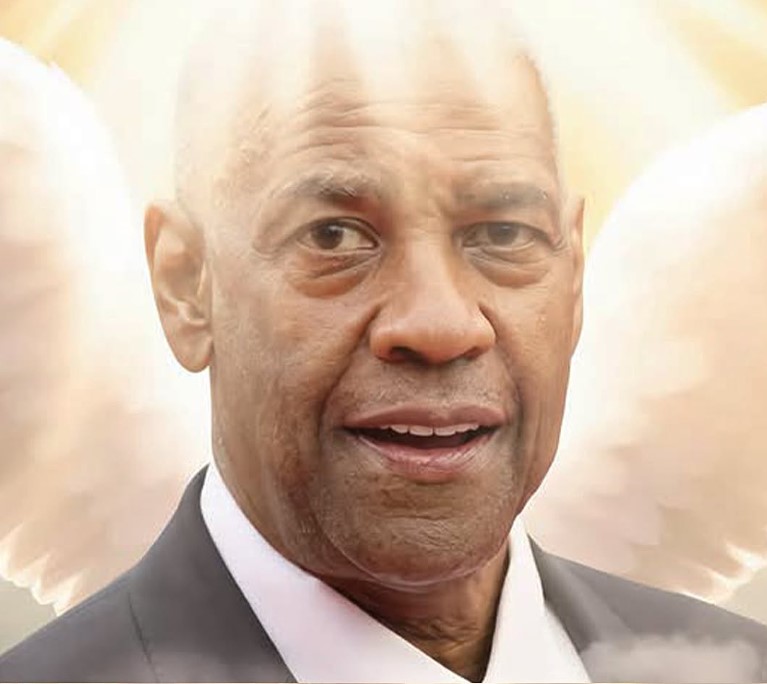
Washington continued approaching new roles as opportunities to discover something. The audience might see a finished performance lasting two hours. The actor had to build the person behind it. That meant understanding how the character speaks, how he moves, what he fears, what he wants, what he hides, and what he might do when nobody is watching. Those details are often invisible to the audience. But they are present in the performance. Why His Characters Rarely Feel Like Copies One of the easiest problems for a successful actor is becoming a copy of himself. Once an actor discovers a particular screen persona that audiences love, there is enormous pressure to repeat it. Washington could have done that.
His natural confidence and commanding presence would have made it easy to play the same powerful man again and again.
Instead, he repeatedly changed the moral center of his characters.
Sometimes the man at the center of the story was trying to do the right thing.
Sometimes he was struggling to understand what the right thing was.
Sometimes he believed he was doing the right thing while causing enormous harm.
That difference is crucial.
Two characters can both walk into a room confidently, speak with authority, and control the people around them.
But one may be protecting others while the other is manipulating them.
Washington understands that distinction.
That is why the same physical qualities can produce completely different performances.
The voice remains familiar.
The presence remains familiar.
But the intention changes.
And intention changes everything.
The Importance of Moral Conflict
Washington has frequently appeared in stories where the central conflict is not simply good versus evil.
It is often one person struggling against another part of himself.
A character may know what he should do but still choose something else.
He may want justice but also want revenge.
He may want to protect someone while simultaneously hurting them.
He may believe he is strong while secretly being terrified.
Those conflicts create drama.
And Washington is particularly effective when a character has something to hide.
He can let the audience see the conflict without explaining it.
A brief pause.
A change in his voice.
A look away.
A moment of silence.
Suddenly, the audience understands that the character is wrestling with something.
That ability gives his performances an internal quality.
The story may be moving forward externally, but something else is happening inside the character.
He Made Leadership Look Complicated
Another recurring element in Washington’s work is leadership.
His characters often find themselves in positions where other people expect them to know what to do.
But real leadership is rarely that simple.
A leader can be respected and still be questioned.
A leader can be confident and still be uncertain.
A leader can make the correct decision for the wrong reason.
A leader can make the wrong decision while believing it is necessary.
Washington’s performances often explore those contradictions.
That makes his authoritative characters more believable.
They are not superheroes.
They are people who happen to have responsibility.
And responsibility changes a person.
It creates pressure.
It creates isolation.
Sometimes it creates arrogance.
Sometimes it creates humility.
Washington knows how to communicate those changes without turning them into simple lessons.
The Quiet Moments Often Reveal the Most
One of the most underrated aspects of his acting is what happens after the major moment.
A character gives a speech.
The room reacts.
The dramatic moment is over.
Then Washington pauses.
That pause can tell the audience what the speech could not.
Maybe the character knows he went too far.
Maybe he is disappointed.
Maybe he is frightened.
Maybe he is pretending to be confident.
Maybe he is completely certain.
The audience has to interpret it.
That is part of the pleasure of watching a mature actor.
The performance does not always provide every answer.
Instead, it creates questions.
What is he thinking?
Why did he make that decision?
Does he regret it?
Is he telling the truth?
Does he believe himself?
Those questions keep the audience engaged.
His Career Survived Changing Hollywood Trends
Hollywood has gone through enormous changes during Washington’s career.
The industry moved from one generation of filmmaking to another.
Technology transformed production.
Digital effects became more common.
Theatrical distribution changed.
Streaming transformed how audiences discover older movies.
Yet Washington’s work remained recognizable.
That is significant because many careers are tied closely to a particular period.
Some actors become icons of the 1970s.
Others are associated primarily with the 1980s or 1990s.
Washington’s career crosses those boundaries.
He became successful in one era and remained relevant in several others.
That requires adaptation.
But adaptation does not necessarily mean changing who you are.
It can mean understanding how to bring the same commitment to a different environment.
Washington did that.
The Characters Became Windows Into Society
Many of his films also work as reflections of larger social questions.
Race.
Justice.
Power.
War.
Prejudice.
Class.
Authority.
Family.
Responsibility.
The movies do not always provide easy answers.
That is important.
Washington’s characters are often placed inside complicated systems.
The individual may want to do something good, but the environment around him creates obstacles.
Sometimes the system itself is corrupt.
Sometimes the character is part of the problem.
Sometimes he does not recognize the problem until it is too late.
These situations give his performances additional depth.
The audience is not simply watching one man’s personal story.
It is watching how that man responds to the world around him.
Malcolm X Remains an Example of Transformation
Among Washington’s most demanding performances, Malcolm X stands apart because the character itself changes so dramatically.
The audience is not introduced to one fixed personality.
It watches a life evolve.
Beliefs change.
Priorities change.
Identity changes.
Understanding changes.
That kind of role requires an actor to avoid becoming attached to one version of the character.
Washington had to allow Malcolm to grow.
That meant changing his physicality.
Changing his rhythm.
Changing his confidence.
Changing his emotional energy.
The transformation could not simply be announced through dialogue.
It had to be visible.
And Washington understood that.
The result was a performance that gave audiences the sense that they were watching a person move through different stages of life rather than watching an actor simply imitate a famous historical figure.
Glory Demonstrated His Willingness to Become Uncomfortable
Glory presented a completely different challenge.
Private Silas Trip is not designed to make the audience comfortable.
He is angry.
He is wounded.
He distrusts authority.
He carries the psychological burden of living inside a system that has treated people like him unjustly.
Washington did not soften those qualities simply to make the character easier to like.
Instead, he allowed the anger to remain.
That decision made the character stronger.
The audience could understand where the anger came from without pretending that the pain did not exist.
It is another example of Washington’s ability to make difficult emotions part of a character’s humanity.
Training Day Turned Familiarity Into Fear
Training Day presented perhaps an even greater challenge.
The audience already knew Washington as a performer associated with strength and authority.
Then the film gave that authority to a corrupt character.
The effect was powerful because familiarity became part of the danger.
Audiences trusted Washington’s presence.
Alonzo Harris exploited that same confidence.
He could charm people.
He could intimidate them.
He could make them believe that he knew what he was doing.
And because Washington was playing him, the character had enormous screen presence.
But beneath that presence was manipulation.
That combination created one of the most memorable villains of his career.
It also showed that a leading man’s image can be used against the audience.
The person they expect to trust becomes the person they should fear.
He Was Never Afraid of Difficult Emotions
Some performers naturally avoid characters who are unpleasant.
Washington often moved toward them.
Anger.
Grief.
Fear.
Jealousy.
Pride.
Guilt.
Obsession.
Desperation.
Moral confusion.
These emotions can make characters difficult to watch.
But difficult does not mean uninteresting.
In fact, difficult characters can sometimes reveal more about the human experience than perfect heroes.
Washington understood that.
His characters do not always make the audience comfortable.
Sometimes they challenge the audience.
Sometimes they force viewers to reconsider their assumptions.
And sometimes they simply show what happens when a person makes one bad decision after another.
His Legacy Is Also About Consistency
There is another quality that deserves attention.
Consistency.
A great performance can happen by accident.
A great career cannot.
One exceptional movie may make an actor famous.
But staying relevant for decades requires something more.
It requires professionalism.
Preparation.
Discipline.
Adaptability.
And the ability to keep working when the excitement surrounding your name begins to fade.
Washington’s longevity suggests that he understood this.
He did not treat success as the finish line.
He treated it as another stage of the journey.
That mindset may explain why his career contains so many different chapters.
He Helped Redefine the Meaning of a Leading Man
The traditional Hollywood leading man was often expected to be physically dominant, emotionally controlled, and unquestionably confident.
Washington brought something more complicated to that image.
His leading men could be strong while still carrying emotional wounds.
They could be authoritative while still being uncertain.
They could be intelligent but wrong.
They could be admirable but flawed.
That made them more relatable.
Strength did not have to mean emotional silence.
Confidence did not have to mean perfection.
Leadership did not have to mean having every answer.
Those ideas became part of the broader image Washington created through his work.
The Audience Does Not Always Need to Agree With Him
One of the most interesting aspects of Washington’s career is that audiences can disagree with his characters and still remain fascinated by them.
That is a major difference between admiration and compelling storytelling.
A character does not need to be right.
He needs to be believable.
If an audience believes that a character genuinely thinks he is right, the story becomes more interesting.
Washington can create that conviction.
Even when the audience sees the character making a terrible decision, the performance can make the motivation understandable.
Understanding is not the same as approval.
And great acting knows the difference.
His Movies Often Leave Questions Behind
The strongest films in a career are not always the ones that provide the easiest answers.
Sometimes the best movie ends and the audience keeps thinking.
Was that character justified?
Could he have made a different choice?
Was he a victim or a participant?
Did he change?
Did he actually understand what he had done?
Could things have ended differently?
Washington’s performances often create that kind of reflection.
The character continues existing in the audience’s imagination after the story has ended.
That is a powerful form of storytelling.
The Meaning of “Iconic” Becomes Clear
The word iconic is used frequently.
Sometimes too frequently.
But there is a reason Washington’s performances are repeatedly described that way.
An iconic performance becomes recognizable beyond its original story.
People remember the voice.
The expression.
The attitude.
The character.
The scene.
Even people who have not watched the entire movie may recognize the cultural image associated with it.
That is what happens when a performance moves beyond the film itself.
Washington has created several characters that achieved that level of recognition.
And each one contributes another layer to his legacy.
The Future Will Keep Reinterpreting His Work
Every generation watches old movies differently.
A performance released decades ago can acquire a new meaning when viewed through a different cultural moment.
Some themes become more relevant.
Others become more complicated.
Audiences notice details that earlier viewers may have overlooked.
That is another sign of lasting art.
It can be revisited.
Washington’s work is likely to continue being examined in that way.
Not because every movie is perfect.
No actor has a perfect filmography.
But because the performances give audiences enough material to discuss.
And discussion is one of the foundations of legacy.
The Greatest Achievement May Be Longevity With Meaning
Hollywood has no shortage of famous names.
Fame can arrive quickly.
It can also disappear quickly.
Longevity is different.
To remain relevant for decades, an actor has to give audiences a reason to keep watching.
Washington’s reason has never been simply nostalgia.
People continue watching because the performances still have energy.
They still contain conflict.
They still feel emotionally immediate.
They still reveal something about the characters.
And that is why his career remains more than a collection of old successes.
It remains active in the minds of audiences.
The Story of Denzel Washington Is Ultimately a Story About Craft
At the beginning of his career, he was another young performer trying to find his place.
Decades later, he had become one of the most recognizable and respected actors of his generation.
The transformation was enormous.
But perhaps the most important part is that the fundamental process never changed.
Learn the character.
Understand the story.
Find the emotion.
Make the audience believe.
Then do it again.
And again.
And again.
That repetition does not make the work ordinary.
It makes excellence possible.
Because acting, like any craft, becomes deeper through experience.
Washington’s career shows what happens when an actor continues treating that craft seriously even after the world has already decided that he is successful.
A Legacy Still Being Written
There is a temptation to talk about a legendary career as if it has already ended.
But a living artist’s legacy is never completely finished.
There can always be another role.
Another performance.
Another collaboration.
Another character that changes how audiences see the actor.
That uncertainty is part of what makes a long career fascinating.
We know what Washington has already accomplished.
We do not know what audiences will remember most strongly decades from now.
Perhaps it will be one of the performances already considered legendary.
Perhaps it will be a quieter later role.
Perhaps it will be a performance that has not even happened yet.
What we can say is that the foundation is enormous.
Decades of work have already created a legacy strong enough to survive individual films.
The Name Became Bigger Than the Movies
Eventually, an actor’s name can become a form of shorthand.
When audiences hear Denzel Washington, they already expect something.
They expect presence.
They expect intelligence.
They expect intensity.
They expect a character with something important at stake.
But the most interesting thing is that those expectations can still be challenged.
That is what happened with Training Day.
The audience thought it knew what Washington represented.
Then he showed them something else.
That willingness to challenge expectations is part of what kept his career interesting.
The Final Measure of a Career
Years from now, people may forget exact release dates.
They may forget box-office numbers.
They may forget some awards.
But they will remember scenes.
They will remember characters.
They will remember how a particular performance made them feel.
That is the final measure of an actor’s career.
Not simply how famous the actor became.
But how deeply the work remained inside the audience.
Denzel Washington’s career has produced an extraordinary collection of those memories.
A soldier standing against injustice.
A historical figure undergoing transformation.
A coach demanding more from his players.
A lawyer confronting his own prejudice.
A boxer refusing to surrender his identity.
A detective whose charm hides corruption.
Different characters.
Different stories.
Different worlds.
But the same commitment to making them believable.
And That Is Why His Story Matters
Denzel Washington’s story is not simply the story of an actor who became successful.
It is the story of an artist who continued to evolve after success arrived.
He did not allow one role to define him.
He did not allow one genre to contain him.
He did not allow one version of himself to become permanent.
Instead, he continued searching.
Searching for characters.
Searching for stories.
Searching for challenges.
Searching for the moments that could make an audience stop watching the actor and start believing in the person.
That is the difference between performing a role and creating a character.
And that difference is visible throughout his career.
From the early days of television to decades of major films, Washington built his reputation one performance at a time.
The result is not simply a successful career.
It is a body of work that has become part of the history of American cinema.
And perhaps that is the greatest compliment an actor can receive.
Not that he was famous.
Not that he won awards.
Not that he appeared in successful movies.
But that when audiences think about the characters he created, they still remember them as people.
People who struggled.
People who fought.
People who failed.
People who changed.
People who carried responsibility.
People who made choices.
People who lived with the consequences.
And people who, for a brief moment on screen, felt completely real.
That is the lasting power of Denzel Washington.
And after decades of unforgettable performances, his legacy is no longer something waiting to be created.
It is already here.
Still being watched.
Still being discussed.
Still being discovered by new audiences.
And still reminding viewers why great acting can survive long after the cameras stop rolling.
CLICK HERE TO CONTINUE READING THE LAST NEXT 👉 What His Career Teaches About Lasting Success


One Comment on “PART 3- The Man Behind the Characters Became Part of the Story”