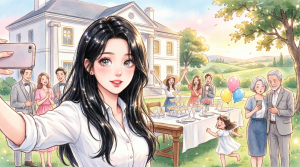
Part I — The Uninvite
The text from my father arrived like sleet—small, cold, late.
We’re doing a small Thanksgiving this year. Just your sister Hannah, her husband, and their kids. Hope you get it. — Dad
There was no flourish. No apology. It landed on my screen at 6:12 a.m., the hour my ranch in Wyoming turns the world cobalt and lets the antelope own the fields for five more minutes. I stood on the timber porch with a mug and watched frost knit the meadow shut. Wind pushed down from the Absarokas and the lodgepole pines murmured the thing they always tell me when I think I’ve seen it all: not yet.
I typed back, Enjoy yourselves. Then I put my phone face down on the porch rail and let the cold make my lungs hurt. It’s a trick I learned after my first company failed—let your body remind you there are places where you’re still alive.
My name is Charlie Price. I’m thirty-five and the kind of American success story that makes people nod at cocktail parties and then google you in the restroom. Tech founder. Two addresses: a steel-and-glass loft in Chicago with a view like a spreadsheet and a ranch outside Cody, Wyoming, where the sky makes deals with no one. I built my empire in the dark hours while other people were loved loudly.
That thing you’ve heard about middle children craving attention? It doesn’t include boys like me. I didn’t crave. I learned to refill the ice bucket at my sister’s wedding and fix a router while my parents took pictures of my niece tearing paper. I learned to build my belonging board by board.
When I was fourteen, I won a regional robotics contest. I soldered the night before until my fingers smelled like pennies and burned plastic. I came home with a certificate still warm. “That’s cool, Charlie,” my father said without lowering his newspaper. “Your sister’s solo was flawless. They’re talking about Juilliard.” My certificate slid under a pile of bills and hunger.
“Neat,” my mother said when I built a voice-command drone at seventeen. “Hannah’s leading the debate team to nationals.” She kissed me on the forehead the way you kiss a dog when you leave for work.
Caltech mailed me an acceptance letter in a fat envelope. “That’s a long way from home,” my father sighed. “If you’re sure about…all the tech stuff,” my mother added, eyes already on the calendar for Hannah’s recital. My sister texted proud of you, bro, and that was the end of that scene. The play changed. I kept the prop.
At her wedding, Ethan chose six groomsmen. I poured punch and tightened my tie until it felt like a dare. He hugged his lacrosse coach on the dance floor while I found the thermostat and turned it down so the cake wouldn’t melt.
Holidays were instructions. My parents would ask how “your tech thing” was going before turning joyfully to the better story. I sat on the carpet with a tangle of cords while my sister’s children tore through boxes and my mother said, “Look at that!” like miracles had standards.
At twenty-eight, my first startup cratered in fifteen months. I lived on ramen and shame and optimism made of duct tape. Fifty thousand dollars in debt and a radiator that made steam taste like defeat. I called my father and asked for a loan. Ten thousand to keep the servers up. “I warned you, son,” he said. “Not everyone is wired for risk. Your sister’s running her own firm. Steady. Respectable.”
After I hung up, my radiator hissed like it had something to say about respectability. I sat in my peeling shoebox and let the anger leave the room so I could hear myself breathe.
I took a job. Three years of going from anonymous coder to director because when you try to earn your way into your own house long enough, you get good at tightening bolts other people loosen to feel important. But the hunger was still in me. It doesn’t leave you. You learn to feed it with the right things.
I quit at thirty-one and sank everything—every line item—into a second startup. TitanLock. A data encryption platform so simple on the surface it looked like magic and so hard underneath it felt like hubris. I worked twenty-hour days until the keys left marks on my face. I knew the security guard’s middle name. I stopped heating up all my meals and called it intermittent fasting.
“Two months,” I told myself during the evenings I could feel failure in the ductwork. “Two more.” Hospital chain. Retail giant. Government agency. The logline writes itself now. Contracts piled up in my inbox like hailstones.
I told my parents “it’s okay” when they asked. “Keep trying,” Hannah said, the way you say it to toddlers on balance bikes. I learned to smile and change the subject strategically—ask about the children, admire a finger painting on the fridge, praise my brother-in-law’s grilling like he’d invented heat.
Last November, a global conglomerate walked into the office with suits so soft they didn’t make noise and said a number that made the electrons cling to each other differently. $500 million. I signed documents that felt heavier than anything I’d held since the second before my first breakup. Then I got into a rideshare and laughed until it hurt and then I cried because I couldn’t remember when I had last asked to be held.
I bought a loft in Chicago with lines you can only draw if you can buy art and the windows to hang it in. Then eighty acres in Wyoming because I needed to stand somewhere vast and honest and let the sandblasted part of my heart stop trying to get invited to living rooms. Eight million dollars. Architects. A house manager named Laya with a practical ponytail and questions more precise than mine. Chef Marco for “when you decide to stop eating bagels in front of your fridge,” Laya said, one eyebrow at a right angle.
By October, the ranch was a cathedral with raw beams and hearths big enough for the stories I wanted to live. Windows ten by twelve, framing the mountains like half-forgiven fathers.
I paced the hall and pictured my family showing up—my mother’s mouth opening into the shape she saves for the successful other children of her friends, my father clapping me on the shoulder and saying, “We knew you had it in you,” Hannah asking for the tour and then for the designer’s number. I wanted it. I hate admitting that, but I am confessing.
And then the text landed. Small Thanksgiving. Just Hannah’s family. Hope you get it.
Something unhooked then like the knot in a muscle that’s been holding your posture wrong for twenty years. It wasn’t rage. It was shade. I stood on the porch and thought: Not once more.
I dialed. Uncle Ray in Iowa, who lent me two hundred dollars when my car ate its timing belt and never asked for it back. Aunt Clara in Milwaukee, who sent me blankets for my dorm when my financial aid didn’t cover anything soft. I called my Caltech cohort, the ones who fed me Thai food when I forgot days had meals. I called TitanLock’s first five employees—people who believed in me when my burn rate looked terminal.
“Why are you free for Thanksgiving?” I asked, crueler than I meant to.
“Your parents wanted…intimate,” Aunt Clara said after a sad laugh. “Intimate enough that Ethan’s parents wouldn’t have to meet the side of the family that lives in reality.”
“My redlined invitation is probably in their spam,” Uncle Ray muttered.
I invited them to Wyoming. All of them. I chartered jets for the elders and sent cars for the ones who don’t like airports. Laya blocked off rooms in the main house and reserved the lodge down the hill. Marco wrote a menu on a chalkboard: herb-crusted turkey, wild mushroom risotto, fennel-citrus salad, pecan pie glossy as amber. I bought gifts like the best version of Santa Claus: a leather-bound journal for Aunt Clara, a drone kit for my cousin’s son who likes to take radios apart and leave them like roadkill if he can’t put them back together.
Two days before Thanksgiving, Hannah called. “Hey, little brother! What are you doing for the holiday?”
“I’m covered,” I said, my voice with a steel lining I didn’t recognize.
“With who?” She put all her vowels into the question as if she could widen them enough to fit inside.
“Family. The kind that shows up.”
She made a noise that had been my name once. “See you at Christmas,” she said without meaning it, and I hung up because the whole point of this was boundaries.
Thursday morning, I was up before dawn with Marco running the ovens like he was conducting an orchestra. Laya moved through the house with lists and a headset, catching potential disasters before they dreamed of happening. The photographer I hired—Sam, who shoots weddings and wars—arrived with three cameras and a quiet respect for people eating their first comfortable meal in months.
The first car pulled up at nine. Uncle Ray stepped out and stopped walking. “Charlie?” he said, half question, half prayer. His voice caught and so did mine. “This is mine,” I said out loud for the first time.
By noon, the ranch hummed with the thing my childhood didn’t have—sustained attention. Kids tore across the lawn with a football. My Caltech friends stood around a fire pit and argued about code and how it is a religion. Aunt Clara turned slowly in the great room and ran her hand along the banister like it was a dog she wanted to know better.
At three, we gathered at the tables under the antler chandelier my designer tried to call gauche until I told her to go outside and look at the names the sky calls itself. I stood and raised a glass. My throat burned in that forgiving way.
“This is for the people who saw me when it cost them nothing,” I said. “And for the ones who loved me when it cost them something.”
Marco brought out the turkey on a board engraved with the ranch’s name. Aromas layered—sage, butter, roasted root vegetables sweet with caramel.
We went around the table naming gratitude like we could pull it from the air and make more of it just by saying it. “Family that doesn’t give up,” Uncle Ray said. “Bonds that survive time,” Leo from Caltech added, earnest. When it was his turn, Grandpa Frank stood up without hands. He wore the old leather jacket he refuses to retire. His voice still had tobacco in it.
“I’m thankful for the kind of man who rises from nothing. For the stubbornness that looks like stupidity until it looks like a house. For a grandson who built a kingdom and didn’t put a moat around it.”
I lowered my head because there are things you can’t hear while looking someone in the eye.
Later, Instagram did the thing it always does—made private joy a public referendum. Sam’s photos lit up feeds from Chicago to Cheyenne. My phone buzzed against the oak like a trapped insect. Hannah’s text popped up.
Holy crap, that place. You’re rich. Mom and Dad are losing it.
I showed Grandpa Frank. He grinned without teeth. “Good,” he said. “Let ‘em sweat a little.”
We ate and drank until the edges of the room felt like they were supporting us back. When the house quieted, I went out under the stars with my friends and learned again the words the Milky Way uses for home.
Friday morning, my phone rang. “Charlie,” my father said, heavy with righteous anxiety. “What the hell? Pictures of you in some palace with your grandfather. He skipped Thanksgiving — lied about the flu — to go to you?”
“He was done with your plans,” I said. “I invited him. And everyone else you cut to make Ethan’s parents comfortable.”
Silence. It lasted long enough for the wind to remind me how far we were from any of the places we used to fight. My mother came on the line, voice small. “How did you afford this?”
“I sold TitanLock,” I said.
“For what, a couple million?” my father scoffed like there was a right way to receive a miracle.
“Five hundred,” I said.
“Five hundred what?” my mother asked.
“Million.”
They made a sound together that made me forgive them and not. “Why didn’t you tell us?” my father asked, hurt the way children are when they miss a magic trick.
“Last Easter,” I said. “At the table. I said my company was done.” I did not add that they heard my niece ask for more peas and no one asked me what “done” meant.
“So you fly the whole family out there?” my father snapped. “To humiliate us?”
“No,” I said. “To spend Thanksgiving with the family you wouldn’t invite. You canceled on forty-five people to impress Ethan’s parents. You didn’t want us? I built another table.”
“Put Hannah on,” Grandpa Frank said without asking if I had them on speaker. “And leave it.”
“What are you doing interfering?” my father snapped, the old tone back.
“I’m doing what you forgot to,” my grandfather said. “Charlie built this with his hands. You should be proud, not jealous. You raised a son who made something out of the silence you gave him.”
“We’re not jealous,” my mother whispered, but it sounded like a person trying on a dress she can’t afford.
“We’ll talk soon,” my father said in the tone that always meant do what we want.
“Maybe,” I said, and hung up because I don’t have to end calls like a child anymore.
The weekend kept itself. Snowball fights. Poker until two. Stories I didn’t know my aunts had because no one asked them at tables where the grandparents held the floor with their own youth. Grandpa Frank stayed the week. He wanted to drive, so we did—past shuttered diners and good ones, into towns with one gas station and more opinions than people. He bought a cowboy hat at a pawn shop because “if I’m going to embarrass you, I might as well commit.”
At the airport, he put his big hand on my shoulder and squeezed with the tenderness only men who have seen their own death can manage. “Make them earn it,” he said. “Respect. Their seat. Your forgiveness. Make ‘em earn it.”
On Tuesday, Hannah texted.
I’ve always envied you.
You took risks, fell, got back up.
I just followed Mom and Dad’s playbook.
I didn’t see how they sidelined you.
I’m sorry.
I stared at my phone a long time. The boy who soldered a little robot and put the certificate on the counter under the bills wanted to text back immediately and say, It’s okay. Come over. The man who built a ranch in Wyoming and bought flights for every aunt they forgot said, Not yet.
I put my phone face down on the porch railing. The wind translated the pines. They said something like this: There’s time.
Part II — The Gate and the Guest List
“Who’s actually coming?” Laya asked on Monday. She was kneeling on the stone floor, rolling up a runner like it owed her money. Laya runs the ranch the way air runs lungs: quiet, precise, essential.
“Aunt Clara and Uncle Ray,” I said, counting on my fingers because I like the ceremony of it. “Grandpa Frank, if he can sneak past his pride. Cousin June and her twins. Leo, Mei, and Omar from Caltech. The TitanLock five. Two old neighbors from my first apartment—the ones who fed me without telling me I looked thin.” I paused. “Greg from the bouldering gym, because he listens when I talk about ceilings I can’t see.”
“Your parents?” Laya asked. She keeps questions the way surgeons keep scalpels—sharp, necessary, not for show.
“No,” I said. “They’re busy having a small Thanksgiving without me.”
Laya didn’t say anything like “I’m sorry,” which is why she’s good at this. She wrote down numbers. She asked me what I wanted the tables to feel like. “Feel?” I asked, caught.
She nodded, pen cap in her mouth. “Formal can be soft. Casual can be cold. What does your version of respect feel like?”
“Warm,” I said. “We do name cards, but we also hand people bread.”
“Got it,” she said. “Respect with gravy.”
Chef Marco wandered in with a bag of sage. He is a tall Italian who swears he was born on a ferry and that salt is fate. He turned the bag upside down and spread the green leaves across the island like a magician revealing his trick. “The turkey will be faithful,” he announced. “The pie will be dangerous.”
“Define dangerous,” I said.
“People will say ‘I’ll have a sliver,’ and then they will regret their lies,” he said, deadpan. “Also we will deep fry Brussels sprouts.”
When you build a house for other people, you learn to measure not with a tape but with appetite. I walked the rooms, felt what they were hungry for. The den wanted a pile of blankets and a movie you can talk over. The great room wanted a moment of quiet before the chaos. The porch wanted children’s hands pressed to the frosted glass to make smudges I would love.
Laya asked me to approve the final guest list. “Forty-five,” she said. “Manageable. No one who needs a throne.”
We printed little cards with names and placed them on the plates. The stack for the kids had a dinosaur on it because I am still that boy and will forever put a dinosaur where I can. We put Grandpa Frank at the head because he would move anyway. We put Aunt Clara near the kitchen because she cannot sit and must fuss every fifteen minutes. We put the TitanLock five together because they deserved to look around and say to themselves, We built a piece of this.
I debated ordering place cards for my parents out of principle, leaving the seats empty for effect, staging a lesson. Laya must have read my face. “Don’t,” she said gently. “You don’t need ghosts at the table to make the point.”
“Point?” I asked, defensive like a teenager at his first philosophy seminar.
She smiled. “That you built this for the people who did the smallest thing right. Not to perform what the biggest thing wrong looks like.”
I nodded because she was right and because I have learned to seek truth wherever it shows up, even in a house manager who scolds like an older cousin.
On Tuesday, the first jet left Chicago. Seeing Aunt Clara in my ranch driveway made me understand why people in old paintings look toward the horizon like there’s a ship with their life on it. She cried. I cried. Uncle Ray patted my back like he was burping me and then pinched my cheeks because some habits are immune to wealth.
By Wednesday night, the house sounded like progress. Children ran into furniture and survived. Uncles compared knee surgeries. My Caltech friends set up a telescope and reminded everyone that looking up is the oldest human trick for remembering we are small and therefore might as well be kind.
Thursday morning, Marco played Sinatra because he thought it would make the yeast behave. It did.
At the last minute, Laya whispered, “We’re short two beds,” like that’s a thing that could scare us now. We moved chairs. We improvised. We are from people who sleep on floors and call it a story.
The guests poured in. Mei brought her toddler who politely pointed to everything and said, “This?” three hundred times. Omar told the story of the day the TitanLock servers almost melted, and we used fans and faith to keep them from folding. Aunt Clara made a team to polish silver and told them their hands looked like they had been paid to study the saints.
At three, we sat. The room held us the way good wood does when it knows your back better than you do. I stood and talked about chosen family and how chosen doesn’t mean “better than” blood, just blood that is not an obligation. I named people. I watched them do that adult thing where they cry without water. I watched my grandfather watch me and saw something I haven’t seen since I was nine and he taught me to fold a napkin like a swan: pride without suspicion.
We made it through turkey intact. We made it through toasts without a fight. It was exactly as I had planned: show my father what it looks like when you are unmissable.
And then Instagram did its work.
Hannah’s text came halfway through coffee.
Holy crap, that place.
You’re rich.
Mom & Dad are losing it.
I stared at it too long. Grandpa Frank stuck his fork in my pie and groaned in pleasure. “Tell them,” he said.
“Tell them what?” I asked.
“That you built a life their envy can’t stand in,” he said. “And that their seat is there if they can stand up on their own.”
Friday morning, my father did not text. He called.
“Charlie,” he said, clipped. “What the hell.”
“You’re seeing it,” I said. “What I built.”
“You invited everyone,” he accused. “Everyone we decided wasn’t…compatible.”
“The word you’re missing is inconvenient,” I said. “They are inconvenient for your narratives. Not for my table.”
“Where did the money come from?” My mother’s voice slipped into the line like a cold hand.
“I sold TitanLock,” I said.
“For how much?” my father demanded.
“Half a billion.”
Silence. Then the sharp inhale of a man whose child just became equal and he doesn’t know what to do with the air.
“Why didn’t you tell us?” my mother asked.
“I did,” I said. “Last Easter, when I said we signed the deal.” You asked me to help my niece find the chocolate egg in the bookshelf instead.
“You did this to humiliate us,” my father said. “To make our Thanksgiving look small.”
“I did this so Aunt Clara wouldn’t eat alone,” I said. “So my friends who fed me could eat something they didn’t pay for. So Grandpa doesn’t die watching you squint to see me.”
“Let me on,” Grandpa barked from the sofa. “I’ve got batteries left.”
“You ignored this boy until he turned into a man where you couldn’t see him,” he said into the phone. “You put your daughter on a pedestal so high she can’t climb down. You taught your son to wait in the kitchen and call it love. He built a house that could hold your regret. Get in the car or don’t. But stop acting like the wind is the problem because you keep leaving the door open.”
“We’ll talk,” my father said, retreat the only tactic he knows. He hung up like a surrender disguised as a plan.
We went for a hike after. The kind where the land changes under your boots every quarter mile and the sky makes your complaints small. Leo picked up a branch and used it as a staff because all men have a little wizard in them. We came across a herd of elk and stopped talking to honor their rights as senior citizens of the field.
At the overlook, the ranch spread below us like an apology. “You going to let them back in?” Mei asked, not unkind.
“Yes,” I said. “When they stop assuming walking into the room means they own it.” I watched the river cut the hill into the shape it wanted and thought about how patience and persistence look the same from far away.
Part III — Conditions
They came in December. They stood on my porch with hats in their hands like freshmen waiting to be told how the cafeteria works. My mother clutched a pie tin like it was a passport. My father wore a coat he bought on sale and a look he didn’t.
“Come in,” I said, voice my own.
“Wow,” my mother breathed, eyes traveling up the timber beams. “Charlie.”
“It’s good work,” my father admitted grudgingly, which is a compliment disguised as a complaint. “You always did make things too sturdy.”
Laya appeared at my elbow like a host on a stage. “Welcome,” she said. “Shoes off, please.”
They bent without argument. Victory is sometimes four inches of leather left by the door.
We walked through the house. We didn’t crowd around the stove. There was no grand reveal. I showed them the great room and the den and the heart of the place—the kitchen Marco refused to let look precious. My mother ran her hand over the island the way a woman touches a bed she knows she’ll sleep well in. My father touched the fireplace mantle with his knuckles. He cleared his throat. “How did you know to choose this stone?” he asked, genuine.
“I asked the mason,” I said. “And then I listened.”
We sat. Not at the big table. In the den. It felt like a doctor’s office where the news was not going to kill you. I told them the terms.
“You will not compare me to Hannah,” I said. “In this house or in your car on the way here or in your head when you go to sleep.”
My mother started to protest. I raised a hand. Boundaries are fragile when they are new. “If you think ‘Hannah would have picked better sconces,’ say ‘These sconces are not to my taste.’ And leave it there.”
My father laughed unexpectedly. “You always were precise,” he said. “It’s a…trait.”
“It’s a safety,” I said. “I need it.”
“You’re right,” my mother said, which is not how that sentence ever sounded in my childhood.
“We will not ask about your finances in a way that is about our pride,” my father added. “We will ask if you need anything and believe you when you say no.”
“You will come to Wyoming for Thanksgiving next year,” I said. “If you are proud to sit next to Aunt Clara and Uncle Ray and the rest. If not, you can have small Thanksgiving at home with Hannah’s family and we will all survive.”
My mother cried then. Three tears, not performative, and then she wiped them away with the back of her wrist like a woman who had things to do. “Okay,” she said.
They stayed for three hours. They did not stay for four. My father handed me an envelope on the way out. Inside: a check for $1,000. “To start,” he said, face red with the complicated act of giving a son money because you owe him and because you are you.
“You don’t—” I began.
“I do,” he said. “And even if I didn’t, I’d want to.”
When they left, I went out on the porch. The sky was a slice of pie you have to eat fast before it falls. Laya handed me a mug and looked out with me like we were partners in a hotel.
“You did good,” she said.
“I did something,” I said.
“Same thing,” she said.
That night I texted Hannah.
The door is open. It’s not automatic. But it’s not locked.
She sent back a heart and then, two minutes later:
I’m in therapy.
It sucks.
I’m starting to see it.
I wrote back:
Good.
And felt exactly what the word held.
Part IV — The Table We Build
Thanksgiving a year later began with a calf in the north pasture deciding the fence was a suggestion. Uncle Ray and I put it back with a rope and humor and the old humility you get from animals who know more about your weaknesses than your friends. We were sweaty and laughing by ten. It was the right way to start.
My parents arrived in a rented SUV. My mother wore a sweater that made her eyes kind. My father wore the coat again. My sister and Ethan rolled up two hours later in a little rental car that looked like penance. They got out like people in witness protection.
“Hey,” I said.
“Hey,” Hannah said.
We hugged like you shake hands with someone you met at the DMV—awkward, necessary. Laya took their bags and handed them an itinerary. “Don’t worry,” she said. “It is a gentle schedule.”
At dinner, I put them between people who know how to make new humans feel like they’ve been here long enough to be comfortable but not long enough to forget to say thank you. Aunt Clara handed Hannah mashed potatoes and a second chance. My Caltech friend Leo told my father how we almost lost the government contract because my pride made me write code when I should have written an apology to the firewall team. My father laughed too loud and then corrected it. These are things you can get better at.
We went around the table with gratitude again. My mother went stammer-dry and then said, “I’m thankful for all the ways I was wrong.” The room stayed very still because we knew a sincerity so large could spook easily and run. My father said, “I’m thankful for work.” He looked at me and then added, “And that my son is not work.”
After pie, I took my father to the back room. There was a gift for him on the table. “Open it,” I said. He did. It was a photo in a frame—me at fourteen holding the robotics certificate, my face confused because no one seemed to know what to do with my happiness. He started laughing, and then he didn’t, and then he put his hand over his mouth and walked away from the table so no one would see.
He found me on the porch later. “I wish I could go back and tell him I was proud,” he said.
“You just did,” I said.
He nodded. “Okay.”
Hannah came out after midnight with two mugs of something that steamed and smelled like forgiveness. “I’m trying,” she said.
“I see that,” I said.
“I hated you for years,” she added in case we were going to pretend otherwise. “Because you made choices I was afraid to. Because Mom and Dad made our roles so clear. Because you got to be free and broke and I was never either.”
“I hated you because you were loved and didn’t have to ask for it,” I said.
We looked at the sky and let ten thousand unspoken sentences become starlight.
“Christmas?” she asked.
“You send a group text next week to Aunt Clara and Uncle Ray and the TitanLock five,” I said. “You invite them to your house. If you can do that, then yes.”
She nodded. “Okay.”
The next morning she did it. Aunt Clara texted me separately. She gets it, she wrote. We’ll bring rolls.
A week later, my parents also sent a group text:
No small Thanksgiving again.
If our table excludes anyone for our comfort, we’re eating alone.
My phone buzzed with a message from a Chicago number I didn’t recognize. Why wasn’t I invited? —Ethan’s father. I did not reply.
There is no cinematic triumphant ending to any of this. There are only repetitions. You either keep them or change them.
So in the end, this is what I built: a table. A table for people who show up and people who learned to. A seat for the version of myself who once waited in the kitchen and called it love. Conditions, yes. But not chains.
And here is the confession I promised: I didn’t invite everyone they ignored to spite my family. I invited everyone they ignored so the child in me would see what the man forgot: he was never waiting for their permission. He was waiting for a door that opened when he pushed from his side.
Next Thanksgiving, we will do it again. There will be a calf who tests the fence. There will be a pie Marco calls dangerous. Uncle Ray will tell the wrong story at the wrong time in the right way. Aunt Clara will steal the last Brussels sprout. My mother will bring extra napkins. My father will start a sentence with “Remember when…” and Hannah will add a detail only I know while we both look at each other like we’re remembering a map no one gave us but we found anyway.
At the end of the night, after chairs are pushed back and Laya says, “You people made a show of it,” and the house sighs, I will go out to the porch, hold a mug against my palms, and tell the mountains what I tell them every year now: Thank you for not needing my approval to do what you do. Then I will text Aunt Clara a photo of the messy table and my grandfather’s empty glass and add:
See you at Christmas.
And she will send back a heart and We’ll bring rolls and the empire I forged will hold, not because it cost five hundred million dollars, but because it cost me my old need and paid me back in chairs I decide who sits in.
If you’ve ever been cut out of your own family’s holiday, if your name landed under a pile of bills, if you stood on a porch with your phone face down because you couldn’t bear to let hope ruin you again, here is the only part that matters: build your table. Invite the people who were never inconvenient. Leave two chairs open for the ones learning. Make the pie dangerous. And when the wind hits, be the house that holds.
Part V — The Christmas Test
Hannah’s group text landed on a Tuesday, at 7:03 a.m., which told me she’d typed it while the house was still quiet and her courage was still warm.
Christmas Eve at our place. Everyone. Clara, Ray, June, the TitanLock crew, your friends. No “small” anything. We’ll make it work. Please come. — Hannah
Below it came a parade of replies, like people cautiously stepping onto a bridge they’d heard might hold.
Aunt Clara: I will bring rolls. And a ham if your oven is scared.
Uncle Ray: I’ll bring my good coat and my bad jokes.
Leo: I’m coming for the rolls and the moral victory.
Mei: Toddler says “This?” about the invitation. I interpret that as yes.
I stared at the screen until the blue light made my eyes sting. A year ago, my sister wouldn’t have invited anyone without checking with our parents first, the way you check the weather before you plan a picnic. Now she was making the plan and daring the sky to behave.
I typed, I’ll be there. And then I deleted it. Not because it wasn’t true. Because the boy in me wanted to sprint into that text like it was a hug I’d been denied.
I set the phone down and walked outside. Wyoming was crisp enough to feel honest. The barns were silver in the morning, the mountains stacked like clean plates, and the horses were already negotiating with the hay. Somewhere in the south pasture, a raven complained about something I’d never understand.
Laya found me on the porch with my hands in my pockets like a man pretending he wasn’t anxious.
“You’re going,” she said.
“It’s a test,” I admitted.
“Everything is,” she said. “At least this one has cookies.”
On Christmas Eve, I drove into town and flew out. Chicago’s airport smelled like cinnamon pretzels and mild panic. My parents met me at baggage claim.
My mother hugged me too long, then pulled back and looked at my face like she was trying to memorize the shape of it. “You look…good,” she said.
“I sleep,” I said. It was a small miracle.
My father clapped my shoulder with a carefulness that made it clear he’d practiced restraint in front of a mirror. “Merry Christmas,” he said. Not the old version that meant, behave. The new version that meant, I’m trying.
Hannah’s house was in a neat subdivision with wreaths like competitive sport. The driveway was packed with cars. Through the front window, I saw bodies moving, heard laughter before the door even opened. A table in the foyer held name tags and a little sign in Hannah’s handwriting: If you’re here, you belong.
When the door swung wide, Ethan stood there holding a tray of deviled eggs like an offering. He was still handsome in a way that suggested he’d been born in good lighting. He smiled too hard at first, then recalibrated. “Charlie,” he said. “Glad you made it.”
“Me too,” I said, and I meant it, which surprised me.
Hannah appeared behind him, flour on her cheek like she’d been doing real work. Her eyes got shiny. “Hey,” she said.
“Hey,” I said, and we hugged. It was not the DMV hug this time. It was awkward, still, but it had intention. Like two people lifting the same heavy thing.
Inside, Aunt Clara was already in the kitchen directing traffic without permission. “Move that spoon,” she told Ethan, “unless you want your eggs to taste like regret.”
Uncle Ray held court in the living room, telling Leo and Omar about the time he tried to deep-fry a turkey and “almost met the Lord personally.” June’s twins were on the floor building a tower of wrapping paper tubes. Mei’s toddler stood in the doorway to the dining room pointing and saying, “This? This? This?” as if cataloging the universe for later.
And then I saw them: Ethan’s parents.
His mother, Marjorie, stood near the fireplace in a cream sweater that looked expensive enough to have opinions. His father, Dennis, had the posture of a man who’d never carried a box unless someone was watching. They were sipping something sparkling out of flutes, both of them smiling with the thinness of people who believed smiling was manners and manners were armor.
Dennis’s gaze snagged on me and held, like a fisherman feeling weight on the line.
“Charlie,” Hannah said, as if presenting me at a recital. “This is Dennis and Marjorie.”
Dennis stepped forward, hand out. “We’ve heard…a lot,” he said, the pause between heard and a lot heavy with implication.
I shook his hand. “All good things, I hope.”
Marjorie’s smile tightened. “Ethan mentioned your…ranch.”
“It’s home,” I said.
Dennis’s eyes flicked toward my coat, my watch, the way I carried myself now. “Shame we didn’t see it last year,” he said, lightly, as if it was a scheduling hiccup and not a decision.
Hannah’s shoulders squared in my peripheral vision. “Last year we did a small thing,” she said. “This year we’re doing the right thing.”
It was the first time I’d ever heard my sister say a sentence that didn’t ask for permission at the end. Dennis blinked. Marjorie took a sip of her drink like she was swallowing a retort.
Dinner came in waves. It wasn’t Thanksgiving, but Hannah had decided to make it feel like a holiday that could heal. Turkey, potatoes, green beans, a ridiculous amount of bread because Aunt Clara believes bread is proof of love.
Halfway through the meal, Dennis leaned toward me. “So,” he said quietly, “you really own that property outright?”
I set my fork down. The old Charlie would’ve answered, would’ve tried to be likable, would’ve offered up numbers like treats. The new Charlie let silence do some of the work.
“I’m here for Christmas,” I said. “Not an audit.”
His face flushed, surprised at being redirected in public. My father’s eyes darted between us like a referee. Hannah’s hand tightened on her water glass.
Dennis chuckled like I’d made a joke. “Of course,” he said.
Later, gifts. The kids screamed the way only children can, fully confident the world owes them joy. Aunt Clara cried over a sweater June had knitted. Uncle Ray pretended his gift was “just a little thing” and then it turned out to be a restored radio from 1952, because of course it was. Mei’s toddler pointed at my wrapped box and said “This?” and everyone laughed like it was the best line in the world.
When it was my turn, Hannah handed me something small. A framed photo.
It was me, seven years old, on our parents’ old couch, holding a book about space. In the background, Hannah was in a tutu, mid-pose. Everyone’s eyes were on her. But in the photo, I was looking up at the camera. Not smiling. Just looking. Like I was asking if anyone could see me.
“I found it in a box,” Hannah said quietly. “I didn’t know…how many times you looked like that.”
My throat went tight. “Thanks,” I managed.
Dennis’s chair scraped back abruptly. “Marjorie and I should go,” he announced, loud enough for the room to hear.
Ethan blinked. “Dad, it’s not even—”
“We have an early morning,” Dennis said, and I understood then: this was the moment he refused to lose control of the narrative. He couldn’t stand being in a room where the table was not arranged around his comfort.
Hannah stood. “If you go,” she said calmly, “you go. But don’t make it a statement. We’re done with statements.”
Dennis stared at her, startled by the spine she’d grown. Marjorie’s cheeks reddened. Ethan looked like a man discovering his wife is braver than he thought.
Dennis sat back down, stiff. “Fine,” he said, as if allowing us the privilege of his presence.
I caught Hannah’s eye and gave her the smallest nod. She exhaled, just once, like she’d been holding her breath for years.
That night, as people packed leftovers into mismatched containers, Uncle Ray stood in the doorway and said, “Your sister’s got some fire in her.”
Hannah heard him and rolled her eyes. “It’s not fire,” she said. “It’s…air. I’m learning to breathe.”
And for the first time, I believed her.
Part VI — The Storm on the Pass
Two days after Christmas, a storm rolled across the country like a bad mood. Flights got canceled. Roads closed. The kind of winter weather that makes even confident people check their survival kits.
My family was supposed to fly back in pieces—Hannah and Ethan first, my parents the next day, then Uncle Ray and Aunt Clara in the afternoon. Instead, the weather decided we’d all have the same plan: wait.
On the third day of waiting, Hannah called me from her kitchen, voice tight.
“We’re stuck,” she said.
“In Chicago?”
“In Denver,” she corrected. “They rerouted us like we’re luggage. Dad’s furious. Mom’s pretending she’s fine. Dennis is—”
“Dennis is Dennis,” I said.
Hannah made a sound that could’ve been a laugh if she’d had more energy. “They’re putting us on buses tomorrow if the pass opens. But Ethan’s parents don’t want to ride a bus. They want to rent an SUV and drive.”
“In a blizzard,” I said.
“They said they’ve done ‘real winters,’” Hannah said, and I could hear the quotation marks.
I looked out at my Wyoming sky, which had already turned that flat, predatory gray that precedes trouble. “Tell them not to,” I said.
“I did,” she said. “They’re not listening.”
There are moments when being the “successful” child becomes less about money and more about logistics. I called Laya. I called a driver I trust in Cody. I called a friend who knows weather like scripture.
Then I called my father.
“Dad,” I said, “you’re not driving over the pass tomorrow.”
“We’re adults,” he snapped.
“You’re humans,” I said. “Those are different categories in winter.”
Silence. Then, quieter: “Dennis says the roads are fine.”
“Dennis isn’t from here,” I said. “And neither are you, anymore.”
My father exhaled hard. I could picture him pacing a terminal, jaw set, a man who hates being told no by his own son.
“What do we do?” he asked finally, and it was the first time he’d ever asked me that in my adult life without sarcasm.
“You come to the ranch,” I said. “All of you. I’ll get you here the safe way.”
The next afternoon, a convoy arrived at my gate: two vehicles, headlights cutting through blowing snow. The wind had teeth. The world had narrowed to white and dark and the glow of the house.
Laya opened the front door before they even made it to the porch. “Shoes off,” she called, like a prayer and a command.
My mother stumbled in first, cheeks red, hair frizzed from static and fear. She looked around like the warmth might disappear if she blinked too hard. “Oh thank God,” she whispered, and hugged me in a way that was less mother and more person.
Hannah came in next, clutching her kids’ backpacks like she’d fought wolves. Ethan followed, carrying a sleeping child. My father came in last, jaw clenched, eyes scanning the house like he expected it to judge him.
And then Dennis and Marjorie stepped through my doorway.
Dennis took one look at the vaulted ceiling and the timber beams and the fire roaring in the hearth and said, involuntarily, “Well.”
Marjorie’s eyes darted toward the antler chandelier, then away like it was too honest. “It’s…rustic,” she said, which was an insult delivered in neutral tones.
“It’s warm,” Aunt Clara called from the kitchen, where she had apparently teleported ahead of everyone. “And that’s the point.”
Dennis looked like he’d swallowed a nail. “We didn’t expect—”
“None of us did,” Uncle Ray said, walking in behind them and stomping snow off his boots. “That’s the fun part of weather.”
We got them settled. The lodge down the hill was full, so everyone was under one roof. Laya set up cots in the den for the kids and turned it into a blanket fort that looked like a luxury bunker.
Dinner was soup and bread and whatever Marco could throw together with the pantry and sheer will. He served bowls like we were all survivors, which, in a sense, we were.
Dennis tried to reassert himself at the table. “So, Charlie,” he said, too loudly, “what’s next for you? Another company? Politics? I hear tech men like you always think you can fix the world.”
I stared at him. “I’m fixing soup right now,” I said.
A few people chuckled. Dennis’s face tightened. My father shifted like he wanted to rescue Dennis from discomfort, out of old habit. Then he caught my eye and stopped himself.
It happened around midnight. The power flickered, then died. The house went silent except for the wind slamming itself against the windows.
For a moment, everyone froze the way people do when their modern life gets unplugged. Then Laya moved. She was already in the hall, pulling a flashlight from a drawer, her voice level. “Generator will kick in. Fire stays contained. Nobody panics. Charlie, check the barn cams. Ray, you’re with me.”
I followed her into the office where the monitors glowed faintly on battery backup. The cameras showed the property in grainy night vision. Snow blurred everything, turning fences into ghosts.
Then I saw it: one of the north pasture gates swinging.
“Gate’s open,” I said.
Laya leaned in. “That’s not wind,” she said. “That latch takes intention.”
My stomach tightened. “Horses could get out,” I said. “Or cattle.”
“Or a person,” she said quietly.
We were all in the same house. Which meant the open gate was either a failure of hardware or a failure of trust.
I turned to run for boots, and Dennis’s voice cut through the hallway behind me.
“What’s going on?” he demanded, flashlight in hand like he’d found a prop for authority.
“Gate’s open,” I said. “Animals could be loose.”
Dennis scoffed. “In this weather? Nothing’s going anywhere.”
Uncle Ray appeared behind him, already zipped into his coat. “You ever see a horse with cabin fever?” he said. “They’ll run through a wall to prove they can.”
My father stepped out of the den, coat half-on. “I’m coming,” he said, and I almost told him no. Almost. But he looked at me with something new: not pride, not envy. Readiness.
Hannah appeared too, eyes wide. “I can help,” she said.
“You can stay with the kids,” I said gently.
Her jaw tightened. “I’m not a kid.”
I hesitated. Then I handed her a flashlight. “Fine,” I said. “You stay behind me.”
We went out into the storm: me, Laya, Uncle Ray, my father, Hannah. Dennis followed despite himself, perhaps because he couldn’t stand being excluded from a crisis.
The wind hit us like an argument. Snow stung my cheeks. The world was a tunnel of light and noise.
At the gate, the latch hung open. Not broken. Opened.
“Someone did this,” Hannah yelled over the wind.
“Or something,” Uncle Ray shouted back, scanning the fence line.
The horses were clustered near the barn, restless, shifting weight, eyes bright. One of them—Blue, the one who spooks at plastic bags—was stamping like he wanted to bolt.
My father stepped forward, calm in a way I hadn’t seen since I was a child and he fixed a leaking pipe without drama. “Easy,” he murmured to Blue, voice low. He reached out, palm open. Blue’s head dipped slightly, the way animals do when they decide you are not a threat.
Hannah stared. “Dad,” she breathed.
Dennis tried to stride toward the latch like he could dominate it. The wind shoved him sideways and he nearly went down. Uncle Ray grabbed his elbow. “Careful, city,” he said, not unkind, and Dennis looked at him like he’d been saved by someone he’d previously considered disposable.
We secured the latch, added a chain. Laya marked the snow with a boot print and then crouched low, scanning.
“Tracks,” she said.
I leaned in. The snow was messy, but there were marks—fresh, narrow. Not hoof. Not deer. Human.
“Someone came in,” I said.
Fear moved through my ribs. The ranch was remote, but not invisible. Money attracts curiosity the way light attracts moths.
“We’ll call the sheriff when the lines are up,” Laya said. “For now we check the perimeter.”
We moved as a unit, lights sweeping. My father stayed close, breathing hard but steady. Dennis kept glancing behind him, his confidence evaporating into the storm.
Then, near the equipment shed, we saw it: a hunched shape, half-buried by drift, struggling to rise.
Hannah gasped. My father surged forward.
It was a teenage boy, maybe sixteen, face white with cold, eyes wide and terrified. He tried to speak but his lips barely moved.
Laya dropped beside him, efficient. “Hypothermia,” she said. “Charlie, get him inside. Now.”
We carried him back. Dennis said, “Who is that?” like the boy was an inconvenience that had wandered into his vacation.
“A person,” Hannah snapped. The sharpness in her voice could’ve cut timber.
Inside, Marco and Aunt Clara took over like a hospital team. Blankets. Warm broth. Slow heat.
When the boy could finally speak, he whispered, “I didn’t mean— I just—”
“Why were you on my property?” I asked softly, crouched beside the couch.
His eyes filled. “My mom’s truck broke down,” he said. “We were on the road. She went to find help. I saw the lights. I thought…maybe there’d be a phone. I didn’t mean to open the gate. I got scared when the horses moved.”
My chest loosened. Not a thief. Not a threat. Just a kid in a storm, trying to survive.
My father stood behind me, hand on my shoulder. “We’ve all made dumb choices when we’re scared,” he said, voice rough.
Dennis’s mouth opened, perhaps to complain. Then he looked at the boy’s shaking hands, at Aunt Clara’s firm kindness, at Uncle Ray pouring water like it mattered. His face changed slightly, like a man realizing the room he’s in has rules he doesn’t control.
That night, when the generator hummed and the fire snapped and the storm raged outside, Dennis approached me near the kitchen.
“I may have misjudged,” he said, stiffly.
“You misjudged a lot,” I said.
He swallowed. “You built something…real here.”
I looked at him. “Real doesn’t care who approves of it,” I said. “But it does care who shows up when the lights go out.”
He nodded once, short and grudging, but it was movement. In some people, that’s the only kind of apology you get at first.
After everyone went to bed, Hannah found me on the porch, wrapped in a blanket, eyes bright.
“Dad was…good out there,” she said.
“He was,” I agreed.
She stared into the darkness where the barn lights glowed faintly. “I used to think strength meant being chosen,” she said. “Now I think strength is…staying.”
I didn’t answer right away. The wind softened for a moment, like even it needed a breath.
“Stay, then,” I said.
She nodded. “I’m trying.”
Part VII — The Quiet Will
Spring came late, as if Wyoming wanted to be sure we deserved it.
The snow melted into mud that tried to steal your boots. The river swelled with impatience. The mountains shrugged off their white cap one slow inch at a time, revealing rock like a scar you stop being ashamed of.
Grandpa Frank arrived in April with a small suitcase and a larger silence. He’d been quieter on the phone lately, taking longer to laugh, pausing mid-sentence as if the thought had wandered off without him.
When he got out of the car, he hugged me hard and then held my shoulders at arm’s length, studying my face.
“You’re eating,” he said, satisfied.
“I have a chef,” I said.
He snorted. “Don’t get used to it. Men should know how to fry an egg.”
Inside, he moved through the house slowly, not with awe, but with ownership. Not because it was his, but because he’d always treated my life like it mattered.
That first night, he asked everyone to sit in the great room. Not just me. Everyone who was there: my parents, Hannah and Ethan, Uncle Ray and Aunt Clara, a couple of ranch hands who’d stayed late because Grandpa had offered them whiskey.
He sat in his chair by the fire, hands folded over his belly like a man who’d made peace with his body.
“I’m not dying tonight,” he said, which made Aunt Clara swat his arm. “Stop it.”
He smiled. “But I’m not immortal either. So I’m doing the thing old men do when they realize they’ve been borrowing time.”
My father’s face tightened. “Dad—”
“Don’t,” Grandpa said. “Let me talk.”
He looked at me. “Charlie, you built a table,” he said. “Now you need to build something that outlives your feelings.”
I swallowed. “What do you mean?”
“I mean land and money are loud,” he said. “But purpose is louder if you do it right.”
He reached into his jacket and pulled out an envelope. Inside were papers—legal, formal, with his shaky signature at the bottom.
“I’m putting what I’ve got into a trust,” he said. “Not much compared to your big tech number, but enough to matter where I come from.”
My mother’s eyes widened. Hannah leaned forward.
“It’s for the ranch,” Grandpa continued. “Not to own it. You own it. But to anchor it. I want part of this land protected. No selling off bits when you get bored or when some developer offers you a number that makes your brain tingle.”
I blinked. “I’m not selling,” I said automatically.
“I know,” he said. “You’re stubborn. That’s why I love you. But I’m building for the version of you that might not be as stubborn someday. Or for the version of your kids, if you have them.”
Hannah’s eyes flicked to mine, surprised by the word kids.
Grandpa looked around the room. “This trust also funds a scholarship,” he said. “For kids who build little robots and come home with certificates and get told ‘that’s cool’ without anyone looking up from their paper.”
My father flinched like he’d been slapped. Grandpa didn’t soften.
“You don’t get to undo what you did,” Grandpa said quietly. “But you can change what happens next.”
My father’s voice came out hoarse. “I know,” he said. It was barely sound.
Grandpa nodded, satisfied. Then he leaned back and closed his eyes for a second, as if the effort of saying the truth had been physical.
Later, when everyone drifted away, my father stayed by the fire. The flames reflected in his eyes like small confessionals.
“I didn’t think it mattered,” he said suddenly.
“What?” I asked, though I knew.
“The little things,” he said. “I thought praise made kids soft. I thought…if I pushed Hannah, she’d be strong. And you—” He swallowed. “I thought you didn’t need it. You were quiet. You were capable. You didn’t ask.”
I stared at him. The anger that used to leap up at those sentences didn’t arrive the way it used to. Maybe because I’d already built the life that proved him wrong.
“I was quiet because there wasn’t room,” I said.
He nodded slowly. “I see that now.”
He reached into his pocket and pulled out a folded piece of paper. “I kept this,” he said, and unfolded it carefully like it might break.
It was my robotics certificate. Yellowed slightly, creased at the corner.
My throat went tight in a way that made me almost laugh. “You had that?”
He stared at it like it was evidence. “I didn’t frame it,” he said. “I didn’t say what I should’ve said. But I didn’t throw it away.”
It wasn’t enough. It wasn’t nothing.
“Thank you,” I said, because I was learning to accept imperfect offerings without pretending they were feasts.
Grandpa’s health declined over the next month in small, stubborn increments. He still insisted on walking the property every morning, cane tapping the porch boards like a metronome. He told stories at dinner about jobs he’d taken, fights he’d survived, the first time he saw the mountains and thought, If God has a favorite, it’s this.
One evening in May, he asked me to drive him out to the far fence line where the land dipped and rose like a slow ocean.
We sat in the truck, windows down, smelling sage and thawed earth. The sun was low, painting everything in apology-colored light.
“You happy?” he asked.
I took a breath. Happiness had always felt like something other people were allowed to claim. Like a bonus feature I hadn’t unlocked.
“I’m…steady,” I said.
Grandpa grunted. “Steady’s good. But don’t hide behind it. People like you confuse ‘not falling apart’ with ‘living.’”
I glanced at him. “You worried about me?”
“I worry about anyone who thinks earning love is the same thing as receiving it,” he said. Then he smiled, small. “But you’re learning.”
He reached into his pocket and pulled out a cheap cowboy hat, the kind he’d bought at the pawn shop the year before. “Take it,” he said.
“I already have one,” I protested.
“Take it anyway,” he said. “This one’s got my sweat in it. That’s the only inheritance worth a damn.”
I took it, laughing and swallowing grief at the same time.
He died two weeks later, in his sleep, in the guest room that faced the mountains. The morning I found him, the sky was clear and cruelly beautiful. The house felt too big, too quiet, like it had been emptied of its spine.
The funeral wasn’t in a church. Grandpa would’ve hated that. We held it on the ranch, outside, with folding chairs and coffee and wind.
People came from town. Ranchers in worn jeans. Old coworkers of mine who’d flown in without being asked. Kids from the local high school who’d met Grandpa once and still felt like he’d given them a look that mattered.
My father stood at the front and spoke, voice shaking.
“I didn’t always understand my father,” he said. “I thought his love was…hard. But I see now it was just honest. He loved the way he knew how. And he loved my son—” He looked at me, eyes bright. “—in a way I didn’t learn soon enough.”
Hannah cried openly. Ethan held her hand. Uncle Ray put an arm around Aunt Clara. Dennis and Marjorie stood at the back, quiet, as if they’d finally learned when to stop making themselves the center.
When it was my turn, I didn’t talk about money or success or tech. I talked about a man who taught me to fold napkins like swans, to fix a fence, to stand up straight when life tried to bend me.
“I built this place,” I said, voice rough, “because I wanted somewhere big enough to hold the family I needed. Grandpa made sure it’ll hold the family that comes after us, too.”
The wind moved through the pines like agreement.
Afterward, we ate. Because that’s what you do when someone you love leaves: you feed the living like it matters.
And in the middle of that meal, I realized Grandpa had gotten what he wanted.
We were all at the table.
Part VIII — The Ranch That Gives Back
By summer, the ranch had a new kind of noise.
Not just kids visiting for holidays. Not just laughter and clinking dishes. A daily hum of purpose that felt like building something you don’t need to explain.
The first group arrived in June: twelve teenagers from a program in Chicago that taught coding to kids who had more talent than opportunity. Scholarships funded by Grandpa’s trust and my own checkbook, because money is only loud if you keep it in your pocket.
They stepped out of the van wearing sneakers too clean for Wyoming dust, eyes wide at the mountains like they were seeing a myth in person.
“This is real?” one boy asked, voice suspicious.
“It’s real,” I said. “So are you. That’s the deal.”
We called it the Price Ridge Workshop, though Laya tried to talk me into a less dramatic name. The days were split: mornings in the converted barn where we’d built a classroom with long tables and soldering stations, afternoons outside learning the kinds of physics you can’t teach with a whiteboard—ropes, pulleys, fence tension, wind direction, animal behavior.
Uncle Ray volunteered to teach “Practical Engineering,” which was mostly him telling stories and then making them fix something with their hands. He had them rebuild an old generator, cursing affectionately the whole time. Aunt Clara fed them like a woman on a mission from God.
Hannah showed up the second week, alone, no kids, no Ethan. Just her and a cooler full of lemonade and a look that said she’d decided to be part of the work, not just the apology.
“I can help,” she said.
“With what?” I asked, cautious.
“With the part where these kids realize they’re not invisible,” she said.
That hit me harder than I expected.
She ran a debate-style workshop in the afternoons: how to pitch an idea, how to argue for your work without shrinking, how to walk into a room and not apologize for taking up space. She was good—shockingly good—because she’d spent her whole life being trained to perform. Now she was turning that skill into a tool instead of a cage.
My parents came too, one weekend at a time at first. My mother organized supplies with the intensity of a woman making up for years of ignoring what mattered. She labeled everything, sorted snacks, learned kids’ names faster than I did.
My father built things.
He didn’t talk much while he worked, but he built a new set of benches for the fire pit, sanded them smooth, sealed them against weather. One afternoon I found him in the barn adjusting a workbench height so shorter kids wouldn’t have to stretch.
“You don’t have to do this,” I said quietly.
He didn’t look up. “I know,” he said. “That’s why I’m doing it.”
Dennis and Marjorie arrived in July, which shocked all of us. Dennis stepped out of the car in a polo shirt that looked like it had never met sweat. He surveyed the camp, the kids, the barn classroom.
“I wanted to see it,” he said.
Marjorie held a container of cookies that looked store-bought and defensive. “Ethan said it was…important,” she said, and it was the closest she’d ever come to praising something not built for her.
Dennis watched a girl solder a wire with her tongue between her teeth, concentration fierce. He watched Uncle Ray show a kid how to hold a wrench properly. He watched Hannah clap for a boy who finally spoke up in front of the group.
Then Dennis cleared his throat and approached me.
“I spoke to someone at my club,” he said, as if confessing to a crime. “They have a foundation. They…match donations.”
I stared at him. “Okay.”
He shifted, uncomfortable. “If you’re doing this every summer…we could contribute.”
It wasn’t an apology. It wasn’t even a full sentence of humility. But it was movement again, and I’d learned movement matters when you’re trying to change the direction of a life.
“Thank you,” I said, and meant it. Not for the money. For the fact that he’d finally recognized a table could exist without him owning the head of it.
In August, a wildfire started in the hills west of town. Lightning strike, dry brush, wind that didn’t care who deserved what.
The smoke arrived first, turning sunsets orange and sinister. Then the alerts. Then the sirens.
The ranch wasn’t in immediate danger, but the town was on edge, and the fire crews were stretched thin. People needed help with evacuations, with animals, with logistics. A lot of those people didn’t love the idea of the “tech billionaire” showing up like a hero.
So I didn’t show up like a hero. I showed up like a neighbor.
Laya coordinated supplies. Marco cooked for crews who hadn’t eaten sitting down in three days. Uncle Ray drove trailers. Aunt Clara ran a donation station out of the ranch kitchen like she was born for crisis.
My father went with the volunteer fire crew. My mother packed sandwiches. Hannah drove back and forth between the ranch and town with a van full of bottled water and kids who needed a calm adult voice.
At one point, late at night, I stood at the edge of my property watching the glow on the horizon. The air tasted like ash. The world felt fragile.
Hannah came to stand beside me.
“You okay?” she asked.
“I’m angry,” I admitted. “At fire. At randomness. At how fast things burn.”
She nodded. “Me too,” she said. “But look.”
She pointed toward the barn where the teenagers were sitting quietly, not panicking, helping roll bandages, sorting supplies, doing small jobs with serious faces. Kids who’d been told their whole lives they were problems were suddenly part of the solution.
“This,” Hannah said, voice soft, “is what I thought success was supposed to be. Not perfect pictures. Not small tables. This.”
I looked at them. At the benches my father had built. At my mother’s careful labels. At Uncle Ray laughing through exhaustion. At Aunt Clara feeding firefighters like it was sacred.
My chest tightened, not with pain this time, but with something like gratitude that had finally learned where to live.
When the fire was contained two weeks later, the town held a thank-you dinner at the community center. The kind of place with folding chairs and coffee that tastes like history.
I walked in expecting awkwardness. Instead, an older rancher I’d only nodded at before slapped my shoulder.
“You’re all right, Price,” he said.
“Thanks,” I said.
He squinted. “Your dad’s got a hell of a work ethic.”
I laughed. “He does.”
The rancher nodded toward the back where my family sat together—messy, imperfect, present. “Looks like you finally got your people in one place,” he said.
“Yeah,” I said. “I did.”
Part IX — The Seat With My Name
Five years after the uninvite, Thanksgiving morning began the way all good traditions do: with chaos you can smell.
Marco was older now, hair flecked with gray he pretended not to notice, still insisting the pie was dangerous like it was a warning label. Laya moved through the house with the same calm power, now with a small team who followed her like disciples.
The ranch had changed too. A new wing off the barn for the workshop program. A plaque near the entrance that read Frank Price Scholarship Fund, because Grandpa deserved permanence somewhere that wind couldn’t erase.
Cars lined the drive. Kids tumbled out of them—Hannah’s oldest now tall enough to act embarrassed by everything, June’s twins arguing about who was taller, Mei’s toddler no longer a toddler, now a kid who said “This?” less and “Why?” more.
Uncle Ray arrived with a cooler and a grin. “Brought my bad jokes,” he announced.
Aunt Clara arrived with rolls, because the universe cannot change everything at once.
My mother carried a stack of napkins and immediately began distributing them like she was saving lives. My father walked in with a turkey already brined and his sleeves rolled up, no longer asking where he should stand. He just went to the kitchen and started helping.
Dennis and Marjorie arrived too, quieter now, less sharp around the edges. Dennis made a comment about the weather and no one cared, which seemed to relax him. Marjorie hugged Aunt Clara, briefly and stiffly, but it happened.
Hannah came up beside me at the doorway, watching everyone flow into the house.
“You did it,” she said.
“We did it,” I corrected.
She smiled, small. “Yeah,” she said. “We did.”
Later, after dinner—after gratitude rounds and laughter and too much pie—my father found me on the porch.
The sky was clean and black, stars thrown across it like reckless generosity. The mountains stood out in silhouette, the same old witnesses.
My father handed me a mug. Steam curled between us.
“I still think about that text,” he said quietly.
“I do too,” I admitted.
He swallowed. “I thought I was protecting the family,” he said. “I didn’t realize I was shrinking it.”
I looked at him, and in the porch light his face seemed older, softer, more human. “What matters is what you do now,” I said.
He nodded. “I’m proud of you,” he said then, plainly, no disguise, no complaint wrapped around it.
For a second, the boy with the robotics certificate stood up inside me like he’d been waiting for years to stretch.
“Thank you,” I said, and I let it be enough.
Behind us, the house roared with life. Someone laughed too loud. Someone dropped a fork. Someone started arguing about whether aliens existed. Aunt Clara yelled, “Not on my carpet!” and everyone yelled back in affection.
Hannah stepped onto the porch with her own mug and leaned her shoulder against mine.
“You know what’s funny?” she said.
“What?”
“I used to think being the favorite meant I’d feel safe forever,” she said. “But it just meant I had more to lose.”
I glanced at her. “And now?”
She looked through the window at the table—messy, full, real. “Now I think safety is built,” she said. “Like a fence. Like a habit. Like a table.”
I nodded. “Yeah,” I said. “Like a table.”
Inside, the chairs were pushed back, crooked. The tablecloth was stained. The centerpieces were wilting. It looked like proof.
Five years ago, I thought the point of inviting everyone they ignored was to make my parents see what they’d missed.
Now I knew the truth.
The point was to make myself see what I’d always had the power to build.
I had a ranch appraised at nine million dollars, sure. I had money that could buy jets and stone fireplaces and a chandelier that made designers sigh.
But the richest thing in the room was the sound of people who chose to come back.
And when the wind hit the house that night—hard, familiar, honest—I didn’t flinch. I didn’t reach for my phone. I didn’t look for permission.
I stood on the porch with my family behind me, held my mug in both hands, and let the mountains do what they do: exist without asking to be loved.
Then I turned back toward the noise and warmth and imperfect grace of the life we’d made, and I walked inside to my seat.
The one with my name on it.
END!

