President Donald Trump’s latest diatribe against China over alleged election meddling has laid bare a “huge crisis” within America’s democratic system, a prominent adviser to Beijing has suggested. Zheng Yongnian, a leading political scientist, said the claims were campaign rhetoric for November’s midterm elections and unlikely to have a significant impact on the China-US relationship. Instead of repeatedly shifting blame onto other countries, Washington should reflect on how to reform its own democracy, he said in an interview. During a prime-time address from the White House on Thursday (Washington time), Trump accused China of interfering in the 2020 US presidential race – which he lost to Joe Biden. In a speech lasting nearly 30 minutes, he further claimed that Beijing orchestrated “what is believed to be the largest compromise of election data in history”, leading to the “illicit acquisition” of 220 million US voter files.
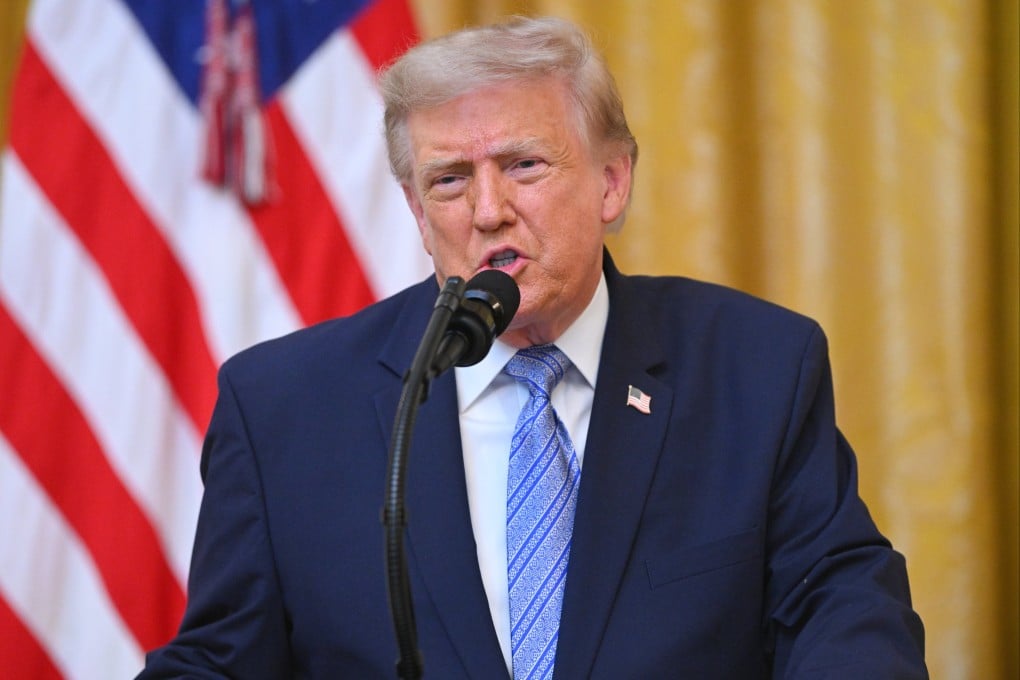
The US president also argued that intelligence documents had revealed “shocking vulnerabilities” in the country’s election infrastructure, leaving it exposed to “hacking, exploitation, and foreign interference”.
“If US elections can be so easily interfered with by other countries, then there must be something wrong with the electoral system and even the democratic system of the US,” said Zheng, who is dean of the school of public policy at the Chinese University of Hong Kong, Shenzhen. “I do think that American democracy needs to have changes.”
“When a party gains power and still insists on redrawing electoral districts to benefit itself, that is no longer democracy – it is already a manipulated version of democracy,” Zheng said.
“Democracy is no longer a value in the US, but merely a tool manipulated by politicians and political parties.
“I think the more this happens, the more it reveals the huge crisis facing American democracy.”
Zheng said the US had long portrayed itself as the “beacon” of democracy, yet had been reluctant to make reforms, which meant things were “getting worse and worse”.
If Americans “truly recognise the flaws in their democratic system”, they should be thinking about how to change it “rather than constantly shifting blame”, he added.
Zheng also said Trump’s latest claims about Chinese interference were nothing new, but previous investigations had found no evidence of it happening.
“[Allegations of] foreign interference have always been part of US electoral politics,” he added.
Zheng also said one hallmark of Trump’s “populist” style was his tendency to exaggerate. “We’re already able to separate what he says from what he does,” he said.
“I don’t think [Trump’s latest remarks] will have much impact on China-US relations,” he observed, adding that the episode was unlikely to significantly affect further engagement between the two countries’ leaders this year, including Chinese President Xi Jinping’s expected visit to the United States in September.
“If China and the US cooperate, they can accomplish a great deal. If they don’t cooperate or come into conflict, not only will they be unable to get things done bilaterally but it will also affect the entire international community. Trump shares this view as well,” Zheng said.
Zheng also said Trump’s allegations were “campaign language” likely to resonate only with his base and might have little impact on his actions after the midterms.