The U.S. president has indicated that he’s done negotiating with Tehran, that the ceasefire between Iran and the U.S. is over, and that the public can expect more strikes to be exchanged between the two nations—a decision that is bound to rack up some monumental costs. A new analysis of U.S. expenses through the four-month war thus far, conducted by Popular Information’s Stephen Semler, found that Trump officials have dramatically lowballed Congress on the real cost of the conflict (Semler also co-founded the U.S. foreign policy think tank Security Policy Reform Institute).
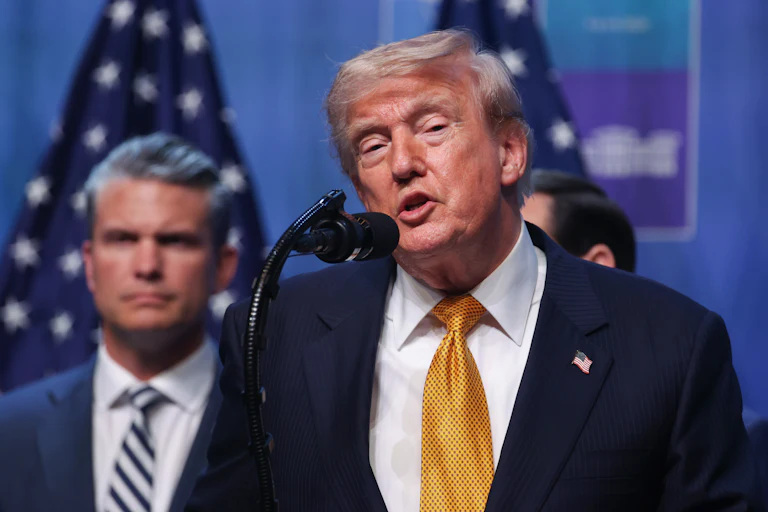
Last week, Director of the Office of Management and Budget Russell Vought told the House Appropriations Committee that the U.S. had spent $30 billion on the Iran war. According to Semler’s estimates, the true cost is closer to $103 billion. Semler argued that Vought himself must have been aware of the figure’s inaccuracy. Days before his House testimony, Vought wrote and signed a formal request “on behalf of the president” for $88 billion in supplemental funding from Congress, including a $72 billion increase for the war effort.
But even that $72 billion figure doesn’t offer a complete image of the war’s total price tag. Semler noted that Popular Information had previously calculated the war cost nearly that much—about $71.8 billion—during the first 60 days. The Trump administration is expected to ask for even more money to fund the conflict through upcoming reconciliation bills.
In order to build an independent analysis of the Pentagon’s expenditures, Semler analyzed procurement information, operating and support data, open-source intelligence, statements from U.S. officials, and media reports.
Over the first 120 days of the conflict, Semler tallied $28.5 billion in mobilization, administrative, and immediate combat costs; $46.7 billion spent on missiles, interceptors, and bombs; $20.3 billion on damaged or destroyed military assets; $2.9 billion spent on Israel’s bombs and interceptors; and an additional $4.8 billion on war costs to nonmilitary U.S. agencies.
Yet no one in charge of the government—from the White House to top congressional Republicans—has posited exactly how the U.S. will pay for the war. Whereas taxes were raised in previous wars (such as World War I, World War II, and the Korean War) in order to fund conflict, the current administration has so far offered no such solution.
Judge Orders Release of $5.8 Million Trump Owes E. Jean Carroll
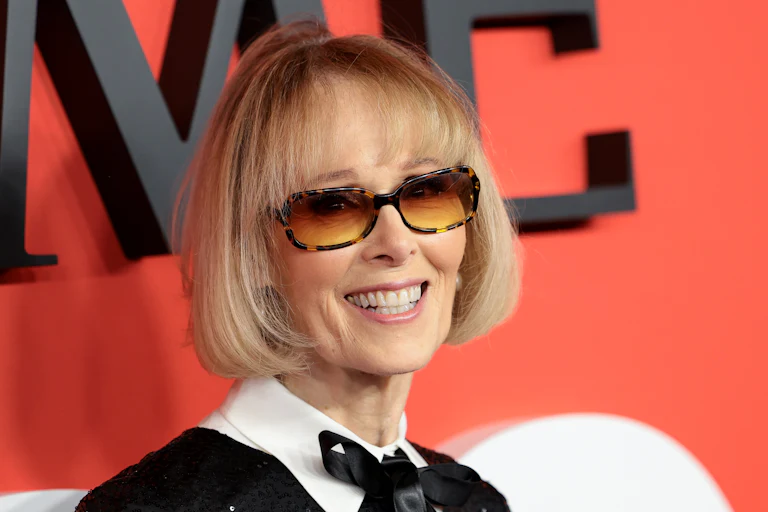
A federal judge on Wednesday ordered the release of the $5.8 million that President Trump owes E. Jean Carroll.
After the Supreme Court declined last week to hear Trump’s appeal of Carroll’s successful defamation case against him, the president has made excuses and tried to get out of paying her. Trump has already provided the money through a fund set up during the appeals process. However, the interest has grown since then, raising the total sum past the initial $5 million verdict.
Shortly after Judge Lewis Kaplan issued his ruling, Trump appealed the decision.
In 2023, a jury found that Trump sexually abused Carroll in 1996 in a Manhattan department store, and defamed her after she went public with her story. The jury ordered $5 million in damages, and Trump put the sum, plus interest, in a court-controlled account shortly after losing the case.
Still, Trump insisted that he didn’t know Carroll and accused her of political and financial motives, and continued to defame her by claiming she fabricated her story. That repeated defamation resulted in another lawsuit that Trump lost, with a jury awarding Carroll $88.3 million.
Carroll is still awaiting payment from a man notorious for many years for not paying his bills. He’s pulling out all of the stops to avoid paying funds that he already deposited, and that are a tiny fraction of his net worth thanks to his successful efforts to use the presidency to enrich himself. Trump can’t admit when he’s lost, whether in court or at the ballot box, and he likes to hoard his ill-gotten gains.
Olivia Rodrigo Gets Revenge for Trump’s “Barbaric” Use of Her Song
The Trump administration had used the pop star’s song “all-american bitch” in one of its deportation videos.

It was a bad idea, right?
Olivia Rodrigo is mobilizing her fans to vote against the Trump administration after Homeland Security officials used one of her songs as the soundtrack for their deportation propaganda.
The singer of “the cure” launched a contest Wednesday that will offer fans a chance to win VIP tickets to her Daisy Chain Fields festival. The only entry requirement: prepping for the 2026 midterm elections.
Headcount Organization, the entity running the sweepstakes, partners with musicians and music events to help Americans understand their civil rights and register to vote. The winner will have all festival expenses paid for, including travel and hotel accommodations, according to Headcount’s website.
The nonprofit offers participants three buttons to enter the competition, labeled “Check your registration status,” “I’m not registered to vote,” or “Election info.” The page notes in fine print that actually following through on the vote is not necessary to win.
“You may enter the sweepstakes by clicking any button above without taking a civic action,” the page reads. “Voting, registering to vote, or being a registered voter is not required.”
Rodrigo’s massive, all-women, late-August lineup will include Chappell Roan, Doechii, Santigold, Sarah McLachlan, Mitski, The Breeders, Bikini Kill, and Stevie Nicks. The event will also feature nonprofits sharing educational resources on a range of issues including reproductive rights, maternal health, economic empowerment, domestic violence prevention, and gender equity.
Partnering organizations include the Black Mamas Matter Alliance, the Center for Reproductive Rights, Planned Parenthood, and the Johns Hopkins Center for Indigenous Health, among others.
The sweepstakes come several months after DHS used Rodrigo’s song “all-american bitch” without her permission in a video calling for immigrants to “LEAVE NOW and self-deport.”
“I was just scrolling on my phone,” the three-time Grammy winner told Dazed last month, recalling the incident. “It was so deeply disturbing to see that propaganda, and the fact it was my song in there made me feel even more enraged. What they’re doing is so awful and barbaric and cruel. I am really sad to be in a country that thinks that’s OK.”

