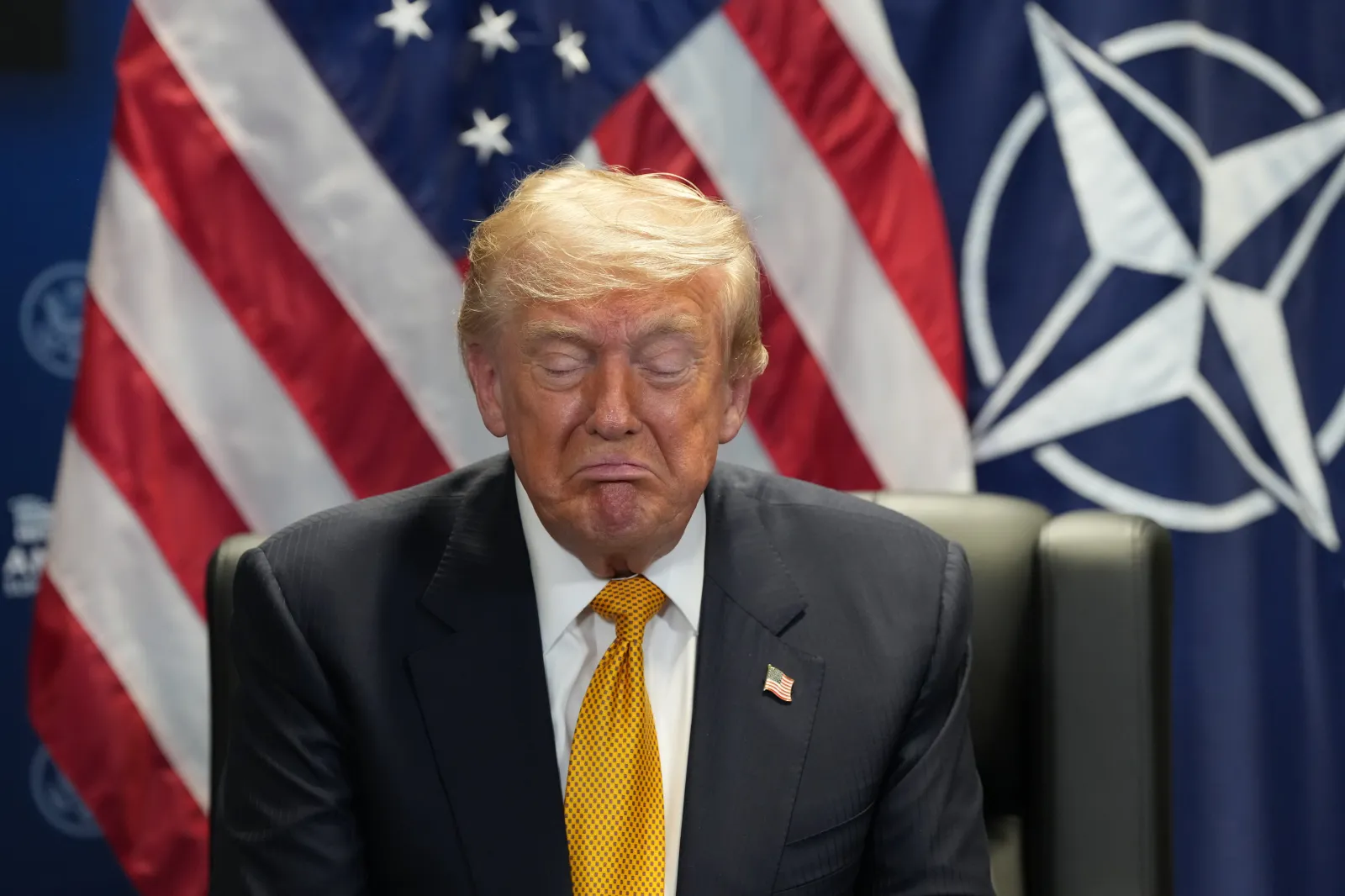
President Donald Trump has said the interim peace agreement between the U.S. and Iran is “over” and branded the leaders of the regime in Tehran as “evil, sick people.” In comments made on the sidelines of the NATO summit in Ankara in Turkey on Wednesday, Trump said he did not want to deal with Iranian officials anymore, labeling them “scum” and “liars,” and adding U.S. negotiators are “wasting their time.” His remarks came just hours after the United States launched strikes on Iran, in what Washington said was retaliation for attacks on tankers in the Strait of Hormuz yesterday.
Iran had responded to the U.S. strikes with strikes on Bahrain and Kuwait, in a crossfire that seemingly raised the risk that the memorandum of understanding struck on June 17 to halt fighting in the war would break down. A ceasefire in the conflict was first set on April 8.
Trump, asked by reporters about the ceasefire, had said “for me, I think it’s over.”
He then added: “It’s just a waste of time dealing with them.” Along with his comments about Iran, Trump repeated his complaints he had made previously about NATO at the alliance summit for not helping the U.S. in the Iran war.
How Long Has the Ceasefire Been in Place?
Trump’s comments have raised concerns about the fate of negotiations with Tehran that followed a ceasefire announced on June 14 and a memorandum of understanding (MOU) announced three days later.
That ended fighting and reopened the Strait of Hormuz, which Tehran had blockaded. Before the war, the strait was the transit point for one fifth of the world’s hydrocarbons.
However, both sides gave differing accounts of the fate of the waterway. The Trump administration had always insisted that it had been fully reopened under the terms of the MOU but the ruling regime, and Iranian state media, presented it as being still in Tehran’s control.
Discussions between Iran and Oman, which also borders the waterway, centered on this issue of control, with Tehran pushing the line that vessels would be charged to transit, which would be contrary to international maritime law.
Alaeddin Boroujerdi, a member of the Iranian parliament’s National Security and Foreign Policy Committee said on Wednesday that the U.S. had violated the MOU by rejecting Tehran’s role in managing traffic through the Strait of Hormuz.
He said that the deal had established that ships would pass through the strait “under the supervision and management of the Islamic Republic of Iran.”
The rhetoric from both sides caused uncertainty for the shipping industry. Traffic started to resume but the skirmishes since the MOU was signed and the latest reported attacks by Iran on vessels, plus the U.S. retaliations, have added to jitters about global energy supplies.
Sitting next to NATO chief Mark Rutte, Trump was asked about the fate of the framework deal announced 21 days ago that kick-started 60 days of negotiations over Tehran’s nuclear program. Trump replied: “It’s a very interesting question. To me, I think it’s over.
“I don’t want to deal with them anymore, they’re scum. You know what scum is? They’re scum. They’re sick people. They’re led by sick people. And they’re vicious, violent people.”
“And if they had a nuclear weapon, they’d use it,” Trump added. “As far as I’m concerned it’s over.”
The messaging from Iran has also dismissed the memorandum, but for reasons linked to Trump. IRGC commander Saeed Ghasemi said that the deal was “worthless scrap” in an X post that called for the “trumpet of war” to be sounded with full force.
Ebrahim Rezaei, spokesperson for the Iranian parliament’s National Security and Foreign Policy Committee, said Tehran was not intimidated by what he described as threats from Donald Trump, posting on X: “We are ready to fight any evil.”
Timeline: How Both Sides Say the Deal Was Broken
Trump may have said that the ceasefire was over but he did not rule out talks, as he referred to his negotiators, mentioning by name envoys Steve Witkoff and Jared Kushner, adding, “but they have to come back to me.”
Trump’s latest remarks about Iran present the latest grievance expressed from either of the two sides since they signed a memorandum three weeks ago.
June 17: U.S. and Iran Sign Memorandum of Understanding
Trump and Iranian President Masoud Pezeshkian signed a 14-point MOU that halted military operations, reopened the Strait of Hormuz and lifted a U.S. naval blockade, with an agreement to negotiate a broader peace deal within 60 days.
June 19: Fighting in Lebanon Sparks First Dispute
Renewed fighting between Israel and Iranian-backed Hezbollah threatened the deal. Tehran argued the MOU required military operations to stop “on all fronts, including Lebanon,” and warned the continued Israeli offensive undermined the agreement.
June 20: Iran Accuses U.S. of Acting in Bad Faith
Iran accused Washington of failing to implement key parts of the agreement because of a continuing U.S. naval presence and disputes over shipping through the Strait of Hormuz. Tehran warned it would maintain control over the waterway until its concerns were addressed, while the U.S. insisted maritime traffic remained open.
June 25: Singapore tanker attacked in the Strait of Hormuz
The Singapore-flagged container ship Ever Lovely was struck by an “unknown projectile” while transiting the Strait of Hormuz near Oman, with U.S. officials blaming Iran.
June 26-27: U.S. Says Iran Violated the Ceasefire
The U.S. military launched retaliatory strikes on Iranian military infrastructure, drone facilities, surveillance systems and air defenses. U.S. Central Command said Iran “had a chance to honor the ceasefire agreement” but instead had attacked commercial shipping.
June 27: Iran Says U.S. Broke the Agreement
Iran said the American strikes breached the agreement and accused the U.S. of resuming military operations instead of using diplomacy established through the MOU.
June 28: Fresh Strikes Deepen the Crisis
The U.S. launched more strikes on Iranian military targets after Trump said Tehran had violated the agreement again. Iran responded with missile and drone attacks targeting Bahrain and Kuwait, warning the peace process could come to a “complete halt.” Both sides blamed the other for undermining the agreement.
July 7: IRGC Accused Of Firing, U.S. Fires Back
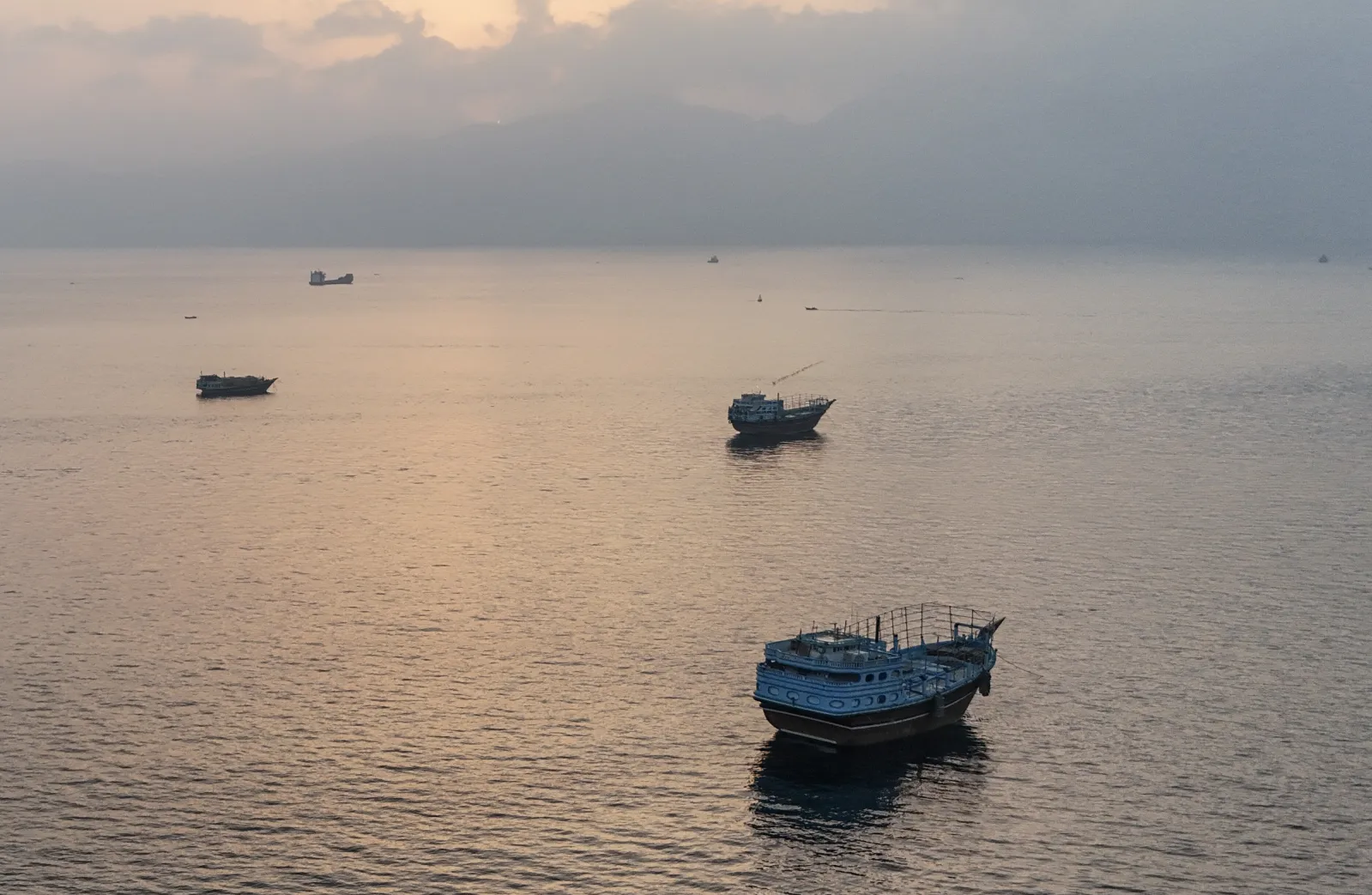
Iran’s Islamic Revolutionary Guard Corps (IRGC) was reported to have fired on at least two commercial vessels transiting the Strait of Hormuz.
A tanker was hit by an unknown projectile while traveling south, about nine miles east of Oman, causing a fire although there were no casualties reported, the United Kingdom Maritime Trade Operations (UKMTO) agency said.
In response, U.S. Central Command (CENTCOM) said it launched a new round of strikes on over 80 targets. Those strikes preceded Trump’s announcement on Wednesday that Washington’s deal with Iran was over.
Oil Prices Spike
After weeks of falling oil prices prompted by an easing of tensions, the price of Brent crude, the global benchmark, climbed 6.4 percent to $78.93 a barrel on Wednesday, although well below the $120 a barrel at the peak of the conflict.
Before Trump’s announcement, Susannah Streeter, chief investment strategist at Wealth Club said Wednesday that “there’s a real sense of déjà vu unfolding, with the U.S. and Iran appearing to take significant steps towards peace, only for the illusion to be shattered once again.”
“A surge in oil prices has sparked worries about persistent inflation, with the Middle East tinderbox reigniting,” she told Newsweek.
“There does seem to be some expectation that tensions will eventually calm again, while the ramp-up in oil production is helping to keep a lid on concerns about a fresh energy crunch,” she said. “Nevertheless, it’s a major setback just as nations around the world had been breathing a sigh of relief that a longer-term resolution looked to be within reach.”
The U.S. Treasury Department has revoked authorization issued on June 21 for the production, delivery and sale of Iranian-origin crude oil, petrochemical products and petroleum products.
This ruling would allow for wind-down transactions until July 17 but banned new purchases or loading from Tuesday which adds further uncertainty to oil markets, which had rebounded over the last three weeks.