The Registry Came in My Email. The Knife Arrived at His Gala. A wedding registry for my husband and his mistress landed in our shared email while I was making breakfast. Towels. Champagne flutes. Silk sheets. A crib. Their names sat together in elegant gold font like mine had never existed. Grant Whitmore and Sloane Mercer. June 14. Newport, Rhode Island. A celebration of love and new beginnings. I stood barefoot in the kitchen of the Beacon Hill townhouse I had helped restore, holding a spatula in one hand and my phone in the other. The eggs burned quietly in the pan. Outside, Boston was silver with rain, the kind that made every window look like a confession. Grant was upstairs shaving. My husband. My best friend once. The man whose wedding band still sat beside mine on the marble sink every night, because he claimed jewelry scratched his skin when he slept.

I clicked the registry. Not because I needed proof. Because the universe had just handed me an invitation to my own funeral, and I wanted to see what flowers they had chosen. Part One: The Crib on the Registry The first item was a set of Italian linen towels, monogrammed G and S. The second was a twelve-piece crystal champagne flute set. The third was ivory silk sheets, king size. The fourth was a walnut crib with brass hardware and a matching rocking chair. I stared at that crib longer than I stared at her name. A crib meant time. Planning. A doctor’s appointment. A secret held gently in both hands while I was sleeping beside a man who had already left me.
Grant came downstairs in a navy suit, damp hair combed back, cuff links flashing under the kitchen lights.
He smelled like cedar, expensive soap, and the life I had been foolish enough to trust.
“Something’s burning,” he said.
I turned off the stove.
He glanced at my face, then my phone.
For one second, only one, the mask slipped.
His eyes sharpened.
Then he smiled.
Not warmly.
Strategically.
“Avery,” he said, my name soft as a warning.
I lifted the phone and showed him the screen.
He did not ask what it was.
He did not pretend.
He simply exhaled, like I had inconvenienced him.
“It wasn’t supposed to go to that email.”
That was the first thing my husband said after I discovered he had a wedding registry with another woman.
Not I’m sorry.
Not let me explain.
Just logistics.
I looked down at the eggs, black at the edges.
“You should change your notification settings,” I said.
His jaw tightened.
“You’re being cold.”
“I’m making breakfast.”
“You’re staring at me like I murdered someone.”
“No,” I said.
“You buried me alive.”
Grant’s hand curled around the back of a dining chair.
The kitchen around us looked like an advertisement for a life that rich people sold to other rich people.
White oak floors.
Limestone counters.
Fresh tulips in a glass vase.
A copper pan ruined on a six-burner French stove.
Everything beautiful.
Everything expensive.
Everything dead.
Grant walked closer and lowered his voice.
“Sloane is pregnant.”
There it was.
The crib had a heartbeat.
I nodded once.
He blinked, thrown by my silence.
“You knew this marriage was complicated,” he said.
I almost laughed.
Complicated was taxes.
Complicated was grief.
Complicated was loving a man whose mother looked at you like you were a stain on the family silver.
This was not complicated.
This was cruelty wearing cuff links.
“How far along is she?” I asked.
His face hardened.
“Eighteen weeks.”
I had hosted his thirty-eighth birthday dinner nineteen weeks ago.
I remembered the veal, the candles, his hand on my waist as he kissed my cheek in front of his parents.
I remembered Sloane arriving late in a white dress and apologizing to me as if we were friends.
I remembered Grant disappearing to take a call.
I remembered sleeping alone that night while he texted from the guest bathroom, thinking I could not hear the lock turn.
“Do your parents know?” I asked.
Grant looked away.
That answered me.
His parents knew.
His mother probably knew the due date before I knew the affair existed.
“She fits,” he said quietly.
It was such a clean little sentence.
So polished.
So Whitmore.
“She fits,” I repeated.
He swallowed.
“You never wanted this life.”
“No,” I said.
“I wanted you.”
He looked almost annoyed by that.
As if love were something tacky I had brought into his house without permission.
“This doesn’t have to get ugly,” he said.
I set the spatula on the counter.
“It already did.”
Grant reached for my wrist.
I moved before he touched me.
His hand stopped in midair.
I had never refused his touch before.
He noticed.
Good.
“We can make a statement,” he said.
“Private separation. Mutual respect. No scandal.”
“Is that what the crib is for?”
“Mutual respect?”
“Avery.”
“Is the wedding before or after my body is legally removed from the premises?”
His mouth flattened.
“It’s not a wedding.”
I turned the screen toward him again.
“Then someone should tell Pottery Barn.”
He took the phone from my hand.
For a second, I thought he might throw it.
Instead, he deleted the registry email.
Then he opened the trash and deleted it again.
When he handed the phone back, his expression had returned to calm.
“There,” he said.
I looked at the empty inbox.
Screenshots are quieter than revenge.
I had already saved everything.
I had saved the registry.
The due date calculator.
The venue address in Newport.
The guest list preview linked through Sloane’s public profile.
The crib.
Especially the crib.
Grant walked to the door and picked up his coat.
“I’ll have Evan call you,” he said.
“Don’t speak to anyone until our attorneys talk.”
Evan Whitmore was his older brother, his general counsel, and the kind of man who believed empathy was a weakness unless it appeared in a courtroom.
I poured his coffee into the sink.
Grant watched me do it.
“That’s childish,” he said.
I smiled for the first time that morning.
“No,” I said.
“Childish is registering for a crib while still married to your wife.”
He left without another word.
The door shut softly behind him.
Rich men rarely slam doors.
They prefer ruining lives with quiet hinges.
I stood in the kitchen until the rain blurred the skyline.
Then I opened the registry again from my saved link and purchased one item.
A silver cake server.
Antique-style.
Pearl handle.
Engraving available.
I paid extra for rush delivery.
In the engraving box, I typed one word.
Evidence.
For gift wrap, I chose black paper.
Part Two: The Woman in Ivory
Sloane Mercer called me at noon.
I knew because her name appeared on my screen like a rash.
She had never called me before.
She had texted, of course.
Little social knives in lowercase letters.
Loved your dress tonight.
Grant says you hate oysters, but I ordered extra just in case.
Your house is stunning.
His mother must have helped so much.
I answered on speaker while packing Grant’s monogrammed shirts into a garment bag.
“Avery,” she said.
Her voice was smooth and bright, the sound of a woman who had practiced being adored.
“Sloane,” I said.
There was a pause.
She had expected crying.
They always do.
Women like Sloane prepare for tears the way hunters prepare for deer.
They stand still, breathe slow, and wait for something wounded to stumble into range.
“I’m sure today has been difficult,” she said.
“For the eggs, yes.”
Another pause.
Then a tiny laugh.
“I can see why he stayed with you as long as he did.”
“As long as he did,” I repeated.
She exhaled.
“I don’t want us to be enemies.”
“You sent a baby registry to my marital email.”
“It was an accident.”
“Most humiliations are.”
Her voice cooled.
“Grant and I didn’t plan to hurt you.”
“That’s strange,” I said.
“You planned everything else.”
I zipped the garment bag.
The sound was sharp.
Sloane let the silence stretch, then softened again.
“I’m carrying his son.”
There it was.
Not baby.
Son.
The Whitmore word for oxygen.
Grant’s mother, Evelyn, had spent five years asking me about children in the same tone she used to ask gardeners about dying roses.
She had once told me, over tea at the Somerset Club, that motherhood made a woman less self-involved.
I had replied that so did kindness, but she had not laughed.
“Sons are important in that family,” Sloane said.
I walked into the closet and looked at the row of evening gowns Grant had bought me for galas where he abandoned me after photographs.
Black velvet.
Emerald satin.
Champagne silk.
Costumes for a marriage.
“Congratulations,” I said.
“You don’t have to be bitter.”
“I’m not bitter.”
“No?”
“No,” I said.
“Bitter is for people who still want the thing that poisoned them.”
For a moment, Sloane said nothing.
Then the sweetness fell away.
“You should know that Evelyn has already invited me to Ridgefield.”
Ridgefield was the Whitmore estate outside Greenwich.
Twenty acres of manicured cruelty with a white-columned mansion, a private chapel, and family portraits that looked down on you like creditors.
“How generous,” I said.
“She wants this handled cleanly.”
“I’m sure she does.”
“She thinks it would be healthier for everyone if you didn’t make a scene at the gala.”
The gala.
The Whitmore Foundation’s annual winter gala at the Boston Museum of Fine Arts.
The family’s holiest public ritual.
Grant would stand under chandeliers and speak about legacy while donors applauded.
Evelyn would wear diamonds old enough to remember war.
Sloane would arrive glowing, pregnant, and triumphant.
And I, apparently, was expected to disappear politely.
“When is the gala?” I asked.
Sloane hesitated.
“You know when it is.”
“I want to hear you say it.”
“Saturday.”
Three days.
I smiled.
“Perfect.”
“That sounded ominous.”
“It should.”
She laughed again, but this time it cracked.
“Avery, don’t embarrass yourself.”
I took Grant’s shirts to the front door.
The doorman could send them to his club.
“My dear,” I said, borrowing Evelyn’s favorite weapon.
“I’m the wife. Embarrassment is still legally his department.”
I hung up.
At two o’clock, Evan called.
At two fifteen, my attorney called.
By three, the house phone rang.
Only three people had that number.
Grant.
Evelyn.
My mother, who had been dead for six years.
I let it ring until voicemail caught it.
Evelyn’s voice filled the kitchen.
“Avery, darling, I know emotions are running high. You’ve always been sensitive, and while that can be charming, it is not useful right now. Grant has obligations, and this family has a future to consider. I hope you’ll remember what you signed.”
I played it twice.
Then I sent it to my attorney.
I had signed a prenup.
Of course I had.
The Whitmores loved contracts almost as much as they loved churches.
The prenup had been handed to me six weeks before our wedding in the private library at Ridgefield.
Grant had looked ashamed then.
I remembered that.
I remembered believing shame meant conscience.
I was twenty-eight and stupid in the elegant ways women are trained to be stupid.
I had read every page.
Then I had added one clause.
Evelyn had nearly choked on her gin.
Grant had laughed and said, “She’s smarter than all of us.”
The clause was simple.
Any proven extramarital pregnancy before divorce filing triggered full forfeiture of Grant’s claim to marital assets acquired after the wedding, including all voting rights transferred through spousal consolidation.
Evelyn called it vulgar.
My father had called it insurance.
My father, Richard Calder, had built Calder Medical Systems from a garage in Cambridge and sold it to Whitmore Holdings when he got sick.
The acquisition tied my trust, my patents, and a block of voting shares to Grant’s expansion plan.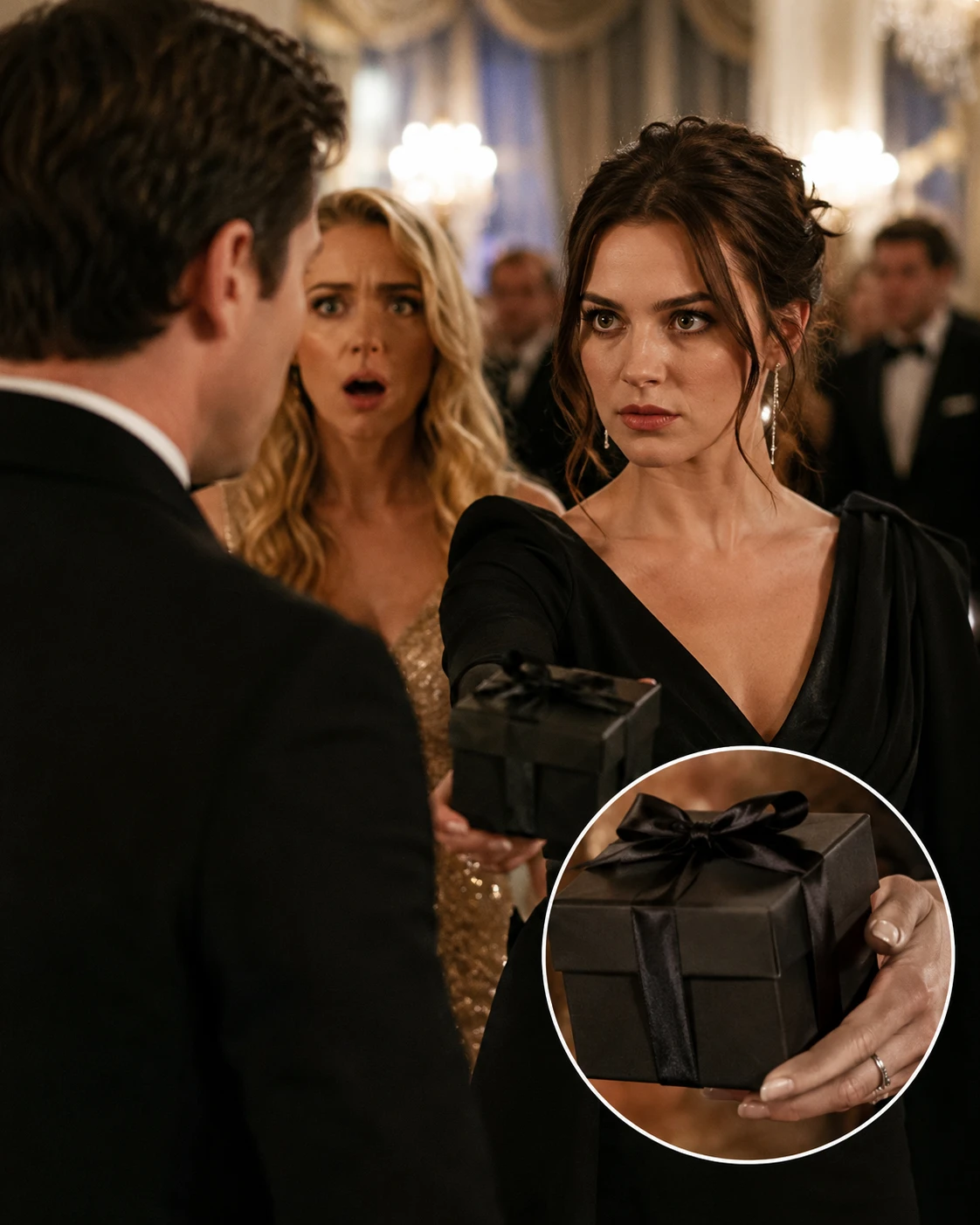
Marriage had made Grant look stronger to investors.
My name had made him richer.
Evelyn never forgave me for reading the contract.
Grant never thought he would get caught.
That was the thing about men like him.
They understood risk when it wore a suit.
They underestimated it when it wore lipstick and made breakfast.
The next morning, a courier brought a cream envelope with my name embossed in navy.
Inside was an invitation to the gala.
Not Mrs. Grant Whitmore.
Avery Calder.
My maiden name.
A demotion printed on cotton paper.
Tucked behind the invitation was a handwritten note from Evelyn.
For everyone’s comfort, please use the south entrance.
I stared at that line for a long time.
Then I laughed.
Not because it was funny.
Because my grief had finally found its spine.
I called my attorney.
“Margaret,” I said, “how fast can we get a paternity test ordered?”
Margaret Voss was seventy-two, terrifying, and had once made a pharmaceutical CEO cry on live television.
“For Grant?” she asked.
“For the baby.”
There was a pause.
Then a rustle of paper.
“You think it isn’t his?”
“I think Sloane wants me to believe it is.”
“And what do you know?”
I looked at the registry screenshot again.
The crib had been added by someone named Theo M.
Sloane had forgotten to make the contributor list private.
Theo Mercer.
Her ex-husband.
The artist from Savannah.
The man she claimed had been abusive.
The man whose divorce from her was sealed after a settlement Grant’s firm had quietly financed.
“I know rich men rarely check the smoke detector when the house is already on fire,” I said.
Margaret chuckled once.
“I’ll file by five.”
Part Three: The Chapel at Ridgefield
Ridgefield looked holy in winter.
That was the trick.
Snow softened the gates, the stone lions, the long black drive curving through bare trees.
It made the mansion look like something out of a Christmas movie instead of what it was.
A museum of inherited appetite.
I arrived in a black wool coat, pearl earrings, and sunglasses I did not need.
My driver stopped before the front steps.
A valet opened my door and froze.
“Mrs. Whitmore.”
I smiled.
“Still.”
Inside, the marble foyer smelled of lilies and old money.
A harpist played near the staircase.
Because apparently adultery required ambiance.
Evelyn stood beneath a portrait of Grant’s grandfather, wearing winter white and a diamond brooch shaped like a dagger.
Sloane stood beside her in ivory.
Ivory.
Not white, of course.
Women like Sloane understand plausible deniability down to the hemline.
Her dress floated over her small pregnant stomach, her hand resting there for effect.
Grant stood behind them, jaw tight.
For one reckless second, I saw the man I had loved.
The man who used to bring me coffee in bed.
The man who kissed the scar on my wrist after my father’s funeral.
The man who promised me, in a candlelit church, that my loneliness was over.
Then he looked at Sloane’s hand on her belly, and the stranger returned.
“Avery,” Evelyn said, crossing the foyer.
She air-kissed near my cheek.
Her perfume was gardenia and command.
“How brave of you to come.”
“How brave of you to invite me.”
Her smile thinned.
“We are having a private family discussion before Saturday.”
“I’m family.”
“Legally,” Sloane said softly.
I turned to her.
Her eyes were wide, lovely, and cruel around the edges.
“Yes,” I said.
“That is usually how marriage works.”
Grant stepped forward.
“Enough.”
The word cracked through the foyer.
A few staff members vanished like smoke.
I removed my gloves slowly.
“Grant, darling, if you wanted peace, you should have picked a quieter betrayal.”
Evelyn gestured toward the library.
“Let’s not perform in the hall.”
The library still had the same dark green walls and brass lamps.
Same leather chairs.
Same shelves full of books no one read.
Same long table where I had signed the prenup.
I sat in the chair at the head of the table before anyone could tell me not to.
Evelyn noticed.
Grant noticed.
Sloane definitely noticed.
Evan was already there, flipping through a folder.
He nodded at me with professional pity.
That pity annoyed me more than Grant’s cruelty.
Pity assumes the wound is fatal.
Mine was becoming surgical.
Evelyn sat opposite me.
“Sloane will be moving into the carriage house until the divorce is finalized,” she said.
I glanced at Grant.
“You’re housing your pregnant mistress on the family estate?”
He looked exhausted.
As if my questions were the problem.
“She needs privacy.”
“She needs a calendar.”
Sloane’s lips parted.
Grant’s eyes flashed.
“You can stop now.”
“I stopped a long time ago,” I said.
“You just didn’t notice.”
Evan slid papers toward me.
“Avery, this is a separation proposal. Extremely generous. Beacon Hill residence for one year. A private settlement. Continued health coverage. No public statements. No claim against Whitmore Holdings.”
I did not touch the papers.
“Health coverage,” I said.
“How romantic.”
Evan ignored that.
“In exchange, you waive the infidelity clause.”
There it was.
The real wedding registry.
Not towels.
Not silk sheets.
Not a crib.
A waiver.
Grant wanted his mistress, his son, his company, and my silence.
He wanted to replace me and make me sign the receipt.
I looked at my husband.
“Did you write this?”
His throat moved.
“It’s better for everyone.”
“Everyone meaning you.”
“Meaning the child.”
Sloane smiled.
Small.
Smug.
Rehearsed.
I leaned back.
“Has the child been tested?”
The room changed.
It was immediate.
Air leaving lungs.
Eyes meeting eyes.
Power misfiring.
Sloane’s hand tightened over her belly.
Grant stared at me.
“What did you say?”
“I asked if the baby has been tested.”
Evelyn’s voice became ice.
“That is a disgusting implication.”
“Then it should be easy to disprove.”
Sloane stood so fast her chair scraped the floor.
“I don’t have to sit here and be insulted.”
“No,” I said.
“You could stand and be subpoenaed.”
Her face drained.
Grant turned on me.
“You filed something.”
“Margaret filed something.”
Evan’s calm finally cracked.
“Avery, you need to be very careful.”
I picked up the separation proposal and flipped through it.
Pages of velvet-covered theft.
“You first.”
Grant leaned both hands on the table.
His wedding ring was on today.
Interesting.
“Avery,” he said quietly.
“You are hurt. I understand that. But attacking a pregnant woman makes you look desperate.”
I looked at Sloane.
Then at Evelyn.
Then back at him.
“You mistook stillness for weakness.”
His face tightened.
I stood.
“Saturday night, you will all smile under chandeliers and tell Boston you are a family of honor. I won’t stop you.”
Evelyn narrowed her eyes.
“What are you planning?”
I buttoned my coat.
“Nothing emotional.”
That frightened her more than screaming would have.
In the foyer, Sloane followed me.
Her heels clicked against marble like tiny teeth.
“Avery.”
I stopped by the chapel doors.
The Whitmore chapel sat off the east wing, built by Grant’s great-grandmother after some ancestor survived a scandal involving a senator’s wife and a dead racehorse.
Rich families build chapels the way sinners buy perfume.
To improve the air.
Sloane came close enough that I could see the diamond necklace at her throat.
It had been mine.
A sapphire pendant Grant gave me on our third anniversary.
He must have reset the stone.
I looked at it.
She touched it gently, smiling.
“He said blue never suited you.”
I almost admired her.
Not her morality.
Her commitment to being obvious.
“You are very pretty,” I said.
She blinked.
“Thank you?”
“It must be exhausting to keep confusing that with victory.”
Her cheeks flushed.
“You think because you have lawyers, you can scare me?”
“No,” I said.
“I think because I have truth, I won’t need to.”
She stepped closer.
“The baby is Grant’s.”
“Then why did Theo buy the crib?”
For the first time, Sloane looked genuinely afraid.
It lasted less than a second.
But I saw it.
She recovered.
“You’re stalking my registry?”
“It arrived in my kitchen.”
She swallowed.
“You don’t know anything.”
“I know enough to invite him.”
Her eyes went sharp.
“You wouldn’t.”
“I already did.”
That was not entirely true.
Margaret had.
But it felt good to say.
Sloane’s hand dropped from the necklace.
For one moment, all the gloss peeled away and something raw looked out.
“Don’t,” she whispered.
Not to me.
To the past.
Then Grant called her name from the library, and the mask returned.
She lifted her chin.
“You’ll still end up alone.”
I opened the chapel door.
Inside, the altar candles were unlit.
The pews waited in obedient rows.
At the front, above the altar, a stained-glass angel held a sword.
I smiled at Sloane.
“Alone is not the worst thing a woman can be.”
Then I left her standing in the doorway of a chapel that had never saved anyone.
Part Four: The Gala Knife
The Museum of Fine Arts looked like a palace built by people afraid of dying ordinary.
Limousines slid up to the entrance.
Photographers flashed.
Diamonds sparked.
Women in velvet laughed too loudly beneath the winter sky.
Inside, the Whitmore Foundation gala bloomed under gold light.
White orchids filled silver urns.
A string quartet played near the grand staircase.
Champagne moved through the room on black trays like liquid permission.
The theme was Legacy in Motion.
I nearly respected the irony.
I arrived through the front entrance.
Not the south.
My dress was black satin, simple and severe, with a neckline that made older women straighten and younger women stare.
My hair was pinned low.
My lipstick was dark red.
No tears.
No trembling.
No visible wound.
That is what they hate most.
A woman who does not perform her devastation for their comfort.
The room noticed me before Grant did.
Whispers moved quickly.
There she is.
Is that the wife?
I heard there was a baby.
I heard Evelyn chose the other one.
God, she looks incredible.
Evelyn saw me from across the hall.
Her smile did not move, but her eyes sharpened like broken glass.
Sloane stood beside her, radiant in pale gold, one hand resting on her stomach, the sapphire at her throat catching the light.
Grant was speaking to the mayor near the stage.
He turned when the whispers reached him.
Our eyes met.
He went still.
For the first time since the email, he looked unsure.
Good.
I walked toward them slowly.
Not because I wanted drama.
Because expensive rooms teach women to glide, and tonight I had use for every lesson.
Evelyn intercepted me near a marble statue.
“Avery,” she said through her smile.
“You were asked to use the south entrance.”
“And yet the front one opened.”
“This is not the place.”
“It never is, until it is.”
Sloane came up beside her.
Her smile was brighter than the chandeliers and twice as artificial.
“You look beautiful,” she said.
“So do you,” I replied.
“Pregnancy suits your ambition.”
Her smile flickered.
Grant arrived before she could answer.
“Avery,” he said quietly.
“Don’t do this.”
I looked at him.
There had been a time when that voice could have undone me.
One rough edge and I would have folded.
One tired look and I would have forgiven the knife because his hand was shaking.
Not tonight.
“Do what?” I asked.
“Humiliate yourself.”
I stepped closer, lowering my voice.
“Grant, you invited donors, reporters, board members, and half of Boston to watch you pretend you have honor. I am only attending.”
His eyes darted to the room.
“Margaret is bluffing.”
I smiled.
“You married me because I read fine print. Don’t insult me by forgetting it now.”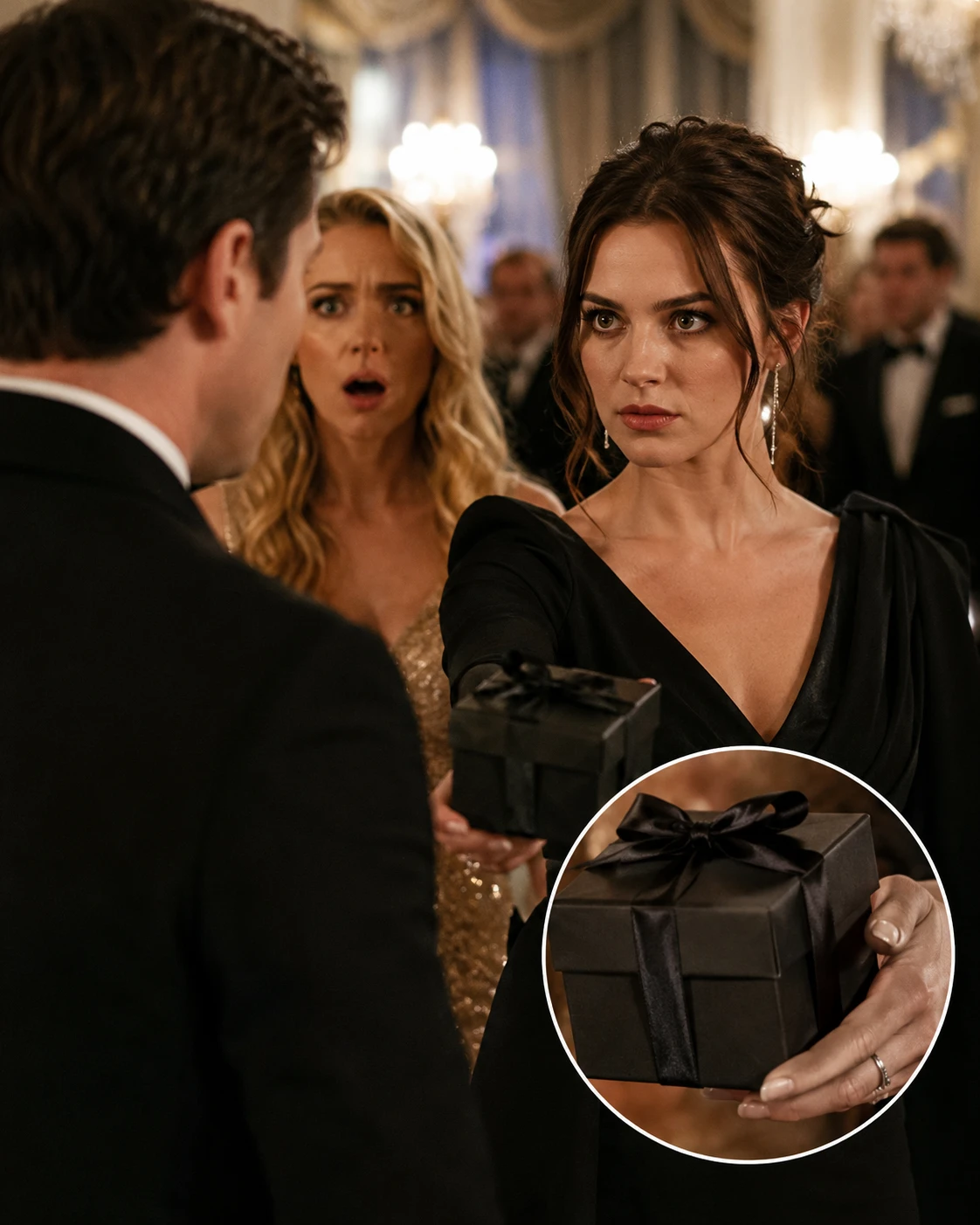
Before he could answer, a staff member approached him.
“Mr. Whitmore, we’re ready for the remarks.”
Grant looked at me.
Then at his mother.
Evelyn gave one tiny nod.
Proceed.
That was always her answer.
Smile through blood.
Speak over the body.
Leave the staff to mop.
Grant went to the stage.
The room dimmed slightly.
Guests drifted toward tables dressed in white linen and crystal.
I sat at the front table because my place card was still there.
Mrs. Grant Whitmore.
Someone had tried to remove it.
Someone else had put it back.
I suspected Margaret.
She sat two tables away in black velvet, tiny, white-haired, and expressionless.
Next to her sat Theo Mercer.
He was thinner than I expected.
Dark hair.
Tired eyes.
A badly fitted suit that looked rented.
Hands clasped so tightly his knuckles were pale.
He saw Sloane and looked away like she was a light too bright to survive.
My stomach tightened.
That was the part nobody warns you about.
Revenge can be clean in theory.
In practice, there are always other wounds in the room.
Grant began his speech.
“Good evening,” he said, charming as a crime.
“On behalf of my family, thank you for joining us in support of the Whitmore Foundation and its mission to build a healthier future for every child.”
Every child.
I looked at Sloane.
She was watching Grant with shining eyes.
Or performing shining eyes.
Sometimes even the performer forgets where the stage ends.
Grant spoke about legacy.
About responsibility.
About trust.
About family.
He said the word family four times.
Each one landed like a match.
Then, just before dessert, a waiter walked onstage carrying a black box.
It was small.
Tasteful.
Wrapped in matte black paper and tied with a white ribbon.
My silver cake server.
The one I had sent to the registry.
Grant stopped mid-sentence.
The waiter looked confused.
Evelyn stood halfway from her chair.
Sloane’s face went blank.
The room murmured.
Grant looked at the box like it might explode.
It would.
Just not with noise.
A small envelope rested on top.
Grant picked it up.
His name was written in my handwriting.
Grant Whitmore.
He opened it.
The card inside held one line.
For cutting what you thought you could keep.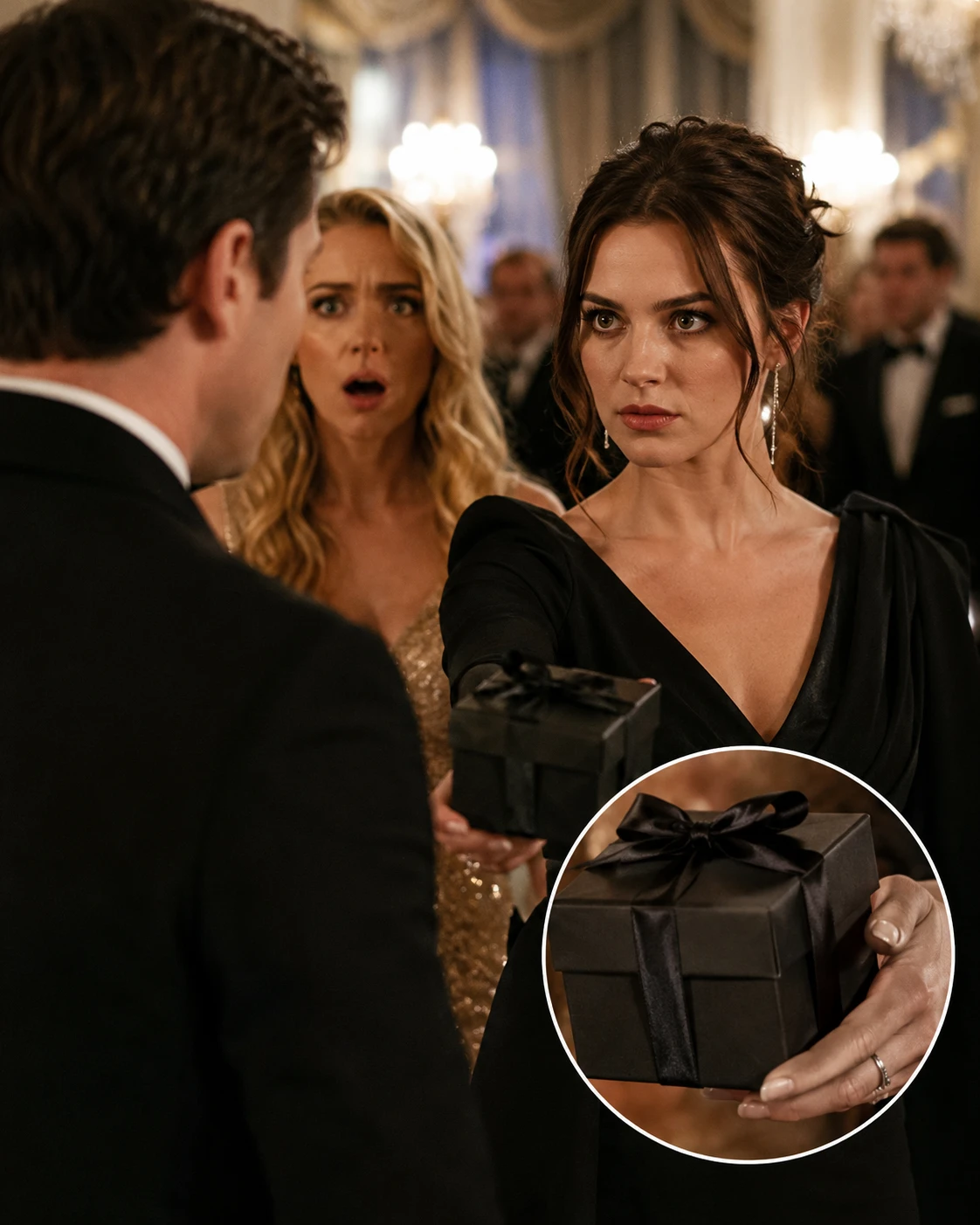
He looked at me.
I lifted my champagne glass.
The microphone caught his breath.
Someone laughed nervously.
Then the big screen behind him changed.
It had been displaying the foundation logo.
Now it showed a screenshot.
The registry.
Grant Whitmore and Sloane Mercer.
June 14.
Newport.
Towels.
Champagne flutes.
Silk sheets.
A crib.
A sound went through the ballroom.
Not a gasp.
A collective intake of delighted horror.
The sound society makes when scandal finally stops being rumor and becomes entertainment.
Grant turned white.
“Turn it off,” Evelyn hissed.
The screen changed again.
This time to the prenup clause.
Clear.
Highlighted.
Unforgiving.
Extramarital pregnancy prior to filing for dissolution.
Forfeiture of claims.
Transfer of voting rights.
Breach of fiduciary marital representation in relation to Calder Medical assets.
The mayor stopped smiling.
Three board members leaned forward.
A reporter lifted her phone.
Grant grabbed the microphone.
“There has been a malicious misunderstanding.”
The screen changed again.
A court order.
Paternity testing required.
Filed by Avery Calder Whitmore.
Granted by Suffolk County Probate and Family Court.
Compliance pending.
Sloane stood.
“No,” she whispered.
Theo Mercer looked down at his hands.
The next slide was not one I had approved.
For one second, I thought Margaret had gone too far.
Then I saw it.
A bank transfer.
From Whitmore Holdings discretionary legal fund.
To Mercer Settlement Trust.
Date.
Amount.
Authorized by Evan Whitmore.
The hush became deeper.
Corporate hush.
The kind with prison in it.
Evan stood at the back of the room, face gray.
Grant stared at the screen.
His shock was real.
He had not known.
That was when the twist turned inside the twist.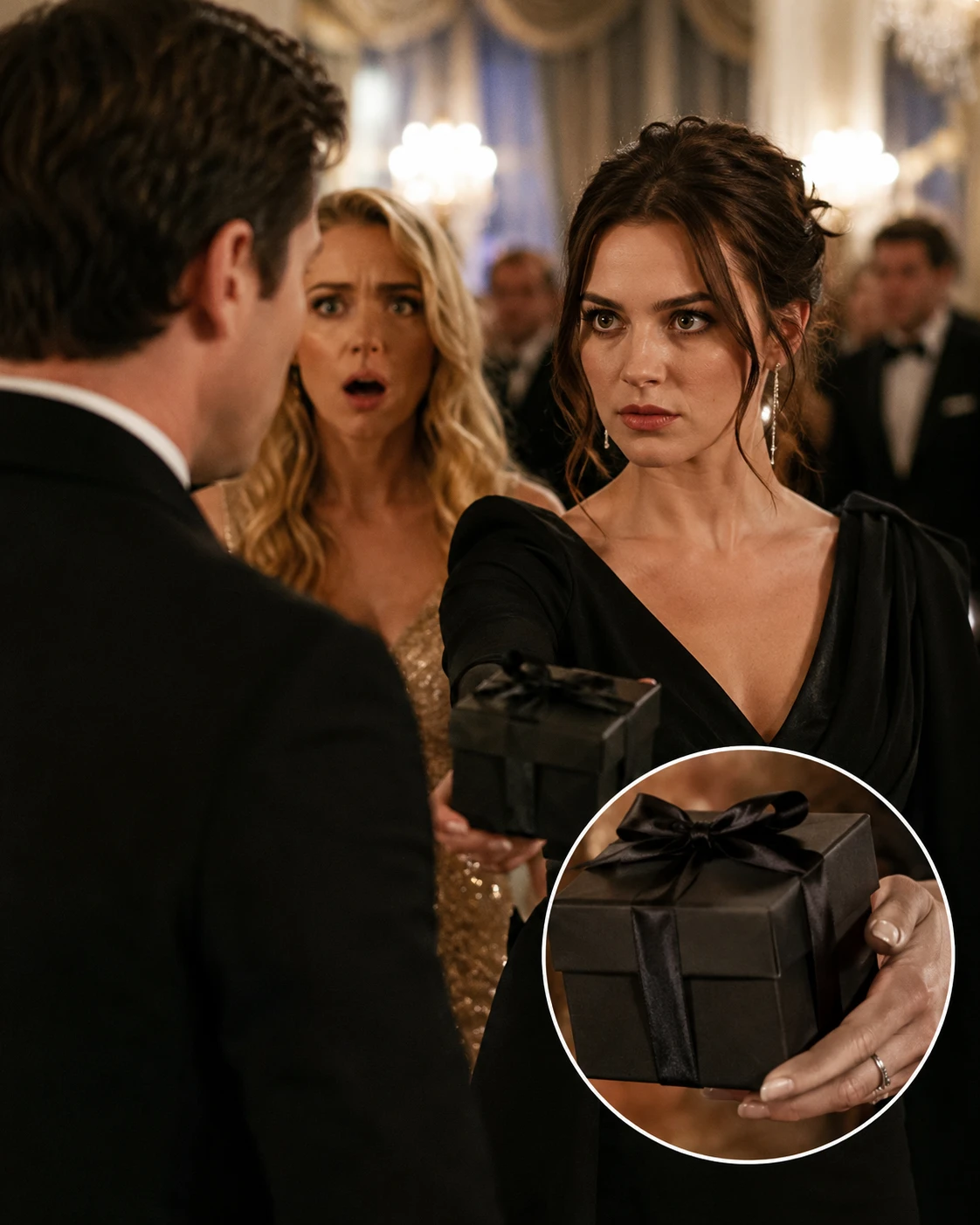
Evelyn had paid Sloane’s ex-husband to disappear.
Evan had buried it.
Grant had been arrogant enough to cheat.
His family had been criminal enough to curate the cheating.
Margaret rose from her table.
She did not need a microphone.
Her voice carried anyway.
“Mr. Whitmore, my client will be filing an emergency injunction at nine tomorrow morning to freeze voting actions of Whitmore Holdings pending investigation.”
Evelyn’s face hardened into something ancient.
“You vicious little woman.”
Margaret smiled.
“I’m five foot one, Evelyn. Be specific.”
The room almost laughed, but fear swallowed it.
Grant looked at me with something like betrayal.
That was the funniest part.
He had destroyed our marriage in rooms I was not invited into.
Yet somehow, my refusal to die quietly felt unfair to him.
“Avery,” he said into the microphone by accident.
My name rang through the ballroom.
I stood.
Cameras turned.
I did not walk to the stage.
I did not need to.
“You told me not to make a scene,” I said.
My voice was calm.
The room listened.
“So I brought documents.”
Sloane’s chair scraped backward.
She fled toward the side hall, one hand over her mouth.
Theo stood and followed her, then stopped.
He looked at me.
Not angry.
Not grateful.
Just broken.
I nodded once.
He nodded back.
Grant stepped down from the stage.
The silver cake server remained in the black box, gleaming under the lights.
For one wild second, I remembered cutting our wedding cake with him at the Plaza Hotel in New York.
His hand over mine.
His laugh in my ear.
Sugar on his thumb.
The memory hurt.
Of course it hurt.
The truth does not cauterize love immediately.
It just tells you where to cut.
Grant came close enough that only I could hear him.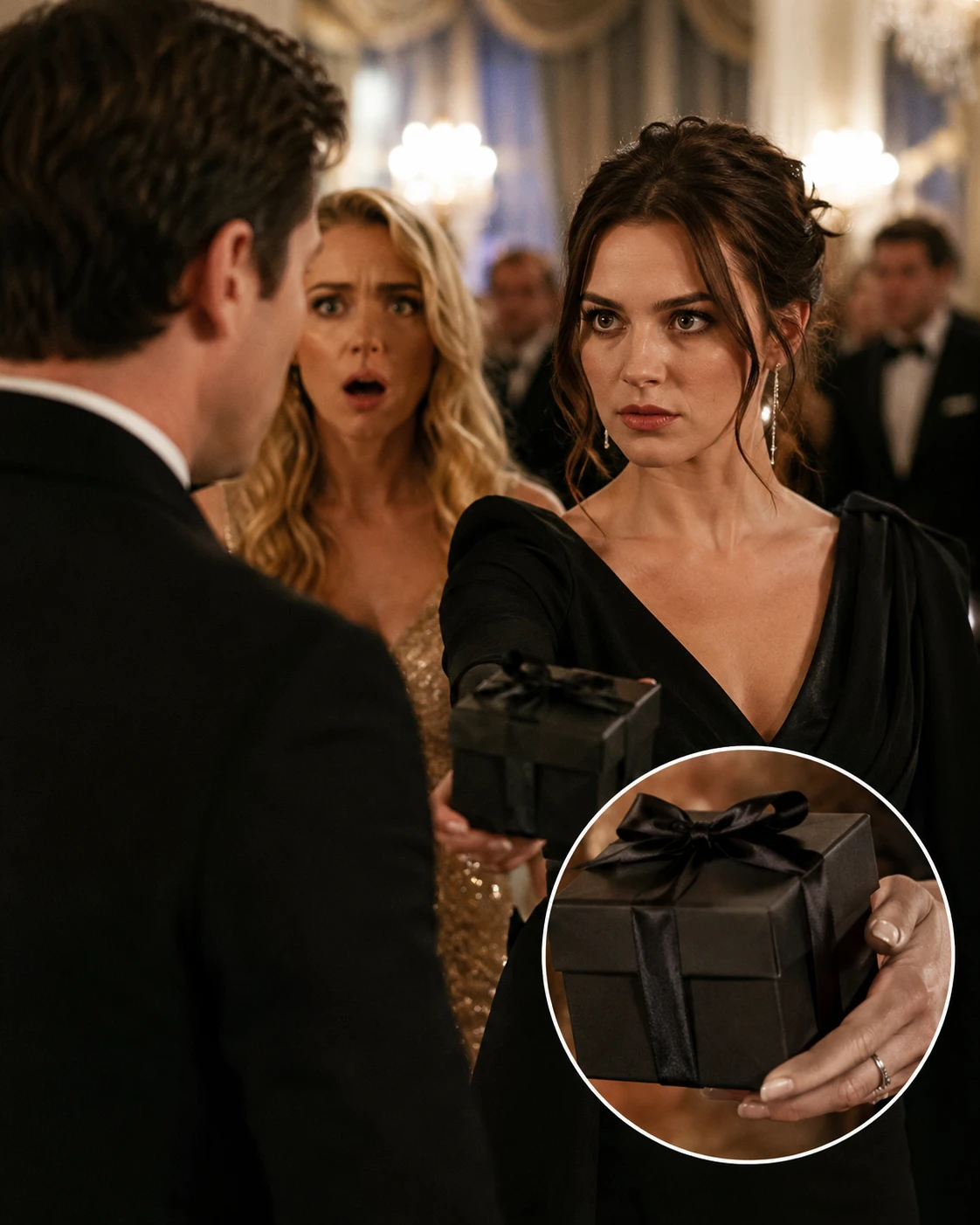
“You ruined me.”
“No,” I said.
“I introduced you to yourself.”
His eyes shone.
With rage.
With fear.
Maybe with grief.
I no longer cared which.
Evelyn approached us, slow and furious.
“You have no idea what you’ve done.”
I looked around the ballroom.
At the donors pretending not to record.
At the board members recalculating loyalty.
At the journalists smelling blood.
At the women watching me like I had opened a locked door.
“I know exactly what I’ve done,” I said.
Then I removed my wedding ring.
Not dramatically.
Not with trembling hands.
Just a simple motion.
Gold sliding off skin.
A small circle becoming just metal.
I placed it in the black box beside the cake server.
Grant stared at it.
“This family gave you everything,” Evelyn said.
I turned to her.
“No,” I said.
“This family took credit for what my father built, wore my name like a medal, and treated my silence as part of the inheritance.”
Her face twitched.
“My father’s company is not your dynasty,” I said.
“And my pain is not your public relations strategy.”
I walked past them.
The crowd parted.
People always do that when a woman stops asking permission to leave.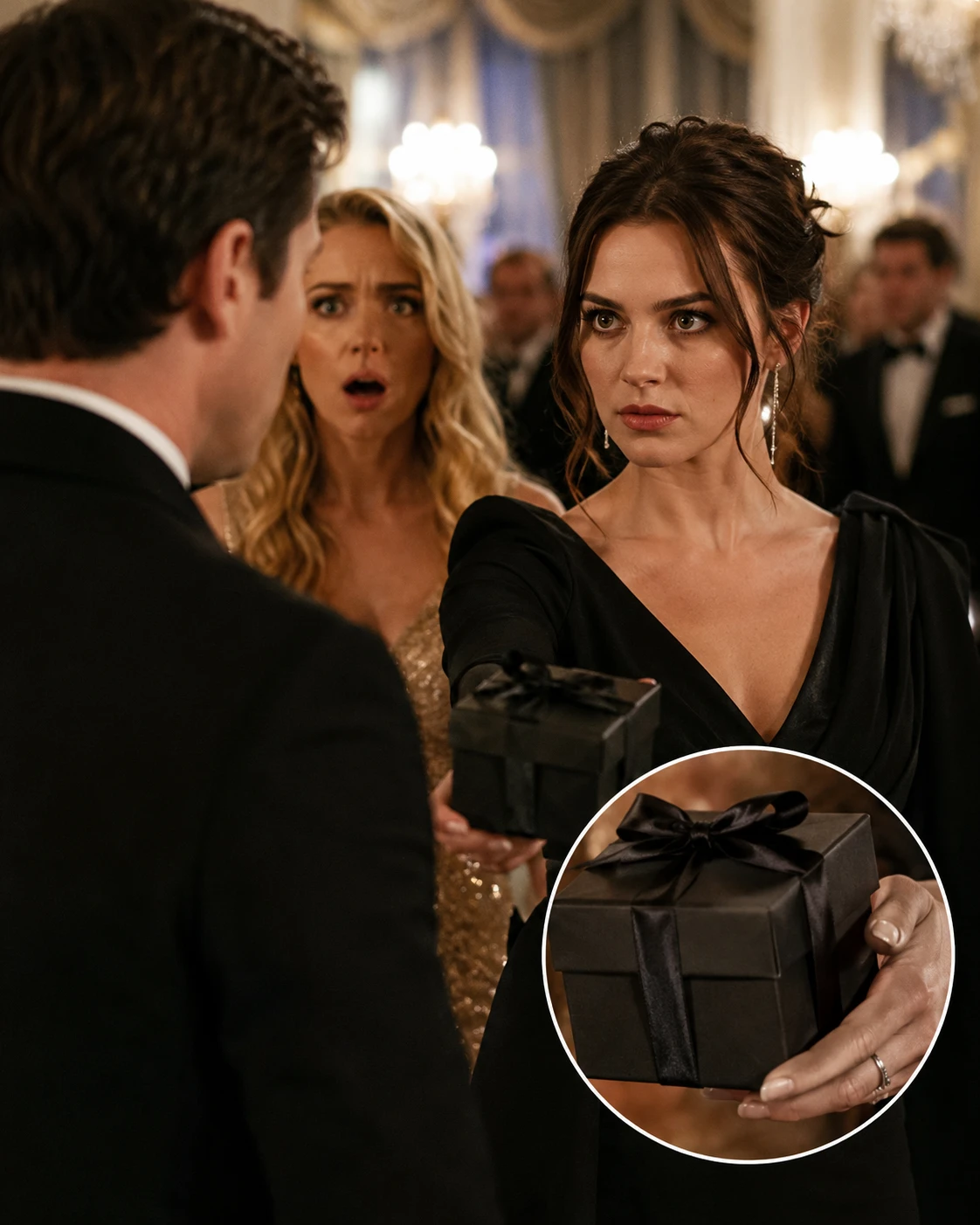
Part Five: The Courtroom and the Bloodline
The courtroom was colder than the gala.
Less beautiful.
More honest.
No orchids.
No champagne.
No string quartet smoothing over the sound of consequences.
Just oak benches, fluorescent lights, winter coats, and the dry rustle of legal paper.
Grant looked smaller there.
Not poor.
Never poor.
But stripped of stage lighting, he was simply a man in an expensive suit who had mistaken charm for character.
Evelyn sat behind him, spine straight, pearls at her throat, hatred polished to a shine.
Evan sat farther back with his own attorney.
That was new.
Sloane arrived late.
She wore gray.
No sapphire necklace.
No glow.
No hand resting proudly on her belly.
Theo sat on the opposite side of the room, two benches behind me.
He looked as if he had not slept in weeks.
Maybe years.
Margaret placed a hand on my folder.
“You’re steady,” she said.
“I’m angry.”
“Good. Steady anger invoices better.”
I almost smiled.
The judge entered.
Everyone rose.
The hearing began with phrases that sounded too small for the ruin they contained.
Emergency injunction.
Marital contract.
Fiduciary breach.
Potential fraudulent concealment.
Paternity order compliance.
Grant’s attorney argued that the gala presentation had been defamatory.
Margaret responded by laying out the authenticated screenshots, the registry metadata, the email routing, the court order, the bank transfer, and the prenup clause in a sequence so clean it felt like watching glass cut silk.
Then came the paternity test.
Sloane’s attorney requested a sealed hearing.
The judge denied the request for the preliminary matter.
Sloane stared at the table.
Grant stared at Sloane.
That was when I understood he truly did not know.
He had believed the son was his.
He had risked everything because Sloane had handed him the one thing Evelyn wanted more than reputation.
A Whitmore heir.
The report was entered.
The courtroom seemed to hold its breath.
Grant Whitmore was excluded as the biological father.
Probability of paternity: 0.00%.
The number sat there on paper like a guillotine.
Grant did not move.
Evelyn made a small sound.
Not sorrow.
Offense.
As if biology itself had been rude.
Sloane began to cry.
Quietly at first.
Then with one hand over her mouth, shoulders shaking.
I watched her.
I did not feel triumph.
Not the way I expected.
Triumph is too simple.
This was uglier.
This was a room full of people discovering that every lie had been standing on another lie.
Grant turned toward Sloane.
“Who?” he said.
His voice was not loud.
That made it worse.
Sloane closed her eyes.
Theo lowered his head.
Grant followed my gaze.
He saw Theo.
Everything inside his face collapsed.
“You,” Grant said.
Theo stood.
“It was before she told me she was leaving,” he said.
Sloane shook her head violently.
“Theo, don’t.”
But he continued.
“She came back to Savannah. She said she was scared. She said Grant was helping her escape me.”
He looked at Grant.
“I never touched her. I never hurt her. She wanted the sealed settlement because she told me your family would destroy my career if I fought.”
Sloane sobbed.
Evelyn’s eyes cut to Evan.
Evan looked down.
Margaret leaned forward.
“Your Honor, this supports our request for discovery into the Mercer Settlement Trust and Whitmore Holdings discretionary legal fund.”
The judge granted limited discovery.
Then the second blade fell.
Because the paternity result did more than break Grant’s fantasy.
It triggered the prenup differently.
The clause required a proven extramarital pregnancy claimed by either spouse as marital issue.
Grant had represented the unborn child as his in separation negotiations and in communications with counsel.
His claim, false or not, had been used to pressure me into waiving voting rights.
Fraudulent inducement.
Bad faith negotiation.
Corporate governance violation.
By the end of that hearing, Whitmore Holdings could not move a dollar tied to Calder Medical assets without court review.
By the end of that week, two board members resigned.
By the end of that month, Evan was under investigation.
Evelyn stopped calling me sensitive.
Grant called me seventeen times the night after court.
I did not answer.
On the eighteenth call, he left a voicemail.
I listened once.
“Avery,” he said.
His voice was ragged.
“I didn’t know. About the baby, I didn’t know. I know that doesn’t fix anything. I know I destroyed us. But I loved you. I did. I just forgot how to be worthy of it.”
I sat in the dark living room of the Beacon Hill house, wrapped in a cashmere blanket, snow pressing softly against the windows.
The house felt too large.
Freedom often does at first.
I deleted the message.
Not because it did not hurt.
Because it did.
Because part of me, the old part, wanted to keep it like a photograph.
Proof that he had finally suffered enough to sound human.
But suffering is not transformation.
Regret is not repair.
And I was done mistaking a man’s pain for my responsibility.
The divorce finalized in late spring.
The courtroom was almost empty that day.
Grant signed first.
Then I did.
Avery Calder.
No Whitmore.
The pen moved smoothly over the page.
My hand did not shake.
Outside, Boston had turned green.
Trees feathered along the sidewalks.
Students crossed the streets with iced coffees.
The Charles River flashed bright under the sun.
Margaret walked me down the courthouse steps.
“You’re officially free,” she said.
“That sounds more cheerful than it feels.”
“It will catch up.”
At the bottom of the steps, a reporter called my name.
Then another.
Then another.
The gala had gone viral, of course.
Not just locally.
Everywhere.
Clips of the registry on the screen, Grant holding the black box, me saying, “So I brought documents,” had been shared until strangers stitched my heartbreak into captions.
She didn’t cry.
She brought receipts.
Luxury wife ends dynasty with one cake server.
The quietest woman in the room had the loudest evidence.
I hated some of it.
I understood some of it.
Women did not share the video because they enjoyed my pain.
They shared it because they recognized the room.
Maybe not the chandeliers.
Maybe not the gala.
But the feeling.
Being asked to make betrayal easier for the betrayer.
Being told dignity meant silence.
Being expected to leave through the south entrance of your own life.
I gave no interviews for three months.
Then I gave one.
Not to a gossip show.
To a business journal.
I wore a gray suit and spoke about governance, medical access, research funding, and reclaiming Calder Medical’s mission from Whitmore Holdings.
The headline was boring.
I adored it.
Avery Calder Reinstates Independent Board Control at Calder Medical.
No mistress.
No crib.
No gala knife.
Just work.
Just my father’s name returned to the door.
Grant moved to New York for a while.
Then London.
Sloane had her baby in July.
A boy.
Theo was listed on the birth certificate.
I sent nothing.
Not flowers.
Not a note.
Not forgiveness wrapped in maturity.
The child was innocent.
That did not make me responsible.
Evelyn sold Ridgefield eighteen months later.
A developer bought it and turned the estate into a luxury wellness retreat.
The chapel became a meditation studio.
The thought pleased me more than it should have.
A place built to launder sin now charged hedge fund wives six hundred dollars to breathe.
Conclusion: The Life After the Knife
Two years after the gala, I returned to Newport.
Not for a wedding.
For a conference on pediatric heart devices funded by Calder Medical.
The hotel overlooked the ocean.
Morning light broke over the water in sheets of gold.
I stood on a balcony with coffee in both hands, the Atlantic wind lifting my hair, and realized I had gone an entire day without thinking of Grant.
Not with anger.
Not with grief.
Not with the dull ache of a phantom ring.
Just nothing.
It felt miraculous.
That evening, after the keynote, I walked alone past a church with red doors.
A wedding had just ended.
Guests spilled down the steps, laughing.
The bride wore satin.
The groom held her veil away from the wet pavement.
For a moment, I stopped.
Not because I envied her.
Because I wanted to bless her.
Quietly.
From a distance.
May he be kind.
May she be brave.
May love never ask either of them to disappear.
My phone buzzed.
A message from Margaret.
Proud of you today. Your father would be impossible to live with from bragging.
I smiled so hard my eyes stung.
Then another message appeared.
Unknown number.
Avery, it’s Grant. I saw the keynote online. You looked happy. I’m glad. I’m sorry for everything.
I stared at the words.
The old Avery might have written back.
Something sharp.
Something graceful.
Something designed to prove she had won.
But winning no longer needed a witness.
I blocked the number.
Then I walked toward the water.
The sky was turning violet.
The mansions along the cliff glowed behind their iron gates.
Somewhere nearby, the wedding bells began to ring.
I thought about the morning the registry arrived.
The burnt eggs.
The silk sheets.
The crib.
The black paper.
The silver knife.
I thought betrayal would be the story of my life.
It wasn’t.
It was the chapter that taught me the difference between being chosen and being used.
It taught me that calm can be louder than screaming.
That elegance is not softness.
That a woman can be publicly humiliated and still walk out looking like the only honest person in the room.
And sometimes, the gift you buy for someone else’s wedding becomes the blade that cuts you free.
I did not become cold.
That was what they never understood.
I became clear.
And clarity, after betrayal, is its own kind of sunrise.

