I spent years caring for my 85-year-old neighbor, Mrs. Rhode, thinking I would be part of her inheritance, only to discover her will excluded me completely. I never imagined the betrayal would sting this hard, after mornings filled with coffee, afternoons helping her around the house, and nights comforting her when insomnia struck brutally. Every Tuesday and Thursday, I arrived at her house precisely at eight a.m., carrying groceries, picking up prescriptions, fixing leaks, and sitting beside her while she recounted memories only she could remember. Her niece, a sharp-eyed woman always dressed in perfect suits, would occasionally visit. She never acknowledged my presence beyond polite nods, yet I knew her eyes calculated my worth and my loyalty. I expected gratitude, perhaps a small token, maybe a personal note. Instead, at the will reading, I realized she had given everything to charities and her niece, while I was left with nothing. The lawyer’s voice was neutral, almost robotic, as he read her possessions aloud. My mind struggled to comprehend that my years of devotion had amounted to zero, not a single word of thanks. I felt my stomach drop. Each sentence he spoke felt like a hammer, pounding me into disbelief. How could someone I cared for so deeply leave me with nothing tangible, no recognition?
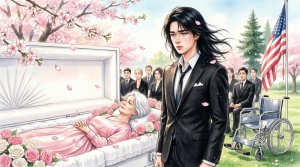
I left before anyone could see me cry. Walking to my small apartment, humiliation and anger intertwined. My footsteps echoed on empty streets as memories of my foster care childhood returned vividly. I grew up in foster homes. My parents were absent, broken systems dictated my life, and I learned to survive by carrying my belongings constantly, never trusting that anyone would truly care. Those lessons had hardened me, yet in Mrs. Rhode’s house, I allowed myself to believe in connection, in loyalty, in the idea that service and love might be rewarded in some way. She was never conventionally kind. Sometimes, she mocked my hair, sometimes my energy, and other times she questioned whether smiling was part of my vocabulary, yet she noticed details no one else ever did. Attention mattered. Recognition mattered. And for seven years, I was her shadow, her confidant, her aide, her anchor in moments when her own family abandoned her or could not be bothered to visit. I remembered the mornings she insisted I sit for breakfast beside her, telling me I looked slightly more alive than usual. Those words, small and rare, had felt like acknowledgment of my existence.
I recalled one evening, carrying groceries home under the soft golden sun, when she stopped me mid-step. She asked in a low voice if I wanted to earn decent money, her eyes scanning my tired expression.
Her request felt like trust, like a bridge between her world and mine. I nodded, and from that moment, I became indispensable, a lifeline she relied on more than anyone would ever know.
I drove her to doctors, carried her bags, fixed her plumbing, and sat beside her during medical tests she feared. The town assumed I would inherit something, and I had assumed the same.
At the will reading, the assumption shattered. Not a single mention of my name. Her possessions, her money, her memories—given away to strangers and relatives who had hardly visited, while I was excluded entirely.
I returned home that night, exhausted and hollow. Grief intertwined with betrayal. I questioned every memory, every laugh, every conversation, wondering if they had been nothing more than illusions of connection.
Yet the next morning, at exactly 7:13, a knock on my door startled me. Mrs. Rhode’s lawyer stood there, a small locked box in his hands, eyes serious and unyielding, ready to speak.
He said, “James… there’s one final instruction Mrs. Rhode left behind. After you open this, your life will never be the same.” My heart raced, anticipation and fear coiling inside me like serpents.
I took the box with shaking hands, careful not to drop it, not knowing if it contained joy, revenge, or a final cruel trick to test my endurance and devotion.
The lock clicked open. Inside was a collection of letters, photographs, and a single key attached to a tag. I examined each item slowly, the weight of years pressing against my chest with every second.
Letters detailed her thoughts, her fears, her memories of my years of service, and her acknowledgment of my unwavering presence when no one else had cared.
The photographs were intimate: me laughing while helping her, carrying groceries, sitting beside her on cold hospital chairs. Each picture confirmed what I already knew—I had mattered deeply to her, even if the world did not understand.
The key was engraved with numbers and letters I did not immediately recognize. I realized it was to a safety deposit box in a nearby bank. My pulse quickened as I understood that the true inheritance was concealed, hidden away, a treasure of tangible and intangible wealth.
Her words, written meticulously, instructed me to use the contents to build, to create, to honor life rather than dwell in resentment. She had left me guidance, responsibility, and trust—worth more than any monetary inheritance could offer.
I felt tears sting my eyes, not of grief this time, but of validation. I had been invisible in legal terms, yet profoundly visible in her heart. The recognition I craved came not through currency but through acknowledgment of my character and devotion.
The town might never know, the niece might never approve, yet Mrs. Rhode’s final message was clear: true wealth lies in the impact one leaves on others’ lives, not the accumulation of material possessions.
I used the key, opened the box, and found funds earmarked for projects she believed in, investments to secure education, healthcare, and homes for those in need—exactly the causes she and I had discussed over countless mornings.
Her final note instructed me to never reveal the contents or the origin. Instead, she trusted me to continue her legacy, to turn years of service and compassion into action and change.
I realized then that the inheritance she left was not merely physical; it was a moral compass, a map to purpose and meaning, and a declaration that my years of care had not been wasted.
The law might have written me out, but she wrote me into eternity, immortalizing my presence in ways that money alone could never achieve.
I understood the lesson clearly: the most profound legacies are those unseen, those lived in quiet moments, acts of service, and unrecognized devotion that shape lives silently, powerfully.
Opening that box was not the end; it was a beginning, a call to action to honor her trust and amplify the good she had nurtured, and to prove that recognition need not come from the world.
I felt empowered, validated, and challenged. Her faith in me outweighed all the legalistic omissions, transforming perceived betrayal into purpose and setting me on a path I had never expected.
The story spread quietly at first, then quickly grew online as neighbors and acquaintances shared my tale. It sparked debates on gratitude, morality, and the hidden legacies of mentorship and service.
Some readers were outraged by the niece’s exclusion of me, others inspired by Mrs. Rhode’s cunning plan, and many reflected on their own relationships and who might be quietly shaping their lives unseen.
Social media lit up with discussions about family, loyalty, and the ethics of inheritance, while groups formed to explore ways to recognize invisible caregivers, echoing the powerful resonance of Mrs. Rhode’s final act.
Thousands shared the story, urging friends, family, and followers to reflect on who they care for and who cares for them, igniting waves of emotional and philosophical debate.
The comments section became a forum for dialogue: debates about entitlement, ethical responsibility, and the difference between legal recognition and moral acknowledgment filled pages and pages.
Some shared their personal stories of invisible labor, others questioned the fairness of inheritance law, and many expressed admiration for Mrs. Rhode’s foresight and wisdom.
The story became a touchstone for discussions about human kindness, demonstrating that true appreciation often comes in forms that legal documents cannot measure or quantify.
Readers debated whether monetary inheritance mattered more than moral and emotional recognition, sparking philosophical conversations about the nature of gratitude, fairness, and relational justice.
Every post encouraged introspection. People asked themselves: who in my life am I ignoring? Who invests in me without expectation? And what legacy will I leave behind for those who serve me silently?
The narrative transcended its original events, evolving into a social experiment on empathy, responsibility, and the ethical treatment of those who commit themselves to others.
The engagement was immense. Shares, likes, comments, and retweets multiplied daily, as the story became a viral phenomenon, encouraging conversation in living rooms, classrooms, and workplaces worldwide.
From corporate offices to small communities, debates raged over loyalty, justice, and the often invisible sacrifices made by caregivers who rarely receive public recognition.
Readers discussed how social media amplifies moral stories and the importance of highlighting human decency beyond the traditional focus on wealth, status, or notoriety.
The story sparked initiatives: crowdfunding, awareness campaigns, and volunteer recognition programs inspired by the narrative of Mrs. Rhode’s secret inheritance began to appear in multiple countries.
Teachers used it to encourage students to reflect on empathy and responsibility, while therapists cited it when discussing the psychological importance of acknowledgment and validation.
The tale became an example of how human stories can transcend social media noise, creating meaningful cultural conversations about ethics, recognition, and the invisible labor of love.
Even months later, the narrative continued to inspire debate. Philosophers, writers, and everyday people analyzed the choices of each character, exploring justice, intention, and the moral weight of promises kept.
It created ripples in professional networks too, highlighting how mentorship, trust, and ethical legacies shape careers, workplaces, and industries in ways that money alone cannot influence.
People shared variations of their own experiences online, documenting quiet heroism and care, reinforcing the idea that service, often unnoticed, has immense value beyond legal acknowledgment.
The story challenged readers to reconsider what inheritance truly means: the passing down of material goods or the shaping of character, purpose, and impact across generations.
Discussions about equity, fairness, and morality proliferated, showing that viral narratives could be more than entertainment—they could spark real reflection, advocacy, and social change.
Parents, children, and communities debated ethical frameworks, teaching lessons about gratitude and the invisible debts owed to those who nurture, guide, and protect others quietly.
The debate even reached legal circles, prompting discussions about how caregiving might be recognized or incentivized in future policies, reflecting a societal acknowledgment of unseen labor.
In the end, I realized Mrs. Rhode’s gift was more than money or possessions; it was a lesson in perception, ethics, and human value, one that social media amplified to reach thousands, even millions.
Her final act demonstrated that the most important inheritance is not wealth, but trust, recognition, and the opportunity to continue meaningful work in the world, inspiring all who heard her story.
People continue to discuss, debate, and share the narrative, proving that a single act of foresight, love, and validation can create a wave far larger than any legal document could dictate.
THE END.

