Part 3
The second note was shorter than the first, but sharper.
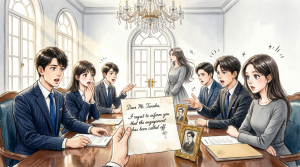
Mr. Bellamy held it under the kitchen light. Outside, rainwater slipped down the window in thin silver lines, turning Grandma’s backyard into a blur of wet grass, bird feeders, and the crooked fence my father had promised to fix for five straight summers.
He never had.
I had painted it once.
Ryan had called the color ugly.
Mr. Bellamy began to read.
“If they are hearing this, then they have already lied in my kitchen.”
My mother pressed both hands to her mouth.
My father looked away toward the sink, where Grandma’s yellow rubber gloves still hung over the faucet like she might return any minute to scold us for leaving dishes to dry with water spots.
“Thomas will say he does not remember. Shirley will say things were not that bad. Ryan will look confused because confusion has always been the cleanest shirt laid out for him.”
Ryan’s ears went red. “That’s unfair.”
Mr. Bellamy did not pause.
“I am tired of the family story that Evelyn was simply helpful. Helpful is carrying a casserole. Helpful is watering plants while someone is away. A childhood spent cooking, cleaning, soothing tempers, surrendering money, missing chances, and being praised only when useful is not help. It is extraction with a family name pinned to it.”
Extraction.
The word made something inside me go very quiet.
Not calm. Quieter than calm. Like a lock turning.
I thought of every time my mother had said, “You know how Ryan is.” Every time my father said, “Don’t make things difficult.” Every time Ryan yelled my name from another room while standing three feet from what he needed.
I had called those moments normal because normal was the only house I had.
Grandma had called them extraction.
Mr. Bellamy continued.
“I watched Shirley let Evelyn eat last and then call her mature. I watched Thomas praise Ryan’s smallest efforts and treat Evelyn’s exhaustion as proof of good character. I watched money meant for her future disappear into her brother’s comfort, then listened as everyone wondered why she lacked ambition.”
My father flinched.
There it was.
He remembered that one.
When I was nineteen, I had told him I wanted to apply to a culinary program in Charleston. I had hidden the brochure under my mattress for two months, touching the glossy pages at night like a secret map. There were photos of steel kitchens, white jackets, sugared pears, and women with knives in their hands who looked like they belonged exactly where they stood.
My father had read the tuition number and laughed.
“Ambition is expensive, Evie,” he’d said. “You need a realistic plan.”
Ryan’s baseball fees that year had cost nearly the same.
I looked at him now, across Grandma’s table, and watched him avoid my eyes.
Mr. Bellamy read on.
“Three years ago, after I confirmed what happened to Evelyn’s education fund, I changed my will. I stopped thinking of my estate as family comfort and began thinking of it as correction.”
My mother sobbed once.
Ryan straightened. That word got his attention. Will.
Not childhood. Not stolen money. Not me.
The will.
People show you where their grief begins.
“If Shirley cries,” Mr. Bellamy read, “let her. Tears do not return what was taken. If Thomas speaks of fairness, ask him whether fairness ever required Ryan to wash his own plate. If Ryan says he never asked for any of it, remind him that comfort accepted long enough becomes participation.”
Ryan snapped. “I was a kid.”
I heard my own voice before I decided to use it.
“You were twenty-four when you called me from your apartment because you didn’t know how to clean vomit out of a bathroom rug.”
His mouth opened.
Closed.
The memory hung between us.
He had hosted a football party. Someone drank too much. He called me at 1:13 a.m. because “Mom said you know what to do.” I drove forty minutes with baking soda, vinegar, gloves, and a change of clothes because I had work at eight. He fell asleep on the couch while I scrubbed the floor.
The next morning, he texted: lifesaver.
Not thank you.
Lifesaver.
As if my purpose was emergency service.
Mr. Bellamy glanced at me. Not pity. Approval, maybe.
Then he finished the note.
“There is a photograph in the oak frame on my living room shelf from Easter, fifteen years ago. Everyone smiles. Evelyn is three steps behind the chairs, holding a serving bowl. If anyone still doubts what I mean, look at it and ask why the only daughter who made the meal was not sitting in the picture.”
My chest tightened.
I knew the photograph.
Pink cardigan. White skirt. Ham glaze on my wrist. I had been seventeen and hungry, my feet aching in flats that pinched at the heel. My mother had told me, “Stand there for a second, Evie, don’t block Ryan.”
Don’t block Ryan.
That might have been the family motto.
My father muttered, “It was one picture.”
Mr. Bellamy folded the note. “Your mother clearly disagreed.”
The lawyer closed the ledger, but he did not give it to anyone yet.
“We return to my office now,” he said. “The will reading will continue.”
My father stepped forward. “We should discuss this privately first.”
“No.”
That word again.
It had become my favorite sound.
My mother looked at me through tears. “Evelyn, please. We’re all upset.”
I waited for the old reflex.
The apology. The softening. The immediate need to comfort her because her pain was louder than mine had ever been allowed to be.
It rose in me like a trained dog.
Then stopped.
Grandma’s words sat in my body, heavy and warm.
Do not comfort them before the reading finishes.
So I did not.
We left the kitchen exactly as it was: flour in the mixing bowl, the false-bottom tin on the counter, my mother’s tissues crumpled beside Grandma’s sugar jar.
On the way out, I stopped in the living room.
The oak frame was on the shelf beside Grandma’s Bible.
I picked it up.
There we were.
My father seated at the head of the table, smiling with a carving knife in his hand though I had carved the ham. My mother beside him, pearls bright against her throat. Ryan leaning back in his chair, grinning, one arm thrown lazily over the empty chair next to him.
And me.
Behind them.
Holding a serving bowl.
Half in the picture. Half out.
Like a ghost doing catering.
I carried the photograph back to the car.
Nobody told me to put it down.
That was new.
At Mr. Bellamy’s office, no one tried to put me in the hallway.
That was new too.
But when we sat down and Mr. Bellamy opened the will, I felt something colder than fear.
I felt expectation.
Because Grandma had not done all of this just to shame them.
She had built a path.
And we were only halfway down it.
Part 4
The will sounded strange in legal language.
Grandma’s voice had always been sharp, warm, and plain. She said things like, “Don’t hand me a lie and expect me to admire the wrapping,” and “A man who can find the TV remote can find the laundry basket.” She did not sound like whereas, pursuant, and herein.
But beneath Mr. Bellamy’s careful reading, I could still hear her.
Specific gifts came first.
Her wedding ring to Aunt Denise, because “Denise knows how to keep a thing without turning it into a weapon.”
Her antique clock to her younger brother, Martin.
Five thousand dollars to the church library, which made sense. Grandma believed books had saved more women than sermons ever had.
A donation to a shelter for girls aging out of foster care.
My mother cried softly through those parts, but nobody reached for her. Not even my father. He was staring at the edge of the table, one hand curled into a fist beside his knee.
Ryan shifted in his chair.
His impatience had returned now that the ledger was closed. I knew that look. He wore it whenever a conversation stayed too long on someone else’s pain.
Then Mr. Bellamy turned a page.
“The residence at 184 Maple Ridge Road, including all land, fixtures, and furnishings not otherwise designated, shall pass in full to my granddaughter, Evelyn Hart.”
My mother shut her eyes.
My father lifted his head.
Ryan said, “Wait, what?”
The words seemed to echo off the walls.
The house.
Grandma’s house.
The porch swing. The yellow kitchen. The pantry with the false-bottom flour tin. The living room shelf where my humiliation had sat in a frame for fifteen years, seen by the only person honest enough to understand it.
Mine.
I did not feel joy first.
I felt terror.
Property had always belonged to people who gave orders. People who signed forms. People who sat at the head of tables and said, “We’ll decide.” I had never owned anything bigger than my car, and even that my father had called “impractical” because it had two doors.
Mr. Bellamy kept reading.
“The investment account listed in Schedule B, the bond portfolio listed in Schedule C, and the cash reserve held at First Carolina Bank shall pass in full to Evelyn Hart.”
The room tilted.
Ryan sat forward. “All of it?”
Mr. Bellamy looked over his glasses. “Yes.”
“That can’t be right.”
“It is.”
My father’s voice came low. “My mother would not leave everything to one grandchild.”
Mr. Bellamy’s expression did not change. “She did not leave everything to one grandchild. She made several specific gifts, as I have read. The remainder of the estate passes to Evelyn.”
“Because she washed some dishes?” Ryan said.
There it was.
The whole family history reduced to chores, because chores sounded smaller than servitude.
I turned to him.
“No,” I said. “Because all of you spent years treating me like I belonged to the house. Grandma decided the house should belong to me.”
Ryan looked like I had slapped him.
My father pointed at me. “Do you hear yourself?”
“Yes,” I said.
That might have been the most shocking sentence I had ever spoken in front of him.
Yes.
Not sorry. Not I didn’t mean. Not let me explain.
Yes.
My mother started rocking slightly in her chair. “Evelyn, sweetheart, your grandmother was angry. You know how she got. She loved all of us.”
“She loved all of us,” I said, “but she saw all of us.”
My mother’s face crumpled again.
Once, that would have pulled me across the room. I would have crouched beside her chair, taken her hand, whispered that it was okay. I had spent my whole childhood managing my mother’s emotional weather. If she sighed, I cleaned. If she cried, I apologized. If she was quiet, I searched the house for what I had done wrong.
But grief does not automatically deserve obedience.
I stayed seated.
Mr. Bellamy read the next clause.
“If any beneficiary contests this will, threatens litigation without substantial evidence, attempts to pressure Evelyn Hart into private redistribution, or engages in harassment intended to alter my instructions, that person’s remaining gift shall be revoked and redirected to the Eleanor Hart Fund for Girls in Transitional Housing.”
My father inhaled sharply.
Ryan frowned. “Remaining gift?”
Mr. Bellamy reached into the folder and removed a smaller envelope.
“For you.”
Ryan snatched it.
He opened it fast, with the offended confidence of a man expecting the punchline to improve.
Inside was a cashier’s check.
Five thousand dollars.
And a note.
Ryan stared at the amount.
The red in his face climbed from his neck to his ears. “This is a joke.”
Mr. Bellamy took the note after Ryan dropped it onto the table like it was contaminated.
He read aloud.
“Ryan, this is enough for a deposit, a mattress, and your first month of learning where your plates go when no woman is following behind you. Love, Grandma.”
A sound escaped me.
Not quite a laugh. Not quite a sob.
My mother gasped. “That is cruel.”
Mr. Bellamy folded the note carefully. “Cruelty is making a child serve a household and calling it love. This is documentation.”
My father stood.
“Enough. I will not be insulted by my own mother’s lawyer.”
Mr. Bellamy looked up. “Then you may sit and be instructed by her will.”
For one wild second, I thought my father might hit him. His fists clenched, shoulders high, face tight with a rage he usually kept polished under authority. But men like my father love control more than violence. Violence gets messy. Control lets them call themselves reasonable.
He sat.
Mr. Bellamy finished the reading.
There were safeguards. Deadlines. Procedures. The estate would be handled through his office. I was not to sign anything my parents gave me without counsel. I was not to discuss redistribution without a third-party attorney present. Grandma had even left instructions that the black ledger be copied, notarized, and retained.
“She thought of everything,” Ryan muttered bitterly.
“No,” I said, looking at the Easter photograph in my lap. “She watched everything.”
When the reading ended, no one moved.
The rain had stopped. Thin sunlight came through the blinds, striping the table in pale gold.
My mother was the first to speak.
“Evelyn,” she said, voice trembling, “can we talk privately?”
“No.”
Her mouth parted.
It was amazing how small a forbidden word could make people look when they were used to owning your yes.
My father leaned toward me. “You need to be very careful. Money changes people.”
I looked at his hand on the table. Gold wedding band. Clean nails. The same hand that used to slide Ryan’s report cards across the dinner table like trophies while mine stayed under the mail.
“No,” I said. “Money reveals what people thought they could take.”
Ryan stood so fast his chair rolled backward.
“You’re really going to let a dead woman turn you against your family?”
I looked at him for a long time.
Then I said, “Ryan, I was already outside the room when she started helping me.”
His face changed.
Not remorse. Not yet.
Something more fragile.
Recognition, maybe.
But it arrived twenty-three years late, and late love is just another kind of mess someone expects you to clean.
Part 5
The parking lot smelled like wet asphalt and car exhaust.
My mother followed me out of the office with quick little steps, her heels clicking behind me like a nervous clock.
“Evelyn, please.”
I kept walking.
The Easter photograph was tucked under my arm. The ledger was inside Mr. Bellamy’s leather case, not because I wanted it out of my sight, but because Grandma had known better than to let my family get their hands on proof.
“Evelyn.”
I stopped beside my car.
My mother stood two parking spaces away, mascara smudged beneath her eyes, pearl earrings trembling slightly as she breathed. She looked smaller than usual. That should have moved me. It did, a little. But not enough to override memory.
“What do you want?” I asked.
Her face folded around the question.
“I want my daughter back.”
I almost smiled.
Not because it was funny.
Because there it was: back.
People only say they want you back when they realize you have left a place they considered yours.
“You had me,” I said. “For years.”
“That isn’t fair.”
“Neither was taking my college money.”
She flinched.
Behind her, my father and Ryan came out of the building. Dad was already on his phone, probably calling someone important enough to make him feel less exposed. Ryan lingered near the door, envelope crushed in his hand.
My mother lowered her voice. “I didn’t think of it that way at the time.”
“How did you think of it?”
She looked down at the damp pavement. A yellow leaf had stuck to the toe of her shoe.
“We needed help.”
“No,” I said. “You needed someone who wouldn’t fight back.”
The truth made her cry again, but softer this time. Less performance. More leak.
“I loved you,” she said.
“I know.”
She looked up quickly, relieved.
I let the relief live for one second before I killed it.
“But you loved me most when I was useful.”
Her lips parted.
I got into my car.
For a moment, I sat with both hands on the steering wheel, breathing in the smell of old coffee, rain, and the vanilla air freshener I had clipped to the vent two months ago. My hands shook so badly I could not start the engine.
In the rearview mirror, I watched my family break into pieces.
My father argued into his phone. My mother stood with a tissue pressed to her mouth. Ryan kicked at a puddle, angry as a child denied dessert.
None of them looked at me.
That was familiar.
The difference was, for once, I was leaving anyway.
The first week after the will reading, the calls came in waves.
My mother called eleven times on Monday. My father called twice, which was more frightening because my father only called when he had decided a conversation was a command. Ryan texted first.
So Grandma bought you. Nice.
Then:
You know this is insane, right?
Then:
I didn’t ask you to do all that stuff.
Then, around midnight:
Did you really pay for my academy?
I stared at that one for a long time.
Not because I owed him an answer.
Because somewhere inside the selfish man was still a boy standing in cleats he had never wondered how we afforded.
I typed:
Grandma’s records say my education fund did.
He replied three dots.
Then nothing.
My father’s approach came through email. Of course it did. He liked written records when he believed they made him look rational.
Subject: Family Resolution
Evelyn,
Your mother and I believe emotions are running high and decisions made in grief should be handled with maturity. Your grandmother’s final documents may be legally valid, but that does not mean they represent what is morally best for the family. We propose meeting with a mediator to discuss a fair redistribution.
Dad
I read it twice.
Then I noticed what was missing.
No apology.
No “we took from you.”
No “we were wrong.”
Just maturity, morally best, fair.
My father had always loved large clean words. He used them like tablecloths over rot.
I forwarded the email to Mr. Bellamy.
His reply came ten minutes later.
Do not respond. I will.
That was new too.
Having someone else absorb the first blow.
On Thursday, I went to Grandma’s house alone.
Mr. Bellamy had given me the keys. They felt heavier than keys should. I stood on the porch for nearly five minutes before opening the door, listening to the wind move through the bare branches and the porch swing complain softly on its chain.
Inside, the house waited.
No one called my name from another room.
No laundry baskets sat at the foot of the stairs like assignments.
No one asked what was for dinner.
I walked through slowly, touching the edges of things.
The hallway table. The quilt on the guest bed. The chipped blue mug Grandma used for tea. The pantry door.
In the kitchen, the flour was gone. Mr. Bellamy’s assistant had cleaned it before locking up. But I could still imagine the white dust on the counter, the hollow sound of the tin, my mother’s face when the past climbed out.
I opened the cabinets.
Plates stacked neatly. Bowls by size. Glasses rim-down on soft shelf liner.
For years, I had cleaned this kitchen as a granddaughter. Now I stood in it as the owner.
The word felt ridiculous.
Owner.
I sat at the breakfast table and cried so hard my ribs hurt.
Not because I was sad exactly. Not happy either.
Because I had spent my life waiting for someone to say, “You can stop now,” and the only person who finally did had to die first.
A knock came at the back door.
I wiped my face fast, heart jumping.
Through the glass, I saw Daniel Price.
He lived two houses down, or had when we were kids. Tall now, with rain-dark hair, a navy work jacket, and a paper bag tucked under one arm. I remembered him as the boy who once helped me carry three grocery bags from Grandma’s car while Ryan sat inside complaining the game was on.
I opened the door.
“Hey, Evelyn,” he said gently. “I heard about your grandmother. I’m sorry.”
“Thank you.”
He lifted the bag. “My mom made banana bread. She said Eleanor liked it toasted with butter.”
“She did.”
His eyes moved over my face, not nosy, just noticing. “You okay?”
The old answer rose immediately.
I’m fine.
It stood on my tongue, polished and dead.
Then I surprised myself.
“No,” I said. “But I think I’m starting to be.”
Daniel nodded like that made perfect sense. “That counts.”
I took the bag.
It was warm.
For the first time in days, someone had brought something to me without expecting me to serve it back.
And that small kindness frightened me almost as much as the ledger had.

