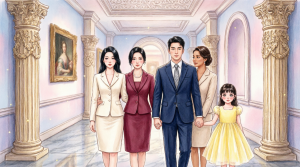
My name is Ingred Fairbanks Webb, and I’m thirty-four years old. Four years ago, on the night before Mother’s Day, I discovered that I had been erased from my own family, removed from our WhatsApp group like a stranger, like someone who had never belonged there at all. My mother’s message to my siblings was crystal clear. All my children are successful except Ingred. She chose to be a lowly teacher. I no longer see her as my daughter. I didn’t scream. I didn’t call her in tears. I simply disappeared the way she wanted me to. What my mother didn’t know was that four years later, I would be standing on a stage in front of five hundred people, shaking hands with the governor of Virginia, while she sat uninvited in the audience, waiting for a moment in the spotlight that would never come. Before I tell you what happened next, take a moment to like and subscribe, but only if this story truly speaks to you. Where are you watching from right now? And what time is it where you are? Let me start from the beginning, from the night I realized I had lost the family I thought I had and began building the one I actually deserved.
Growing up, the Fairbanks family was what people in our Virginia suburb called picture-perfect. My mother, Margaret Fairbanks, retired from her job as a regional bank manager at fifty-five, not because she needed rest, but because she had finally secured her seat at the Westbrook Country Club. The membership alone cost more than my annual salary. She wore her Hermès scarves like armor, always draped just so over her shoulders, always in muted tones that whispered old money, even though our money was barely a generation old. My sister Victoria was the crown jewel, thirty-eight years old, a plastic surgeon in Richmond with a clientele that included local news anchors and politicians’ wives. She posted photos of her Rolex Datejust casually resting on restaurant tables, her perfectly manicured nails wrapped around champagne flutes at charity galas. Every Thanksgiving, she would update us on her latest subtle work as if we couldn’t see the tightening around her eyes, the lips that seemed a little fuller every year. Then there was Bradley, forty years old, a corporate lawyer in D.C. who drove a Mercedes G-Wagon and made sure to park it in the most visible spot at every family gathering. He had a wife named Carolyn who collected designer handbags the way some people collect stamps, methodically, obsessively, always hunting for the next limited edition. And then there was me, Ingred, the youngest, the one who never quite fit the family portfolio.
I was a fourth-grade teacher at Maple Creek Elementary, a small school tucked into the rolling farmland about ninety miles from my mother’s pristine Colonial Revival house. My Honda Civic was twelve years old. My apartment could fit inside Victoria’s walk-in closet. But here’s what no one ever mentioned at those country-club brunches: my mother had two successful children, a doctor and a lawyer. Not three. Never three. I didn’t choose teaching because I couldn’t do anything else. When I graduated from high school, I had a 4.1 GPA and a full scholarship offer to pursue pre-med at UVA, the same path Victoria had taken a decade earlier. My mother had already ordered the Future Doctor bumper sticker for her car. She had told all her friends at the club. The narrative was set. But that summer, I volunteered at a literacy camp for underprivileged kids in our county, and there was this boy, Marcus Jr., eight years old, who couldn’t read past a first-grade level and had been told his whole life that he was slow. By August, he was devouring chapter books. The day he finished Charlotte’s Web on his own, he hugged me so hard I thought my ribs might crack. That was the moment I knew.
I called my mother that night and told her I was turning down the pre-med scholarship. I was going to study education instead. I wanted to teach elementary school. The silence on the other end lasted seventeen seconds. I counted.
“You’re throwing your life away,” she finally said. “For what? A government salary and ungrateful children?”
She didn’t come to my college graduation. She said she had a conflict, a garden party at the club that same weekend. Victoria sent a card with a fifty-dollar check and a note that read:
“Good luck with your little career.”
I cashed the check. I needed groceries. But I never forgot the message beneath those words. You chose wrong. You chose less. And we will never let you forget it. I didn’t choose to be poor. I chose meaning. To my mother, those were the same thing. The exclusion didn’t happen all at once. It crept in slowly, like mold in the corners of a room no one bothered to clean. Thanksgiving 2019, I arrived at my mother’s house with a homemade sweet potato casserole, her favorite recipe, the one Grandma Ruth used to make. When I walked into the dining room, I found my place card at the small folding table in the corner, the one set up for Victoria’s stepchildren and Bradley’s toddler nephew.
“Oh, honey, we just ran out of room at the main table,” my mother said, adjusting her pearl earrings. “You don’t mind, do you? You’re so good with children.”
I was thirty years old. Christmas that year was worse. I spent three weeks knitting my mother a cashmere scarf in her favorite shade of dove gray. When she opened it, she held it up, smiled thinly, and said:
“How handmade.”
Then she turned to Victoria, who had given her a Chanel clutch, and spent the next twenty minutes praising the stitching, the hardware, the craftsmanship. My scarf ended up in the coat closet. I found it there two months later, still wrapped in tissue paper, with the tags I had carefully removed stuffed back inside. But the final blow came on her birthday in early 2020. I called to ask what time dinner was.
“Oh, Ingred,” she said, her voice dripping with practiced regret. “The restaurant only had six seats available. Your father, Bradley and Carolyn, Victoria and her date. You understand, don’t you? Family comes first.”
Six seats, and somehow I wasn’t family enough to fill one of them. But all of that, the folding table, the forgotten scarf, the restaurant that supposedly didn’t have room, none of it prepared me for what came next. The only person in my family who still treated me like I existed was my cousin Rachel. She was twenty-four then, my aunt Patricia’s daughter, eight years younger than I was, fresh out of college and working her first marketing job in Charlottesville. We had been close since she was little. I used to babysit her on weekends, take her to the library, help her with homework when her own parents were too busy fighting. Rachel was the kind of person who noticed when you were hurting even when you tried to hide it.
The night before Mother’s Day 2020, my phone rang at 11:47 p.m. Rachel’s name lit up the screen. When I answered, her voice was shaking.
“Ingred, I need to tell you something. I just… I didn’t know if I should, but you deserve to know.”
My stomach dropped.
“What happened?”
“Check your WhatsApp. The family group.”
I opened the app and scrolled to Fairbanks Family Dinner, the group my mother had created three years earlier to coordinate holidays. I wasn’t in it anymore.
“Rachel, I don’t—”
“I know. They removed you. Your mom asked Victoria to do it last week, but she only got around to it tonight.”
Rachel’s voice cracked.
“Ingred, I’m so sorry. I screenshot everything. I’m sending it to you now.”
My phone buzzed. One image, then another. I stared at the screen, at my mother’s words frozen in digital ink, and something inside me went very, very quiet.
“Why are you telling me this?” I whispered.
“Because you’re my family,” Rachel said. “Even if they’ve decided you’re not theirs.”
I saved those screenshots in a folder titled Proof. I didn’t know then that I would need them. I just knew I couldn’t let those words disappear. I read that screenshot forty-seven times that night. Not because I didn’t understand the words. I understood them perfectly. I read them over and over because some part of me kept searching for a loophole, a phrase that might mean something else, a context that could soften the blow. There wasn’t one. The message was from my mother, posted in the family group at 8:32 p.m.
“Reminder: Mother’s Day dinner at the Jefferson, 7 p.m. sharp. All my children will be there. All my successful children. Ingred chose to be a lowly teacher. I no longer see her as my daughter. Please don’t mention her name tomorrow.”
Below it, Victoria had replied with a heart emoji. Just a heart. No protest. No hesitation. Bradley’s response had been even worse.
“Understood, Mom.”
Two words. That was all I was worth to my brother. Two words and total compliance. I sat on the edge of my bed in my tiny studio apartment, phone clutched in both hands, and I didn’t cry. I wanted to. God, I wanted to fall apart, to scream into a pillow, to call my mother and demand an explanation. But what would that have changed? She had made her decision. She had announced it to the family like a press release. Ingred is no longer one of us. And everyone had agreed. I stayed awake until two in the morning, staring at those messages, reading the timestamps, noticing that not a single person, not my father, not my aunt, not anyone, had pushed back. Rachel was the only one who thought to warn me. By sunrise, I had made a decision of my own. If my mother wanted me gone, I would be gone completely, on my own terms. But I would not forget, and I would not delete those screenshots. Some receipts you keep forever.
Mother’s Day morning, I woke up to silence. No calls. No texts. No awkward We miss you, wish you could make it from Victoria. Nothing. For the first time in thirty years, I didn’t send my mother flowers. I didn’t call to wish her a happy day. I didn’t drive ninety miles to sit at a corner table while she pretended I didn’t exist. I made myself coffee. I graded papers. I went for a walk along the creek behind my apartment complex and watched the water catch the morning light. And I thought about my options. I could call her, confront her, demand to know why she had said those things, why she had cut me out, why being a teacher made me unworthy of her love. I could screenshot her message and post it online, let the world see what kind of mother raises a doctor, a lawyer, and a daughter she throws away. I could show up at the Jefferson uninvited, make a scene, force them to acknowledge my existence. But what would any of that accomplish? My mother had made her choice. She had chosen status over her own child. She had chosen the opinions of women at a country club over the daughter who had loved her for three decades. If she wanted me to disappear, I would give her exactly what she asked for. Not because she demanded it, but because I chose it.
I blocked her number that afternoon, then Victoria’s, then Bradley’s. I deleted Instagram so I wouldn’t have to see their curated family photos. I didn’t know then that my silence would last four years. I didn’t know those four years would change everything. All I knew in that quiet moment was this: I would not beg to be loved by people who saw me as a stain on their reputation. The world kept spinning, and the Fairbanks family kept pretending I had never been part of it. Six months after that Mother’s Day, Rachel called me with an update I hadn’t asked for.
“Thanksgiving photos are up,” she said quietly. “Victoria posted them an hour ago.”
I told myself I wouldn’t look. I lasted three hours. The image showed my mother at the head of her formal dining table, with Victoria and Bradley on either side, their spouses arranged perfectly behind them. Crystal stemware caught the light. A massive turkey glistened in the center. The caption read:
“Grateful for my amazing family. Mom, you raised us right.”
Three people, not four. My chair wasn’t even empty. They had simply reconfigured everything as if the table had always been set for six instead of eight. By Christmas, I had stopped torturing myself with social media. But Rachel still called.
“Your mom tells everyone you’re doing volunteer work in Africa,” she said. “Some kind of education nonprofit. Very prestigious. Can’t come home because you’re changing lives overseas.”
I laughed, the bitter kind that scrapes your throat raw.
“She’s lying to cover up the fact that she disowned me. She’s lying so no one asks questions. She doesn’t want to admit she kicked out her own daughter for being a teacher.”
Rachel paused.
“Ingred, she told Mrs. Patterson at the club that you were nominated for some international teaching award in Kenya.”
I hadn’t left Virginia in three years. That was when I understood it. My mother didn’t hate me. She hated what my existence said about her. So she invented a version of me she could brag about, a humanitarian hero, conveniently unreachable. The real me, the one who taught fourth grade ninety miles away, was already a ghost.
I met Marcus Webb on a Tuesday in October, surrounded by pumpkins and giggling nine-year-olds. His farm, Webb Family Organics, was a local legend, fifty acres of rolling hills, heritage vegetables, and a small orchard where families came every fall to pick apples and take pictures against the red barn. I had brought my fourth graders on a field trip to learn about sustainable agriculture. Marcus was waiting by the tractor when our bus pulled up, tall and broad-shouldered, with kind eyes and soil permanently embedded under his fingernails. He shook my hand and said:
“You must be Miss Fairbanks. My daughter hasn’t stopped talking about you.”
His daughter was Lily, five years old, with golden curls and a smile that could have melted glaciers. She was in my colleague’s kindergarten class, but I tutored her twice a week after her mother died of cancer the year before.
“Lily is an incredible kid,” I told him. “Smart as a whip. Curious about everything.”
Something shifted in his face, gratitude maybe, or the recognition of a kindred spirit.
“She says you’re her favorite teacher in the whole school, even though you’re not technically her teacher.”
He smiled, and that field trip turned into a phone call. The phone call turned into coffee. Coffee turned into a picnic under the old oak tree on his property, where Marcus asked about my family and I told him the truth.
“I don’t have one,” I said. “Or they decided they don’t have me.”
He didn’t ask for details. He didn’t push. He just handed me a slice of apple pie his late wife’s mother had taught him to make and said:
“Family isn’t always blood, Ingred. Sometimes it’s the people who show up when everyone else leaves.”
That was the moment I started believing him. Two years passed like pages turning in a book I was finally writing for myself. In 2022, Marcus and I got married, not at a country club, not with three hundred guests and a twelve-tier cake. We exchanged vows under the oak tree where we had our first real conversation, with Lily as our flower girl and a handful of friends who had become family. I officially adopted Lily that same year. The day the paperwork came through, she handed me a crayon drawing of three stick figures holding hands under a yellow sun. At the bottom, in wobbly kindergarten letters, she had written: My mom, my dad, me. I keep that drawing in my desk at work. Some days, when the world feels heavy, I pull it out just to remember what matters.
I finished my master’s degree in educational leadership through night classes and summer sessions, typing papers at eleven at night after Lily was asleep, studying during my lunch breaks, determined to prove that ambition did not require abandoning the students I loved. When a position opened up for assistant principal at Maple Creek Elementary, I applied. The interview panel included three school board members, one of them Marcus, who recused himself from voting. I got the job anyway. Through all of it, I stayed invisible. No social media. No press releases. No proud announcements to the family that had erased me. Somewhere in Richmond, my mother was still telling people I was saving children in Africa. Somewhere in D.C., Bradley was still pretending he had never had a second sister. Somewhere online, Victoria was posting family dinner photos at tables that would never have a place for me. They had no idea who I had become, and I wasn’t ready to tell them yet.
The phone call came on a Thursday afternoon in March 2024.
“Mrs. Fairbanks Webb?”
The voice was formal and precise.
“This is Diana Morrison from the Virginia Department of Education. The board has reviewed your application, and I’m pleased to inform you that you have been selected as the new superintendent of schools for Clark County.”
I sat down on the edge of my desk because my legs suddenly didn’t feel reliable. Superintendent. The position I had applied for on a whim, never believing I would actually be considered. Overseeing twelve schools, four thousand students, two hundred teachers.
“Are you certain?” I managed.
“Your track record speaks for itself. Literacy rates are up eighteen percent in three years. Teacher retention is the highest in the region. The mentorship program you developed is being adopted statewide. Dr. Hart specifically recommended you. She said you were the best educator she had ever worked with.”
Eleanor Hart, my mentor from my first year teaching, now the state education commissioner. I hadn’t spoken to her in months. The announcement hit the local papers two weeks later. Local Teacher Rises to Superintendent, a small headline in the Shenandoah Valley Voice, complete with my photo from the school district website. I didn’t think anyone in my family would see it. I was wrong. Rachel called that evening, breathless.
“Ingred, your sister just posted the article in the family group chat with the caption, Isn’t this our Ingred?”
My stomach tightened.
“What did my mother say?”
“Nothing. She hasn’t replied. But…” Rachel hesitated. “I was at Aunt Patricia’s when it happened. Your mom called Victoria immediately. I could hear her through the phone. Ingred, she was furious. Furious that you got the job. Furious that she didn’t know. Furious that she has been telling everyone you’re in Africa and now there’s proof you’ve been here the whole time.”
The email arrived three days later. The subject line read: From your mother. I almost deleted it unread. Almost.
My dearest Ingred,
I saw the wonderful news about your promotion. I always knew you had it in you. We should meet for lunch soon. I’d love to hear about everything you’ve accomplished. Mother’s Day is coming up. It would mean so much to have the whole family together again.
No apology. No acknowledgment of the four years of silence. No mention of the WhatsApp message that had shattered me. Just an invitation, as if nothing had happened, as if I had simply been away on a long trip and was now welcome to return. I didn’t respond. Two weeks later, my phone rang from an unknown number. Against my better judgment, I answered.
“Ing, it’s Victoria.”
Her voice was honeyed and warm, a tone I hadn’t heard since we were children.
“I know it’s been a while, but I wanted to reach out personally. Mom hasn’t been feeling well, and she’s been asking about you. She really wants to see you.”
“What’s wrong with her?”
“Just stress. You know how she gets. But she misses you, Ingred. We all do.”
I called Rachel that night.
“Is my mother sick?”
Rachel snorted.
“She was at the spa yesterday. Posted a selfie in the eucalyptus steam room. Ingred, they’re not reaching out because they miss you. They’re reaching out because you made the news.”
I already knew that, but hearing Rachel confirm it made the truth settle deeper into my bones. Can I ask you something? Have you ever received one of those reconciliation calls, the kind where you can hear the insincerity dripping through the phone? If you know exactly what I’m talking about, comment yes below. And if you want to know what I did next, keep reading, because what happened at that award ceremony surprised even me.
I wish I could tell you I was strong every single day, that I never wavered, never questioned, never lay awake at three in the morning wondering whether I was the villain in my own story. But that wouldn’t be the truth. The doubts crept in slowly after that phone call from Victoria. At work, colleagues kept congratulating me. The superintendent announcement had spread through the county like wildfire. Everyone wanted to shake my hand, ask about my plans, tell me how proud they were. And then came the questions I dreaded.
“Your parents must be over the moon,” my assistant principal said one morning, beaming. “I bet your mom is bragging to everyone at church.”
I smiled, nodded, changed the subject. That night, I sat at the kitchen table while Marcus washed dishes and Lily did her homework at the counter. The silence felt heavier than usual.
“You’re somewhere else,” Marcus said without turning around. “Talk to me.”
I pressed my palms against my eyes.
“Victoria called. Said Mom has been asking about me, that she misses me.”
I looked up at him.
“What if I’m wrong, Marcus? What if I’ve been too harsh? She’s still my mother. Maybe I should have…”
“Should have what?”
He dried his hands and turned to face me.
“Called her back? Gone to dinner? Pretended the last four years never happened?”
“I don’t know.”
My voice cracked.
“I just keep thinking everyone forgives family, right? That’s what you’re supposed to do. What if I’m the bad guy here?”
Marcus didn’t answer immediately. Instead, he walked to the office, disappeared for a moment, and came back with his laptop.
“I want to show you something,” he said. “Something I’ve been saving for a moment exactly like this.”
He set the laptop on the table and opened a folder labeled INGRED, DO NOT DELETE. Inside were files I had almost forgotten existed. The first was a screenshot of my mother’s WhatsApp message, the one Rachel had sent me four years earlier. The timestamp glowed in the corner: May 9, 2020, 8:32 p.m. The words hadn’t changed.
I no longer see her as my daughter.
The second was my mother’s email from two weeks earlier. My dearest Ingred. No apology. No acknowledgment. The third was a photo from Victoria’s Instagram, Thanksgiving 2020, the family portrait with the empty space where I should have been, the caption beneath it reading, Mom, you raised us right.
“I saved everything,” Marcus said quietly. “Every message Rachel forwarded. Every photo that showed up online. I backed it all up to the cloud with timestamps and metadata because I knew this day would come.”
He sat across from me.
“I knew there would be a moment when you forgot why you walked away, when you started wondering if you were the one who failed.”
I stared at the screen, at the evidence of my own erasure, and felt something shift inside me.
“You didn’t fail,” Marcus said. “You survived. You built a life. You became someone, not despite them, but without them.”
He reached across the table and took my hand.
“You don’t owe forgiveness to people who never asked for it. You owe yourself the truth.”
I closed the laptop slowly.
“Rachel sent you something else,” I said.
“What is it?”
Marcus hesitated.
“Are you sure you want to see?”
I nodded. He opened one more screenshot, a new message from the family group chat dated the day before. And when I read it, everything became clear. The screenshot was from the Fairbanks family group chat, the one I had been removed from four years earlier. My mother’s message glowed on the screen.
“Wonderful news. Ingred is being honored at the state Teacher of the Year ceremony next month. It will be televised. I’ve already confirmed our attendance. We’ll arrive early, sit in the family section, and join her on stage for photos. Victoria, wear your red Valentino. Bradley, bring Carolyn. This is an opportunity to show everyone that the Fairbanks family stands together.”
Victoria’s response came first.
“Already picked out my dress. Should I bring flowers?”
Bradley’s came next.
“I’ll clear my schedule. Good PR move.”
Not a single person had asked if I wanted them there. Not a single message mentioned reconciliation, an apology, or even a private conversation before showing up at the biggest moment of my career.
“They’re planning to hijack your ceremony,” Marcus said, his voice tight with controlled anger. “Walk in like nothing happened. Pose for cameras. Take credit.”
I read the messages again, slower that time. This is an opportunity. Not I miss my daughter. Not I was wrong. An opportunity to fix her reputation, to reclaim the narrative, to stand beside me in my moment of triumph and pretend she had been there all along.
“They don’t want me back,” I said, the realization settling cold and final in my chest. “They want the version of me they can show off.”
Marcus nodded.
“So what are you going to do?”
I looked at the screenshot one last time, at my mother’s careful orchestration, my siblings’ eager compliance, the complete absence of anything that resembled remorse.
“I’m going to let them come,” I said quietly. “And then I’m going to tell the truth.”
We gathered around the kitchen table that night, Marcus, Rachel on video call, and me, like generals planning a campaign.
“You could uninvite them,” Rachel suggested. “Call security, have them removed if they try to enter.”
“Then I’m the villain,” I said. “The ungrateful daughter who barred her own mother from her award ceremony. That’s the story they’ll tell everyone.”
“So what’s the alternative?” Marcus asked. “Let them waltz in and pretend they’ve supported you this whole time?”
I had been thinking about it for hours, running through scenarios, weighing every angle.
“No,” I said finally. “I let them come. I don’t cause a scene beforehand. I don’t warn them or confront them.”
I took a breath.
“And then, when I give my acceptance speech in front of five hundred educators, television cameras, and the governor of Virginia, I thank my family.”
Rachel’s face on the screen went still.
“Ingred…”
“I thank my family,” I repeated. “My husband, Marcus, who believed in me when no one else did. My daughter, Lily, who taught me what unconditional love looks like. And that’s it. That’s the whole list.”
Silence hung in the air.
“You’re not going to mention them at all,” Marcus said slowly.
“Why would I? They’re not my family. They made that clear four years ago.”
I pulled up the screenshot of my mother’s WhatsApp message on my phone.
“I don’t need to expose them. I don’t need to read this out loud. I just need to not include them. The absence will speak for itself.”
“And if your mother tries to come on stage anyway?” Rachel asked.
I smiled, the first real smile I had felt in days.
“Then I’ll remind her, very politely, that I’m simply honoring the boundaries she set. She said I wasn’t her daughter anymore. I’m just taking her at her word.”
Three days before the ceremony, Dr. Eleanor Hart called me.
“Ingred, we need to talk.”
Her voice carried the no-nonsense directness I remembered from my first year teaching, when she had been the principal who took a chance on a nervous twenty-two-year-old fresh out of college.
“Something’s come up.”
I braced myself.
“What happened?”
“Someone contacted the ceremony coordinator last week. A woman named Margaret Fairbanks said she was your mother.”
Eleanor paused.
“She requested to speak during the family remarks portion of the program. She wanted to say a few words about raising you.”
My grip tightened on the phone.
“She did what?”
“The coordinator passed the request to me since I’m giving the introduction speech. I turned it down.”
Another pause, heavier this time.
“Ingred, I don’t know the full story of your family situation. You’ve never told me, and I’ve never asked. But I know you. I’ve watched you work for fifteen years, and I know that if you wanted your mother involved, you would have mentioned her yourself.”
I exhaled slowly.
“Thank you, Eleanor.”
“I’m introducing you on that stage,” she continued, “and I’m going to talk about your achievements, your dedication, your fifteen years of changing children’s lives. Not your family name. Not who raised you. Just what you built with your own hands.”
Her voice softened.
“You earned this, Ingred. Nobody gets to rewrite that story but you.”
When I hung up, Marcus was watching me from the doorway.
“Your mother tried to get on stage.”
“Eleanor blocked her.”
He shook his head slowly, not in disbelief, but in confirmation of everything he already knew about the woman who had discarded me.
“She really thinks she can just walk back in,” he said.
“She thinks she deserves to,” I replied. “That’s the difference.”
The night before the ceremony, I sat at the kitchen table with a blank notepad, a cup of chamomile tea, and the weight of four years pressing against my chest. Lily had gone to bed an hour earlier, her small hand waving from the doorway.
“Good luck tomorrow, Mom. You’re going to be amazing.”
Marcus stayed in the living room, giving me space. He understood that some words needed to be found alone. I stared at the page. I would like to thank… My pen hovered. Who did I thank? My colleagues, obviously. Dr. Hart. The board members who believed in me. The students who made every early morning and every late night worth it. And then I thought about my mother, about the woman who hosted country-club luncheons while telling her friends I was saving children in Africa, who airbrushed me out of family pictures in real life long before anyone edited a photograph, who was at that very moment probably laying out her outfit, practicing her proud-mother smile, rehearsing the speech Eleanor had already denied her.
I started writing.
“I want to thank my family, the family I chose and the family that chose me back. My husband, Marcus, who saw me when I was invisible. My daughter, Lily, who taught me that love isn’t something you earn. It’s something you give freely.”
I put down the pen. That was enough. That was everything. No mention of the Fairbanks name. No acknowledgment of the people who announced my exile in a group chat. Just the truth. The family in my speech was the family that had actually shown up.
“Done?” Marcus asked from the doorway.
“Done.”
Tomorrow, I would stand in front of five hundred people, and for the first time in four years, I would let my silence speak.
The Virginia State Capitol had never looked more imposing. I had seen pictures of the building my whole life, Thomas Jefferson’s neoclassical design, the white columns, the dome that seemed to touch the sky. But standing at the entrance in my navy-blue dress, Marcus on one arm and Lily holding my hand, I felt as if I were walking into history. The ceremony was being held in the House chamber, five hundred chairs arranged in precise rows, each one filled with educators from every corner of the state, principals, teachers, school board members, superintendents like me who had spent their careers in classrooms before moving into offices and cameras. Three news crews were there, including a live feed for the Department of Education’s website. I signed in at the registration table. A volunteer handed me my badge.
Ingred Fairbanks Webb, 2024 Virginia State Teacher of the Year.
“Congratulations,” she said warmly. “Your family must be so proud.”
I smiled.
“They are.”
We took our seats in the front row, reserved for honorees and their immediate families. Lily sat between Marcus and me, her legs swinging beneath her chair, too short to reach the floor. She wore the dress we had picked out together, soft yellow with tiny embroidered daisies.
“Mom,” she whispered, tugging on my sleeve. “Is that your name up there?”
I looked up. A massive banner stretched across the stage.
VIRGINIA STATE TEACHER OF THE YEAR 2024
INGRED FAIRBANKS WEBB
My name, fifty feet wide and impossible to ignore. I squeezed Lily’s hand.
“Yeah, sweetheart. That’s my name.”
Behind me, I could feel it, the prickling sensation of being watched. I didn’t turn around. I didn’t need to. I already knew who was sitting in the second row, uninvited and undeterred, waiting for a spotlight that would never shine on them. I heard them before I saw them.
“Excuse me, that’s my daughter up there. Yes, the honoree. I need to be in the family section.”
My mother’s voice carried across the chamber with practiced authority, the same tone she used to command waiters, silence dinner parties, and convince strangers she belonged wherever she stood. I kept my eyes forward. Breathe. Just breathe. In my peripheral vision, I watched them arrive like a delegation: my mother in cream Chanel with pearls at her throat, Victoria in the red Valentino dress she had mentioned, cinched waist, dramatic neckline, camera-ready, Bradley in a charcoal Tom Ford suit, Carolyn trailing behind in Oscar de la Renta. They swept into the second row directly behind us. Then I heard my mother stage-whisper to the woman beside her:
“I’m Margaret Fairbanks, Ingred’s mother. I raised that girl from the day she was born. Everything she is, she owes to me.”
The woman nodded politely, glancing at the banner and then back at my mother. Victoria leaned forward close enough for me to catch her perfume.
“Ingred, you look well.”
I didn’t turn around. I didn’t acknowledge her. A hand touched my shoulder.
“Aren’t you going to say hello to your family?”
Bradley’s voice was casual, entitled. I turned my head just slightly, not enough to face them, just enough to be heard.
“My family is sitting right next to me.”
Then I turned back toward the stage, Lily’s small hand warm in mine. Want to know what happened when I gave my speech? When my mother heard me thank everyone in my life except her? I promise you, you won’t guess her reaction. If you’re still with me, tap that like button and stay, because the next few minutes are the reason I’m telling you this story.
Dr. Eleanor Hart walked to the podium with the same quiet authority she had carried into every classroom, every board meeting, every difficult conversation for the past three decades. She adjusted the microphone, surveyed the room, and began.
“In fifteen years of working in Virginia’s education system, I’ve had the privilege of meeting thousands of extraordinary teachers. But today, I want to tell you about one who stands apart.”
I felt my mother shift in her seat behind me, adjusting her pearls, preparing her proud expression for the cameras.
“Ingred Fairbanks Webb started her career in a rural elementary school with twenty-three students, limited resources, and unlimited determination. In her first year alone, she raised reading levels by an average of two grade levels per student. Not through magic. Through showing up every single day.”
She paused, letting the words settle.
“Ingred didn’t come from a background that made her path easy. She didn’t have connections or privilege handed to her on a silver platter. She built everything herself: her master’s degree while teaching full-time, her mentorship program, now being adopted in thirty-seven counties across the state, and her family, whom I have the honor of introducing now: her husband, Marcus, who has served on the Clark County School Board for six years, and her daughter, Lily, who told me backstage that her mom is the best teacher in the whole wide world.”
The camera panned to Marcus and Lily. Not to my mother. Not to Victoria in her red dress. To the family that mattered. Behind me, I heard a sharp intake of breath, the creak of a chair as someone gripped the armrest too tightly. Eleanor smiled.
“Please welcome your 2024 Virginia State Teacher of the Year, Ingred Fairbanks Webb.”
I walked to the podium on legs that felt steadier than I expected. Five hundred faces looked up at me. Cameras recorded every breath. And in the second row, four people in designer clothes waited for the acknowledgment they believed they deserved.
“Thank you, Dr. Hart,” I began. “And thank you to the Virginia Department of Education, the governor’s office, and everyone who made today possible.”
I looked out at the audience, the real audience, teachers who spent their weekends grading papers, principals who stayed late to counsel struggling students, educators who had chosen this life not for money or status but because they believed in the power of a child’s potential.
“When I started teaching fifteen years ago, I didn’t know whether I’d last a semester. The hours were long, the pay was modest, and some people…”
I paused, choosing my words carefully.
“…questioned whether it was a path worth taking.”
Silence, the kind that vibrates.
“But here’s what I learned. Teaching isn’t about proving anything to anyone. It’s about showing up for the kids who need you, even when no one else does, especially when no one else does.”
I took a breath.
“Which brings me to my thank-yous. To my colleagues at Maple Creek Elementary, you are my village. To Dr. Hart, who saw something in me when I was just a nervous twenty-two-year-old with a dream, I owe you more than words can say.”
Then I turned toward the front row.
“And to my family…”
I smiled at Marcus. At Lily.
“My husband, Marcus, who believed in me when I had stopped believing in myself. My daughter, Lily, who reminds me every single day what unconditional love looks like.”
I stopped. That was the list.
Behind me, someone in the second row stood up.
“Ingrid!”
My mother’s voice.
I didn’t turn around.
“Ingred, sweetheart, surely you didn’t forget your own mother.”
Margaret’s voice rang through the chamber, halfway between wounded and commanding, the kind of voice designed to make everyone in the room sympathize with her, the neglected mother overlooked by her ungrateful child. I heard movement behind me, heels clicking against marble. She was walking toward the stage. Five hundred heads turned. Cameras swiveled. The moment stretched like taffy, sticky and inescapable. My mother reached the bottom of the stage steps, her cream Chanel catching the light, her practiced smile fixed in place.
“I’d just like to say a few words about my daughter, about how proud I am of everything she’s—”
“Mrs. Fairbanks.”
My voice came out calm and quiet, amplified by the podium microphone for everyone to hear. She stopped mid-sentence, one foot on the first step.
“Thank you for attending,” I said, meeting her eyes for the first time in four years. “But the family portion of my speech has concluded.”
Her smile flickered, just once, a hairline crack in the façade.
“Ingred, I’m your mother.”
“You said you no longer saw me as your daughter.”
The words fell like stones into a still pond.
“Four years ago, in a group message, you said I chose to be a lowly teacher and that I was no longer part of your family. I have simply honored your decision.”
Gasps rippled through the audience. A murmur of voices. Someone dropped a program.
“The family I thank today,” I continued evenly, “is the family that stood by me, the family that didn’t require me to prove my worth through a job title or a salary.”
A security guard approached Margaret gently, gesturing back toward her seat. She stood frozen, unable to move forward and unwilling to retreat. For the first time in my life, my mother had nothing to say. The silence lasted exactly four seconds. Then, from somewhere in the middle of the chamber, a woman stood up, gray-haired, in her mid-sixties, wearing a simple cardigan and glasses that had clearly seen thousands of classrooms. She started clapping, slow and deliberate and unmistakable. Another person stood. Then five. Then twenty. The applause built like a wave rolling through the chamber until every single educator in that room was on their feet. Five hundred people were giving me something my own mother never had: validation without conditions.
I gripped the edges of the podium, my eyes burning. The security guard gently guided Margaret back toward her seat. She walked stiffly, mechanically, her perfect posture crumbling a little more with every step. Victoria reached for her arm, whispering something urgent, but Margaret shook her off. I caught fragments of nearby whispers.
“Did you hear what she said?”
“Her own mother disowned her for being a teacher?”
“That’s disgusting.”
“So that’s the woman who called her a lowly teacher?”
“Can you imagine?”
The story moved through the room like wildfire. Every whisper was another nail in the coffin of my mother’s carefully constructed reputation. When the applause finally subsided and people sat down again, I saw Margaret rigid in her chair, staring straight ahead. Her cream Chanel suddenly looked too bright, too desperate. Victoria was furiously typing on her phone. Bradley’s jaw was clenched so tight I could see the muscles working from the stage. And in the front row, Lily was looking up at me with shining eyes.
“You did it, Mom,” she whispered.
Too quiet for anyone else to hear, but I read her lips perfectly. I smiled at her. Just her. The rest of the audience faded into background noise. My family was proud of me. That was all that mattered.
They cornered me in the hallway outside the chamber. I had just finished taking pictures with the governor, a kind man with a firm handshake who told me my speech was the most honest thing he had heard in that building in twenty years, when I saw them approaching. My mother, flanked by Victoria and Bradley, moved through the crowd with the determination of people who believed they were owed an explanation.
“Ingred.”
My mother’s voice was low now, stripped of its performance.
“We need to talk privately.”
I kept my tone pleasant and professional.
“If you have something to say, Mrs. Fairbanks, you can say it here.”
Her eyes flicked to the people around us, other honorees, their families, a journalist scribbling notes.
“You humiliated me in front of everyone. On television.”
“I stated a fact.”
I pulled out my phone, unlocked it, and held up the screenshot that had lived in my camera roll for four years.
“This is the message you sent on May 9, 2020. I no longer see her as my daughter. Your words. Your decision. I simply honored it.”
My mother’s face went pale.
“That was… I was upset. You know how things get taken out of context.”
“Context?”
I showed her the timestamp, the sender ID, Victoria’s heart emoji, Bradley’s Understood, Mom.
“This was a group message telling everyone in our family to pretend I didn’t exist. There is no other context.”
Bradley stepped forward.
“Ingred, let’s be reasonable.”
“I was reasonable for thirty years.”
My voice stayed calm.
“I was reasonable when you seated me at the children’s table. Reasonable when Mom skipped my graduation. Reasonable when all of you decided my career made me disposable. I’m done being reasonable.”
Victoria’s mask cracked first.
“This is ridiculous,” she hissed, her red Valentino suddenly looking garish under the fluorescent lights. “We came here to support you. We rearranged our entire schedules.”
“You came here for a photo op.”
I kept my voice level.
“I read your messages, Victoria. Should I bring flowers? That wasn’t support. That was staging.”
Her face flushed.
“How do you— Who showed you that?”
“It doesn’t matter how I know. It matters that all of you planned to show up at my ceremony, sit in my family section, and take credit for a success you spent four years ignoring.”
Bradley tried a different tone then, the lawyer tone, smooth and reasonable, the one he probably used to negotiate settlements.
“Ingred, think about this from a PR perspective. The video is going viral. People are calling Mom. You’re making this worse for everyone. For the family name.”
“I haven’t had that name in two years.”
I held up my hand, showing the simple gold band Marcus had placed there.
“I’m a Webb now. And funny thing about family names, they only mean something if the family behind them is real.”
Victoria stepped closer, her voice dropping to a fierce whisper.
“You think you’re better than us, don’t you? Just because you got some award.”
“No.”
I met her eyes.
“I think I’m exactly what I’ve always been. A teacher. The same teacher you called lowly. The same teacher Mom was embarrassed to mention at her country club.”
I looked at all three of them.
“I didn’t become better than you. You decided I wasn’t good enough, and I stopped trying to change your minds.”
Behind me, I heard Marcus’s steady footsteps. Lily’s small hand found mine.
“Ready to go home?” he asked.
“More than ready.”
I turned to face my mother one last time. She looked smaller somehow. The cream Chanel hung differently now. The pearls seemed dimmer. Four years of careful reputation-building, undone in three minutes on a stage she had never been invited to share.
“Mrs. Fairbanks,” I said quietly, softly enough that only she could hear. “Four years ago, you made a choice. You chose your image over your daughter. You chose the opinions of women at a country club over a child who loved you.”
Her lip trembled, the first crack in her armor I had ever seen.
“I could hate you for that. I spent a lot of nights thinking I should. But here’s what I realized: hating you would mean you still controlled my life. And you don’t. Not anymore.”
“Ingred…”
“I’m not asking you to apologize. I don’t need your apology to be happy. I’ve been happy for two years without it.”
I took a breath.
“But I want you to understand something. I’m not doing this to punish you. I’m doing this because I finally learned the difference between forgiveness and self-respect.”
I turned to Victoria.
“You asked if I think I’m better than you. I don’t. I just think I deserve to be loved without conditions. And I found that somewhere else.”
Then to Bradley.
“You were worried about the family name. But names are just words. Family is showing up. You didn’t show up for four years. You don’t get to start now.”
I stepped back. Marcus’s hand was warm against my lower back. Lily pressed against my side.
“Goodbye, Mrs. Fairbanks. Victoria. Bradley.”
I nodded once.
“I hope you find whatever it is you’re looking for. But you won’t find it with me.”
We walked out the doors without looking back.
The fallout didn’t happen overnight. It crept in slowly, like water through foundation cracks. Rachel called me a month after the ceremony with updates I hadn’t asked for but somehow needed to hear.
“Your mom resigned from the country-club social committee,” she said. “She told people she needed to focus on family matters, but everyone knows the real reason. Women were asking her questions she couldn’t answer. About you. About the speech. About what kind of mother disowns her daughter for being a teacher.”
I stirred cream into my coffee and watched it swirl.
“And Victoria?”
“She deleted all her family Instagram posts. Every single one. Someone commented on her practice page asking whether she was the sister who sent a heart emoji when her mom disowned a sibling.”
Rachel laughed bitterly.
“Apparently patients don’t love finding out their plastic surgeon has a thirty-second response time to family cruelty.”
Bradley had gone quiet entirely. According to Rachel, he told Aunt Patricia the whole situation had been blown out of proportion and that he would prefer not to discuss it. The professional class had its own ways of punishing social missteps. No one boycotted Victoria’s practice. No one stopped hiring Bradley’s firm. But there were whispers, side-eyes at networking events, the subtle distancing that happens when people realize someone’s polished surface is hiding something rotten underneath.
“Your mom is seeing a therapist,” Rachel added quietly. “She told Aunt Patricia she wants to understand what went wrong.”
I set down my mug.
“Good for her.”
“You don’t want to know more? Maybe she’s actually changing.”
“Maybe she is.”
I looked out the window at the oak tree in our backyard, the one where Marcus and I had exchanged vows.
“But her changing doesn’t change what happened. And it doesn’t obligate me to go back.”
Six months later, I learned what peace actually feels like. Not the absence of noise. Our farmhouse was never quiet. Lily practiced piano in the living room, stumbling through Für Elise with determined imperfection. Marcus argued with the tractor in the barn as if it understood his lectures about fuel efficiency. The chickens had opinions about everything. But underneath all that noise there was stillness, the kind that comes from knowing exactly where you belong. I was still superintendent. The job was hard, budget meetings, personnel conflicts, endless paperwork from running twelve schools. But every morning, when I walked into my office, I saw Lily’s crayon drawing pinned above my desk: three stick figures, a yellow sun, My mom, my dad, me. That was my daily reminder of what success actually looked like.
On our third wedding anniversary, Marcus and I had another picnic under the oak tree. Lily helped set out the blanket, spreading paper plates beside cold fried chicken and Marcus’s mother’s famous biscuits. The evening light turned everything gold.
“Someone from a publishing house called last week,” Marcus said casually, handing me a glass of lemonade. “They want you to write a book. About your career, your journey, all of it.”
I shook my head before he finished.
“I don’t want to live in the past. Even if it could help other people. Other teachers who were made to feel small.”
But I thought about it. Really thought about it.
“If I ever tell this story publicly,” I said finally, “it’ll be on my terms. Not for revenge. Not for profit. Just to let someone else know they’re not alone.”
Lily crawled into my lap, smelling like sunshine and grass.
“Tell me a story, Mom.”
I kissed the top of her head.
“Once upon a time, there was a teacher who found her family.”
The letter arrived on a Tuesday in October, almost exactly one year after the ceremony. No return address. Just my name written in handwriting I recognized immediately, the careful cursive my mother had always been proud of, the elegant loops she perfected at charm school in the seventies. I sat at the kitchen table for a long time just holding the envelope. Marcus came in from the barn, saw what I was holding, and sat across from me without a word.
“You don’t have to open it,” he said.
“I know.”
I opened it anyway.
The letter was two handwritten pages on her personalized stationery, thick cream cardstock with her initials embossed in gold.
ING,
I’ve written this letter forty-seven times. Every time, I tried to explain, to justify, to make you understand why I did what I did. But the truth is simpler and uglier than any explanation I could give. I was afraid. Afraid of what people would think. Afraid of being judged. Afraid that your choices somehow reflected failures in me. I don’t expect you to forgive me. I haven’t even forgiven myself. I just want you to know I was wrong. Not upset. Not taken out of context. Wrong. And I’m sorry for every day you spent believing you weren’t enough. You don’t owe me a response. You don’t owe me anything. But if you ever want to talk, not reconcile, just talk, I’ll be here.
Your mother, even if that word doesn’t mean to you what it should
I read it twice. Then I folded it carefully and put it in the kitchen drawer.
“What are you going to do?” Marcus asked.
“I don’t know.”
I looked out at the oak tree, its leaves turning amber in the autumn light.
“But for the first time, I think I don’t need to know yet.”
Do you know what kept me awake for months after all of this? Not anger. Not even sadness. It was one question. Why? Why would a mother erase her own child? What kind of person looks at her daughter and sees a liability? I spent a long time reading about that, talking to a therapist friend, trying to understand, not to forgive, but to stop carrying the weight of confusion. Here’s what I learned about people like my mother. Margaret Fairbanks grew up in a family where love was transactional. Her own parents praised her when she achieved and withdrew when she didn’t. She learned early that worth equals performance, that you earn your place at the table, literally. By the time she had children of her own, she didn’t know any other way to love. When Victoria became a surgeon and Bradley became a lawyer, my mother wasn’t just proud. She was relieved. Their success proved she was a good mother. Their achievements became her achievements. Their status protected her from the shame she had been carrying since childhood. And then there was me, the daughter who chose meaning over money, who picked a lowly profession that made Margaret feel exposed. Every time someone asked about her children, she had to explain me. And to someone like her, an explanation felt like failure. So she did what frightened people do. She cut out the part that hurt. It doesn’t excuse her. Nothing excuses abandoning your child. But understanding it helped me realize something important. Her rejection was never about my worth. It was about her wounds.
And here’s the thing I want you to hear, especially if you have ever been in my shoes: you are not responsible for healing people who hurt you. You can understand them without excusing them. You can have compassion without giving them access to your life. Boundaries aren’t walls built from anger. They’re doors you get to control.
THE END